








TL;DR: On-demand graphic design services give businesses a dedicated design team for a flat monthly fee, with most projects delivered in 24 to 48 hours. They work best for companies with steady design needs, not one-off projects.
On-demand graphic design services let businesses submit unlimited design requests for a flat monthly rate, usually between $400 and $2,000.
A vetted designer picks up each project and returns a first draft within 24 to 48 hours, with unlimited revisions included. There are no contracts, so clients can cancel anytime.
A marketing manager we spoke to last year described her old process this way: post a job, wait a week, review forty portfolios, hire someone, then watch them disappear mid-project.
On-demand graphic design services exist because that process breaks for a lot of people.
Companies like Penji, trusted by brands like Uber and Hot Wheels, replaced it with a subscription. You pay one flat rate, request what you need, and a designer gets to work the same day.
This guide covers how the model works, what it costs, and who shouldn’t use it.
Why Do Businesses Use On-Demand Graphic Design Services?
Most clients arrive from one of two places. Either they can’t justify a full-time hire, or they’re burned out on freelance marketplaces.
The first group is usually early-stage. A startup that needs a pitch deck, a logo, and thirty social graphics this quarter still can’t absorb a designer’s salary plus benefits. The math doesn’t work until design volume is constant.
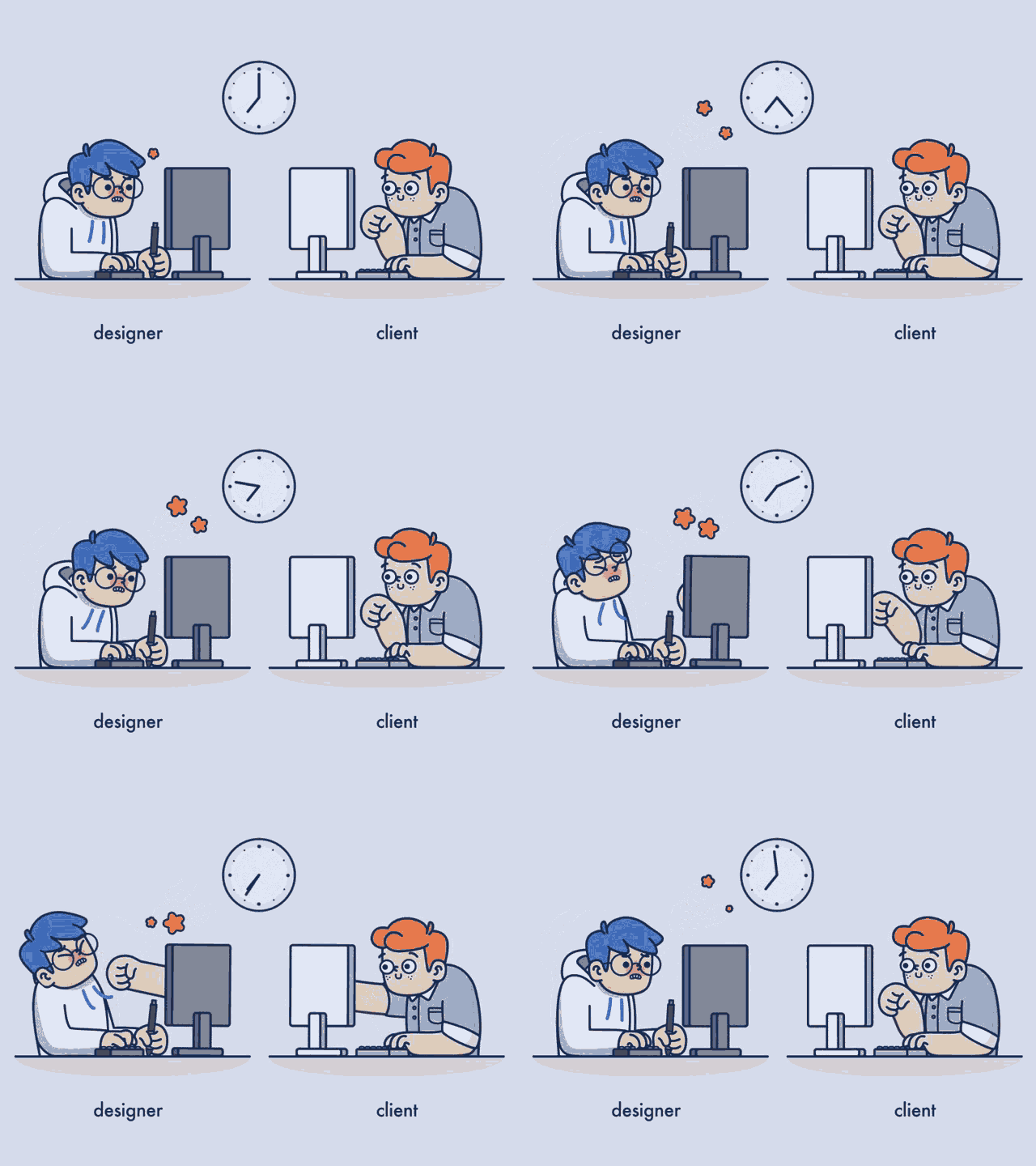
An unlimited graphic design service covers the gap because the cost stays fixed while the output scales with whatever the business needs that month.
The second group has hired freelancers before and remembers how it went. Sorting portfolios takes hours. The cheap option produces a $5 logo that looks like a $5 logo.
The good option books out three weeks ahead. Penji’s comparison with Fiverr gets into the specifics, but the short version is that vetting falls on you in a marketplace.
With a subscription, the service does the vetting. Penji, for example, tests applicants and hires roughly the top 2% of designers who apply.
There’s also a visual quality argument. Research highlighted by CXL found that 94% of first impressions are design-related, which is a number worth sitting with if your landing page still runs on stock photos.
What Are the Pros and Cons of Design Subscriptions?
The pros cluster around speed and predictability. First drafts arrive in 24 to 48 hours. Revisions are unlimited and don’t cost extra, so you can push a design until it’s right instead of rationing feedback to stay under budget.
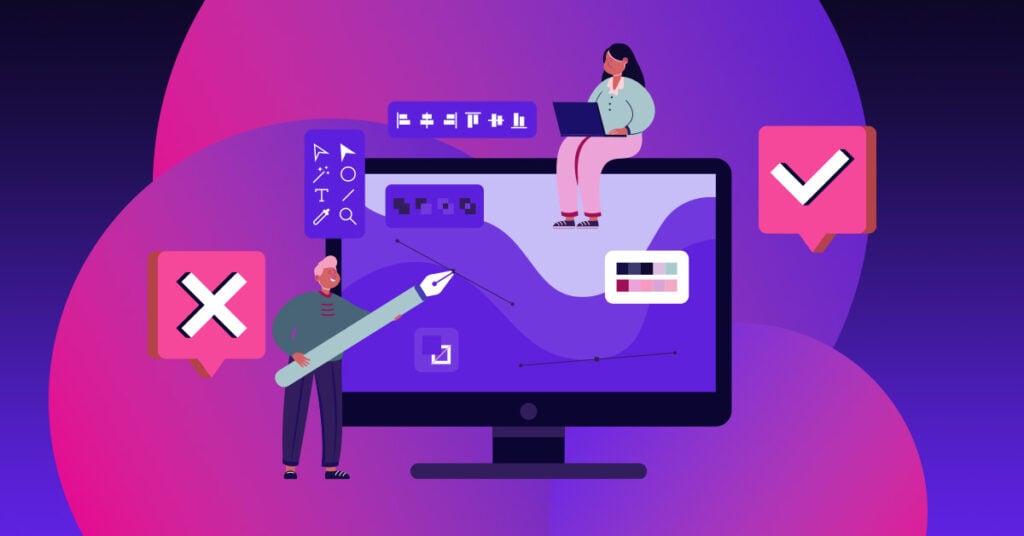
Files come in every standard format, including source files like AI and PSD, and clients keep full ownership, which means no licensing surprises later.
The cons are real and worth naming. You won’t always get the same designer on every project, so brand guidelines may need restating unless you request a specific designer, which most platforms allow. The bigger one is volume.
A design subscription is built for recurring work. If you need one logo and nothing else for six months, a project-based freelancer will cost you less.
Penji’s own onboarding team will tell prospects this, which says something about how the model is meant to be used.
How Much Do On-Demand Design Services Cost?
Pricing across the industry generally runs from $400 to $700 per month for entry plans, climbing to around $2,000 for teams that need multiple active projects and faster turnaround.
The fee is flat. Ten requests or fifty, the bill doesn’t change.
Compare that to hiring. The U.S. Bureau of Labor Statistics puts the average graphic designer’s wage at roughly $25 per hour, which works out to about $200 a day for a single person before benefits or platform fees enter the picture.
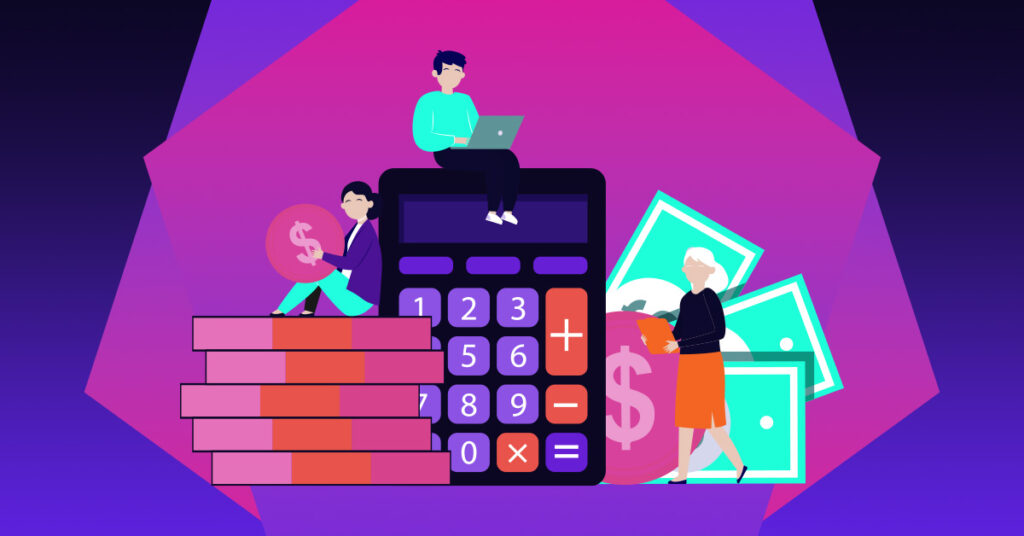
A month of moderate freelance use can pass a subscription’s cost quickly, and the freelancer caps out at their own working hours.
Penji’s pricing follows the flat-rate model with tiered plans, and every tier includes the 30-day money-back guarantee. That trial window matters more than it sounds. Freelancers don’t offer refunds on work you didn’t like.
How Does the Process Work Day to Day?
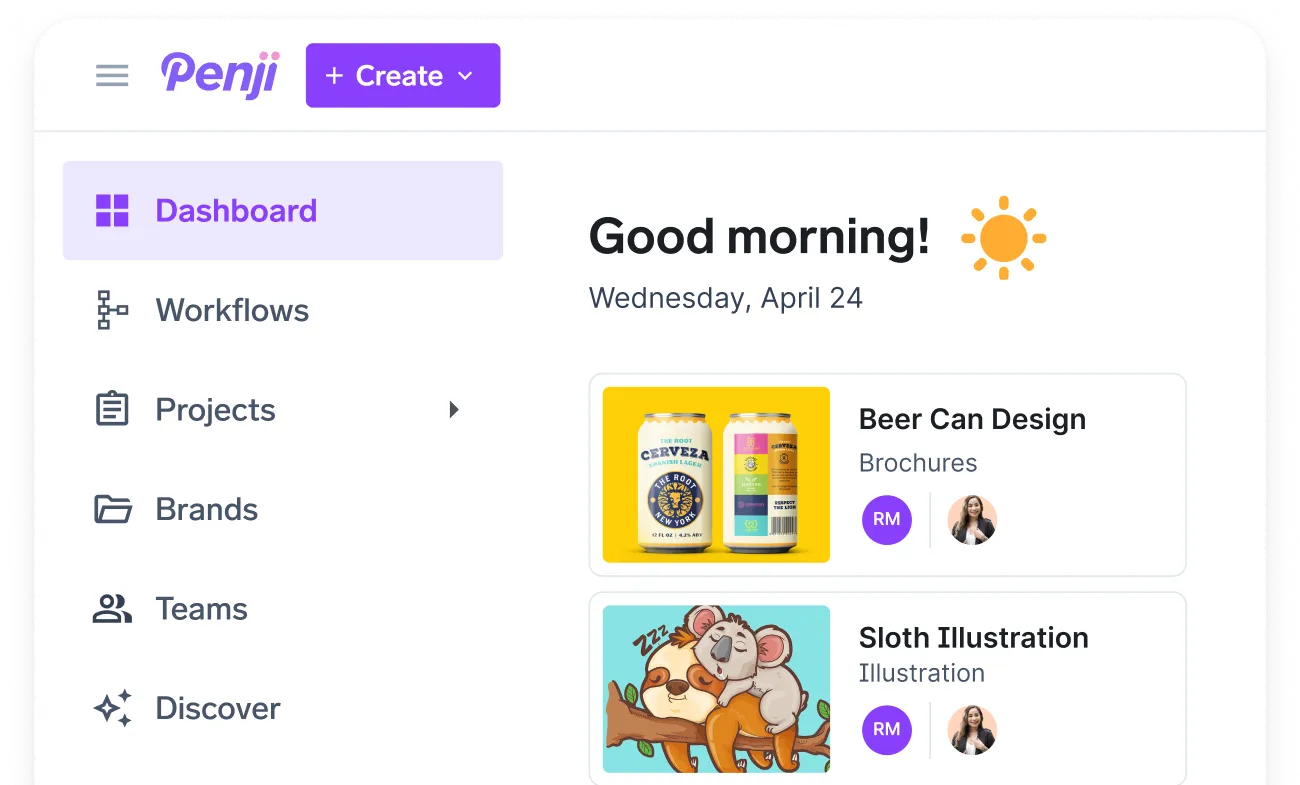
The workflow runs through a single dashboard. You write a brief, attach reference files, and submit. A designer is assigned without any interviewing on your end.
You track progress in the platform, get notified when the draft lands, and leave feedback directly on the design itself. Penji uses a point-and-click revision tool for this, so notes like “make this blue” attach to the exact element you mean.
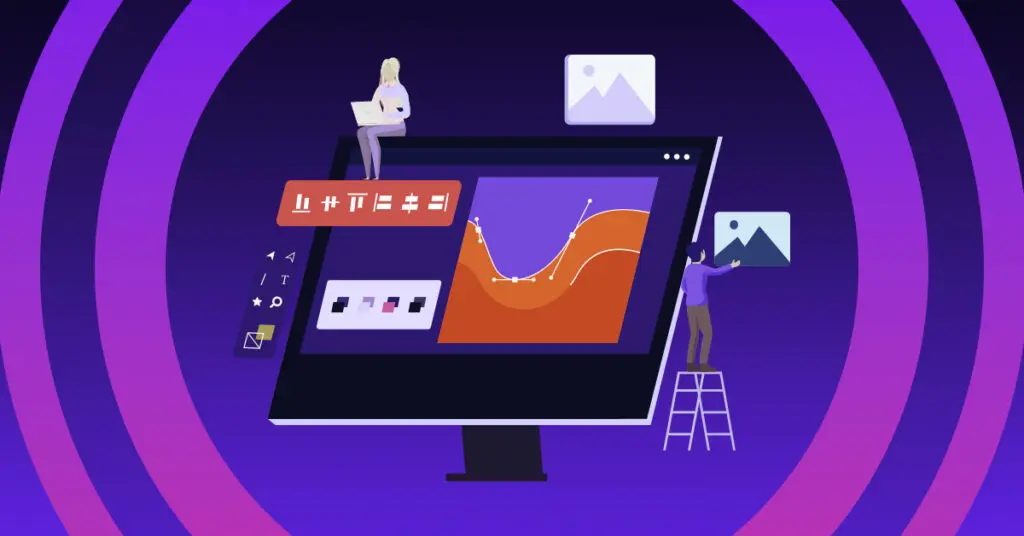
One detail clients tend to mention after switching: nothing happens over scattered email threads.
Briefs, drafts, revisions, and final files all live in one place, and how Penji works walks through each step if you want to see the dashboard before committing.
Once you approve a design, you download the source file and the project closes. The next request starts immediately.
Try Penji risk-free for 30 days
Get logos, ad designs, landing pages, illustrations, & more




What Are the Alternatives Worth Comparing?
In-house designers make sense once design volume justifies a salary, and they’re the only option that puts someone physically in your office.
Agencies suit larger companies with big campaigns and budgets to match, though startups usually find the retainers steep.
Design contests can generate variety fast, but quality is a coin flip and the designers competing rarely learn your brand.
For ongoing needs at a startup or small business budget, on-demand graphic design services sit in the practical middle: more consistent than freelance marketplaces, far cheaper than an agency, and faster to start than a hiring process.
Hiring a freelance graphic designer still wins for one-off projects, and it’s an honest answer to give.
The decision comes down to volume. Count the design assets you needed in the last 90 days. If the list is long and still growing, a flat-rate service will likely pay for itself.
If it’s two items, hire per project and revisit later. Either way, on-demand graphic design services have made professional design reachable for businesses that couldn’t touch it a decade ago.
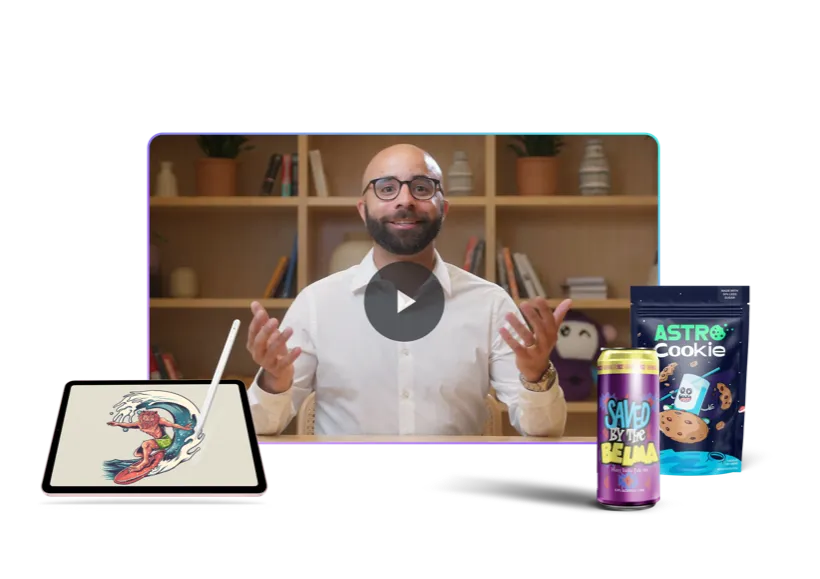
Want to see the platform before deciding? Watch Penji’s seven-minute demo and judge the workflow for yourself.
Frequently Asked Questions
How fast are designs delivered?
Most requests come back as a first draft within 24 to 48 hours. Complex projects like web pages and app screens take longer, and revisions typically return within 12 to 24 hours of feedback.
Can I keep the same designer for every project?
Usually, yes. Most platforms assign designers per project by default, but you can request a favorite designer once you find someone who understands your brand.
Is there a contract or commitment?
No. Plans run month to month, and you can cancel anytime. Penji also includes a 30-day money-back guarantee, so the first month carries no real risk.