








TL;DR – Building a brand book can be the best investment you’ll make to ensure your brand stays consistent across channels. When done right, your brand book can be the single document that can help strengthen recognition, build trust, and foster customer loyalty.
Are you struggling to keep your brand voice clear and consistent across all platforms?
If so, building a brand book can immensely boost your marketing efforts. In fact, data reveals that six out of ten companies credited consistent branding a 10% to 20% increase in their overall growth.
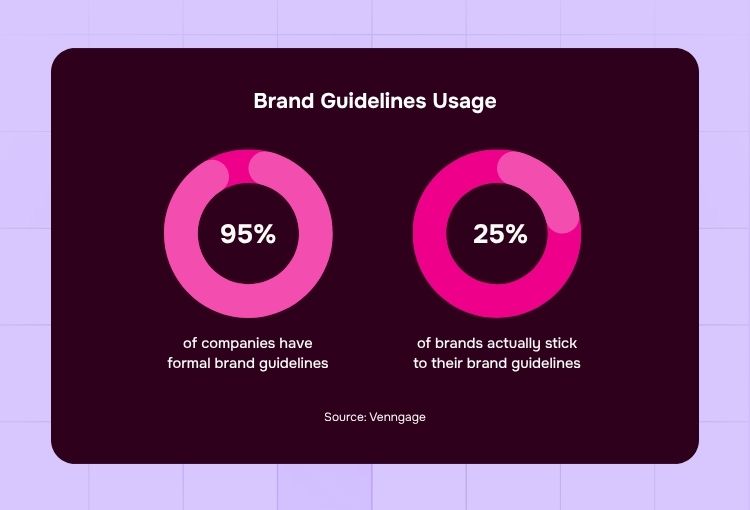
But here’s an interesting tidbit: although 95% of companies surveyed said they have formal brand guidelines, only 25% said they stick to them.
That means you don’t only need to build a brand book for the sake of it, but you need to carefully curate its components so that you’ll actually want to use it.
In this article, we’ll discuss the basics of creating a brand book and how to integrate it into your creative strategy. We’ll also look at a few stellar examples, including ones expertly crafted by our professional designers at Penji.
Let’s dive right in!
What Does a Brand Book Include?
Building a brand book involves curating crucial elements that guide your brand’s visual and communication strategies.

That said, a well-structured brand book is a reference for internal teams, partners, and external stakeholders, allowing the brand to maintain consistency.
Have your brand book crafted by design experts
Unlimited graphic design at a flat monthly rate

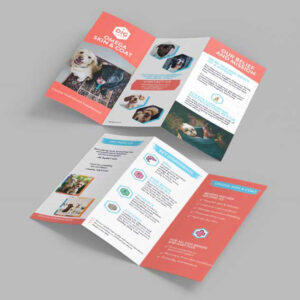
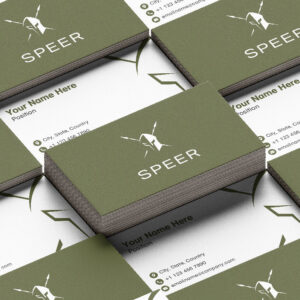
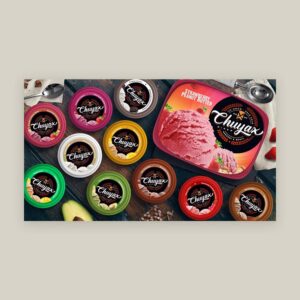
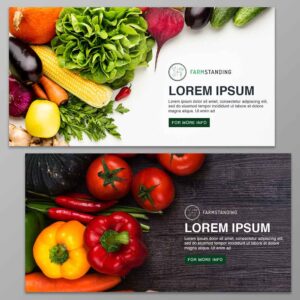

Here are the usual brand book contents:
- Mission and Vision – The mission explains why your brand exists, while the vision provides a roadmap for where you’re heading. Though you’re not required to stipulate them in the brand book, make sure that they lay the foundation for how the brand communicates and evolves.
- Logo Usage – Your logo is the face of your brand. That said, a brand book should outline how and where the logo can be used, including approved logo variations, sizing guidelines, and incorrect usage to avoid.
- Brand Color Palette – Include specific color codes (HEX, RGB, CMYK) for both primary and secondary colors to ensure that your brand is represented consistently across all platforms, from digital screens to printed materials.
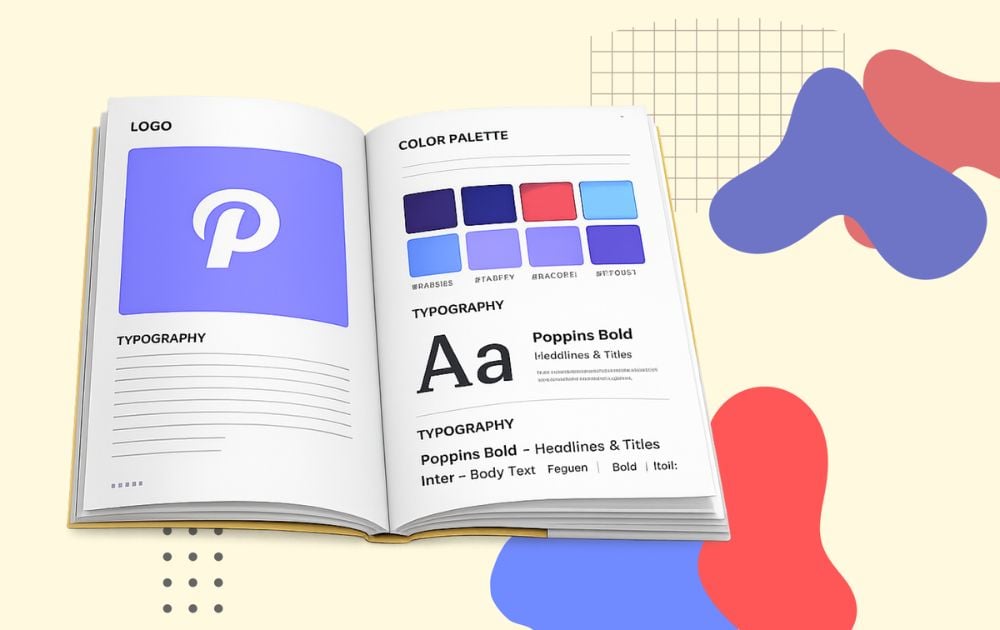
- Typography – Define your brand typefaces, detailing which fonts are used for headings, body text, and accents, along with size and spacing guidelines.
- Visual Elements – To maintain a cohesive look, you can include imagery guidelines that cover the style of images, photography standards, and rules for graphic elements.
- Tone of Voice – Aside from design elements, your brand book may also include the tone and voice used in messaging. For instance, are using a formal, casual, or playful tone of voice? Being clear about this from the get-go will allow you to stay consistent across marketing materials, social media, and customer service interactions.
What’s the Difference Between a Brand Book and Brand Guidelines?

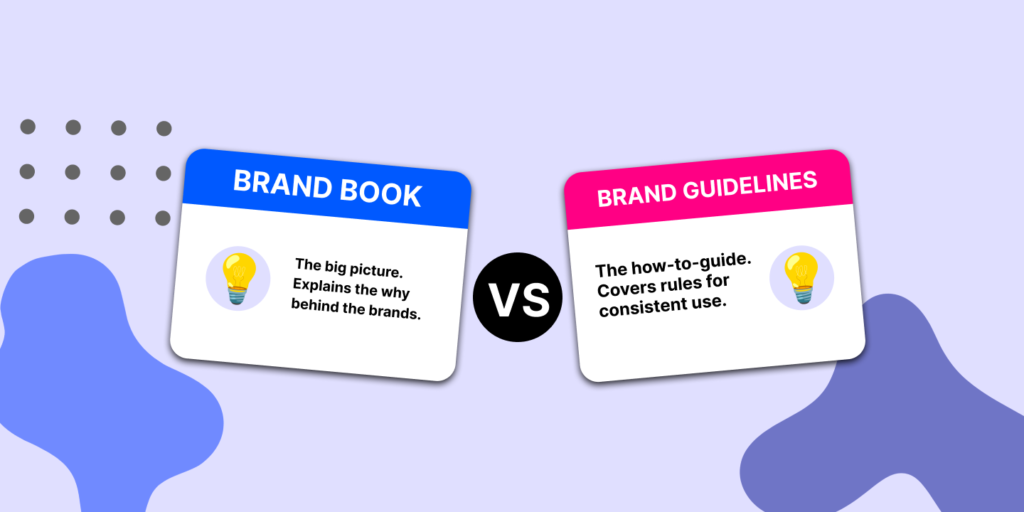
Many use the terms “brand book” and “brand guidelines” interchangeably. However, there are distinct purposes:
- A brand book captures the essence of your brand—it tells the story, explains your mission and vision, and provides an overarching framework for how your brand is presented to the world. In short, a brand book provides the “why” behind the brand.
- Brand guidelines, meanwhile, are more about the specifics of execution. In fact, brand guidelines are usually included as part of a brand book. If the brand book offers the “why,” brand guidelines deliver the “how.”
What Can Real-World Brand Book Examples Teach You?
Here are a few examples of brand books to inspire you, including some crafted by our expert designers here at Penji:
1. Playful Color Blocking

This visual identity guide for Love to Ride uses bold, playful color blocking with vibrant hues like teal, coral, and mustard, creating a dynamic and engaging feel. The geometric design elements, paired with simple bike illustrations, convey a sense of movement and adventure.
- Actionable Tip: Don’t shy away from using vibrant colors that reflect your brand’s energy.
2. Sophisticated Warmth

This brand guideline, created by Penji for My Kitchen, employs a rich, earthy color palette of deep maroon, beige, and warm neutrals. In addition, the inclusion of mood boards and business card designs ties everything together into a cohesive brand identity.
- Actionable Tip: Include examples of how the brand guidelines are implemented on actual prints and other guidelines.
3. Iconic Minimalism

This Starbucks brand guideline highlights the use of its globally recognizable logo and signature green color, referred to here as Starbucks Green. Just as important, the brand book also includes a section on product photography, emphasizing natural lighting and minimalist setups, allowing the products to stand out against plain backdrops.
- Actionable Tip: Focus on visual consistency across all elements, not just the logo. For instance, ensure that your product photography style aligns with your brand’s overall aesthetic.
4. Modern Simplicity

This brand guideline made by Penji for KOAR Cloud Solutions focuses on a sleek, modern design that incorporates clean lines and sharp edges. Meanwhile, the typography provides a contemporary feel, aligning with the brand’s innovative identity.
- Actionable Tip: Ensure your brand’s typography matches the tone of your industry. For a tech or cloud solutions company like KOAR, using modern, sans-serif fonts such as Montserrat helps communicate innovation.
5. Bright Energy
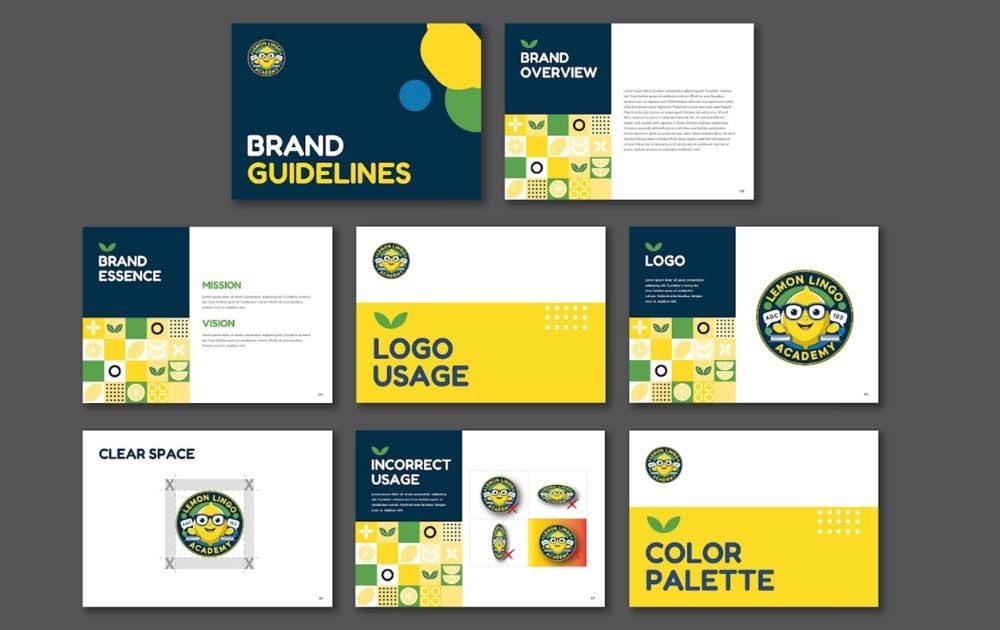
These brand guidelines, designed by Penji, feature bright yellow and green hues that give the brand an energetic and dynamic look. Aside from the typical elements, it also documents incorrect logo usage and the clear space required when using the logo.
- Actionable Tip: Include incorrect usage examples in your brand guidelines to guide designers on what to avoid when using the logo.
6. Professional Credibility
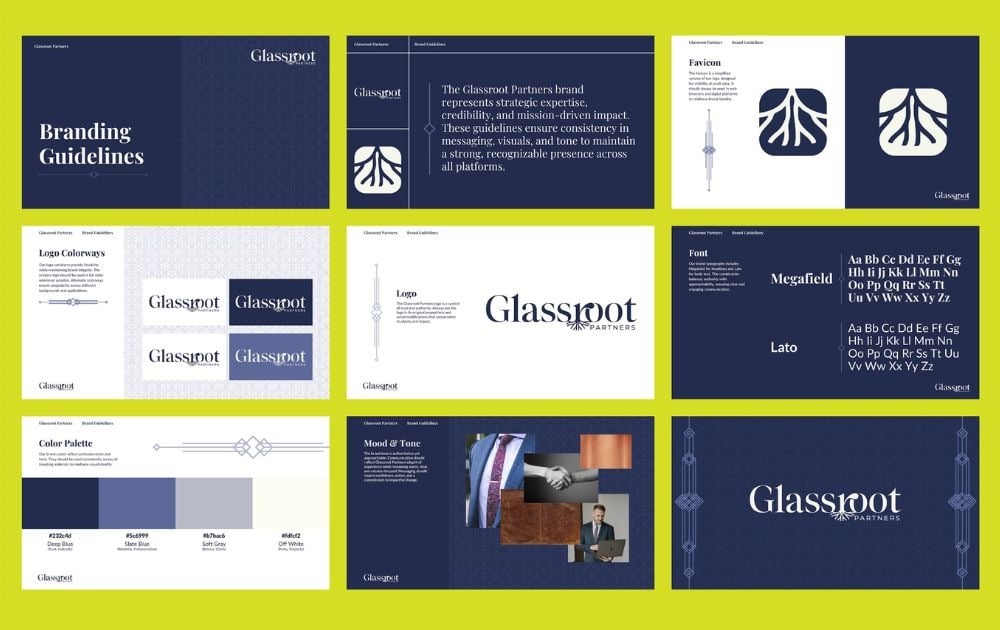
If you’re building a brand anchored in elegance and professionalism, this example can be a great source of inspiration. Using clean hues of blues and neutrals, these guidelines also include mood boards that show brand inspiration in action.
- Actionable Tip: Consider including mood boards in your brand guidelines to show the brand identity in context and help your design team maintain a consistent look.
The Lowdown
When building a brand book, start by outlining your brand’s mission, vision, and core values to establish a strong foundation. Next, detail the visual elements, such as your logo usage, color palette, and typography, providing specific guidelines on how they should appear across different platforms. Finally, include rules for your tone of voice and messaging to ensure consistency in communication.

Need an expert partner when building a brand book? Check out Penji for unlimited graphic design services to make your brand stand out!
Check out Penji’s portfolio or view a demo today to learn why Penji is one of the top-rated tools for graphic design for brands of all sizes.
Frequently Asked Questions (FAQs)
A brand book outlines a brand’s identity, including its mission, vision, values, and visual elements like logos and colors. In contrast, a brand bible typically dives deeper, offering more detailed, step-by-step instructions for maintaining brand consistency across all touchpoints. In short, the brand bible is more granular and specific in its guidelines.
Whether you’re building one made through a design-as-a-service platform or you’re building one yourself using a graphic design software, a brand book ensures consistency in how your brand is presented across all platforms and serves as a reference for internal teams and external parties. Additionally, it helps streamline marketing and design processes, reducing confusion and allowing for faster decision-making.
Yes. A branding kit helps small businesses look consistent across channels, making them appear professional and helping them compete with bigger competitors.
About the author

Carla Deña
Carla is a journalist and content writer who produces stories for both digital and legacy media. She is passionate about creativity, innovation, and helping small businesses explore solutions that drive growth and social impact.