









TL;DR: Brand guidelines serve as a toolkit to help designers create consistent branding assets. It needs to be clear, precise, and evolving.
You have an impressive brand guideline, but you wonder why your designers aren’t actually interpreting it the way you hoped. If you’re finding it hard for your guideline to bridge the gap between the strategy and execution, you’re not alone. When your guidelines are made to impress stakeholders, but aren’t doing their job of guiding the work of a brand design service, here’s what you need to do.
Why Are Some Brand Guidelines Hard to Follow?
There are two types of brand guidelines: those that are easy to follow and those that aren’t. The difference all boils down to whether they’re informational or operational. Here’s a quick description of each:
- Informational Guidelines: These are the “why” behind your brand, describing its vision, values, and personality
- Operational Guidelines: These are the “how” that translates those ideas into rules that a brand designer can easily use.
An effective brand guideline has both layers. Without the operational layer, your brand designers will find it hard to execute consistent visuals. Having these two means your branding service or design-as-a-service team can scale your output while staying true to the brand identity.
Here are the common friction points that make a brand guideline difficult to follow:
- Vague language: These are the phrases “keep it modern” or “use sparingly” that leave too much room for interpretation.
- No examples included: To better explain what you want, include visual references such as logo placement, color combinations, or imagery use.
- Rigidity vs. looseness: A too-rigid guideline stifles creativity while a very loose one creates inconsistency.
Here is an easy checklist you can use:
| Pitfall | Why It Hurts | The Better Approach |
| Vague terms | Designers guess | Include measurable rules (e.g., font sizes, spacing) |
| No examples | Inconsistent execution | Show mockups and case studies |
| Overly rigid | Limits creativity | Allow flexibility within defined boundaries |
| Overly loose | Dilutes brand | Define minimum standards for consistency |
Solve Your Design Dilemma for Good
Boost your business with unlimited branding designs

List the Essentials Every Brand Guideline Must Include
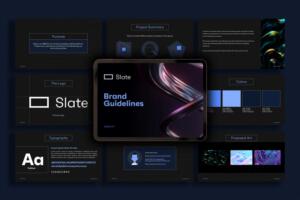
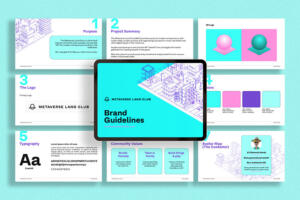
Before going any further, let’s check if your brand guidelines have these to make sure lack of them isn’t the reason why it is hard to follow:
- Rules on how to use your logo: Provide clear instructions on size, spacing, and placement on different backgrounds
- Color palette: Primary and secondary colors, and for accuracy, HEX/RGB/CMYK
- Typography system: Font types, weights, sizes, and hierarchy for digital and print.
- Imagery style: Photography guides, illustration styles, and do’s and don’ts for visuals
- Tone of voice: Key phrases, writing style, and brand messaging examples.
- Layout principles: Grid systems, margins, spacing rules
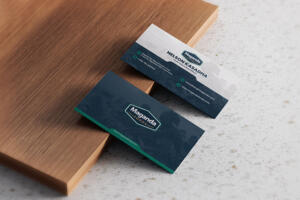
- Examples in context: Mockups that show how your assets should look on all your platforms
Create Rules That Follow the “Do This/Not That” System
Long paragraphs and abstract instructions can sometimes be the reason you’re not getting what you want out of your brand guidelines. In this situation, you need to provide visual direction as well. Below are a few examples:
- Logo spacing: Show overlays that illustrate the minimum clear space around your logo.
- Color pairings: Show combinations that work versus those that clash.
- Typography hierarchy: Display layouts with heading, subheading, and body text styles.
This approach gets rid of the guesswork. Your brand designer will see exactly what you want and what you don’t want, rather than interpreting vague language. This also helps keep the back-and-forth revisions to a minimum for those working with branding design services.
Add Ready-to-Use Templates
While written instructions go a long way in helping your brand designer craft the exact visuals you need, it helps if you add ready-to-use templates. These show how brand assets should look in real applications. Your designer can adapt more quickly than try to interpret abstract rules.
A few template examples:
- Social media posts: pre-made layouts for Facebook, Instagram, or LinkedIn
- Ad creatives: banner ads or digital campaigns with the right logo placement and typography
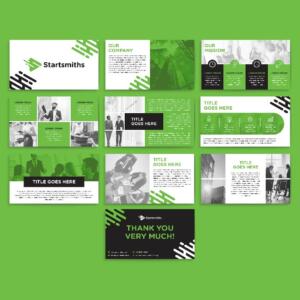
- Pitch decks: Slide designs that show hierarchy, color, use, and image styles
Templates are also effective for giving your brand design service a head start and maintaining consistency across all platforms. These professionals know how to leave room for creative adaptation to craft visuals that make your brand stand out.
Test Your Guidelines Before Finalizing
Like all of your visual assets, your brand guidelines also need to be tested for performance. The best way to do this is by giving your guidelines to a designer who wasn’t involved in their creation.
- See where they get stuck: To check whether your instructions are clear, see whether your brand designer asks questions or makes mistakes.
- Identify points of confusion: Missing examples or vague rules will quickly show up.
- Get feedback and refine: Adjust the language, add visuals, and simplify rules if necessary.
Test them with fresh perspectives to confirm if your guidelines are usable. This allows you to reduce back-and-forth revisions, save you time, and ensure that your brand identity is what it should be.
Keep Your Guidelines Evolving
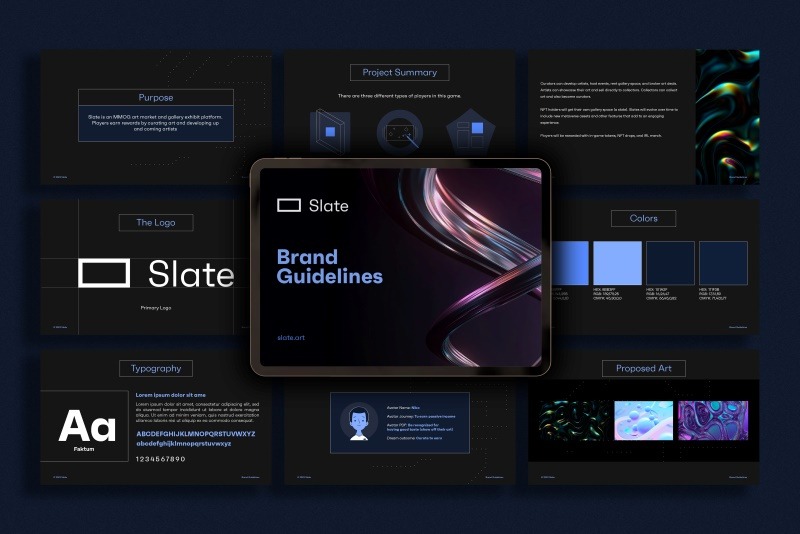
Once you achieve the ideal brand guideline, don’t stop there and treat it as a static document. It is a living system with rules that need to be adaptable as your platform, campaigns, and audience change. Here’s when to update:
- New platforms: When you use a new social media channel, new digital platforms, or new ad placements
- New campaigns: Seasonal promotions or product launches that need new creative perspectives
- Performance insights: when analytics show what visuals or messaging resonate most with your audience
As with any aspect of your business, continuous improvement is necessary. This ensures your brand stays relevant, scalable, and aligned with real-world performance. If you find these too overwhelming, the right design-as-a- service can help you achieve all these.
Final Thoughts
Brand guidelines should help speed up visual creation, not slow them down. Think of it as a toolkit instead of a rulebook that guides brand designers or brand design services to craft visual assets. While it takes time and effort to create an effective one, it offers so many benefits that outweigh the hassles.
If you need expert brand design services, there’s Penji. Watch our quick demo video here to learn how you can get usable brand guidelines and many other graphic design services. You can submit your first design request through this link.
FAQs
Regularly. Update them when you use a new platform, launch new campaigns, or get new insights on your brand’s performance to maintain relevance.
If you want usable brand guidelines and effective brand identity visuals, you need to work with a brand design service. To be more cost-effective, choose one that also provides a wide range of graphic design services, like Penji.
Penji’s team of professional designs specialize in over 120 design categories. You can submit requests for infographics, logos, web and app designs, custom illustrations, and many more.
About the author

Celeste Zosimo
Celeste is a former traditional animator and now an SEO content writer specializing in graphic design and marketing topics. When she's not writing or ranking her articles, she's being bossed around by her cat and two dogs.