








![How to Scale Faster with White-Label Design Services [+ Pro Tips]](https://penji.co/wp-content/uploads/2026/03/Graphic-3-White-Label-Graphic-Design.jpg)
TL;DR – White-label design services allow agencies to accommodate more clients and offer high-quality graphic design as part of their services without having to hire more in-house creatives.
White-label design services are a widely untapped resource for businesses trying to scale without significantly raising overhead expenses. As design demands pile up, so does the pressure to get high-quality services that offer value to clients and boost their brands’ growth.
This pressure can be explained by data from HubSpot’s 2026 State of Marketing Report. The survey found that brand awareness campaigns are the top branding investment that delivers the highest ROI. This is followed by customer experience alignment, brand messaging development, and visual identity systems.
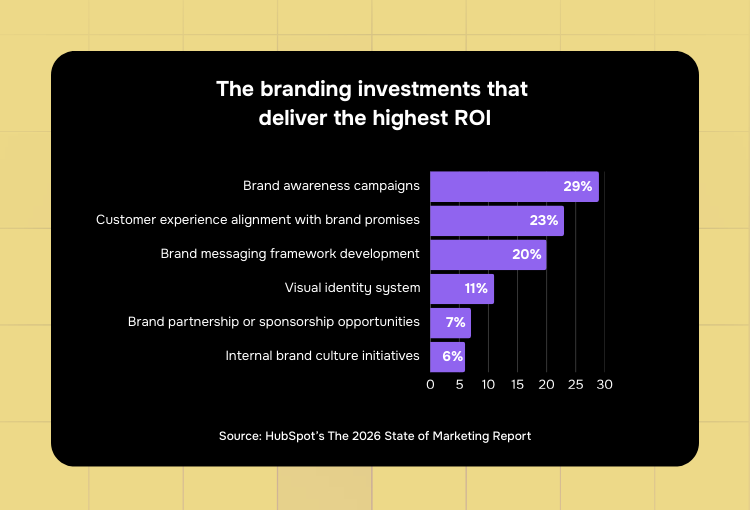
These numbers only go to show that graphic design in marketing isn’t all about aesthetics. They’re about moving the brand forward, and they can directly influence revenue.
In this article, let’s take a closer look at white-label services and how you can use them to deliver high-impact design without breaking the bank. We’ll also walk through the step-by-step process of doing it, along with pro tips to set you up for success.
Let’s start with a basic question:
What Are White-Label Graphic Design Services?
White-label design services are design solutions that use a third-party service provider’s designs under your brand name.
In simple terms, it’s outsourcing your visual assets while clients see them as output from your team.
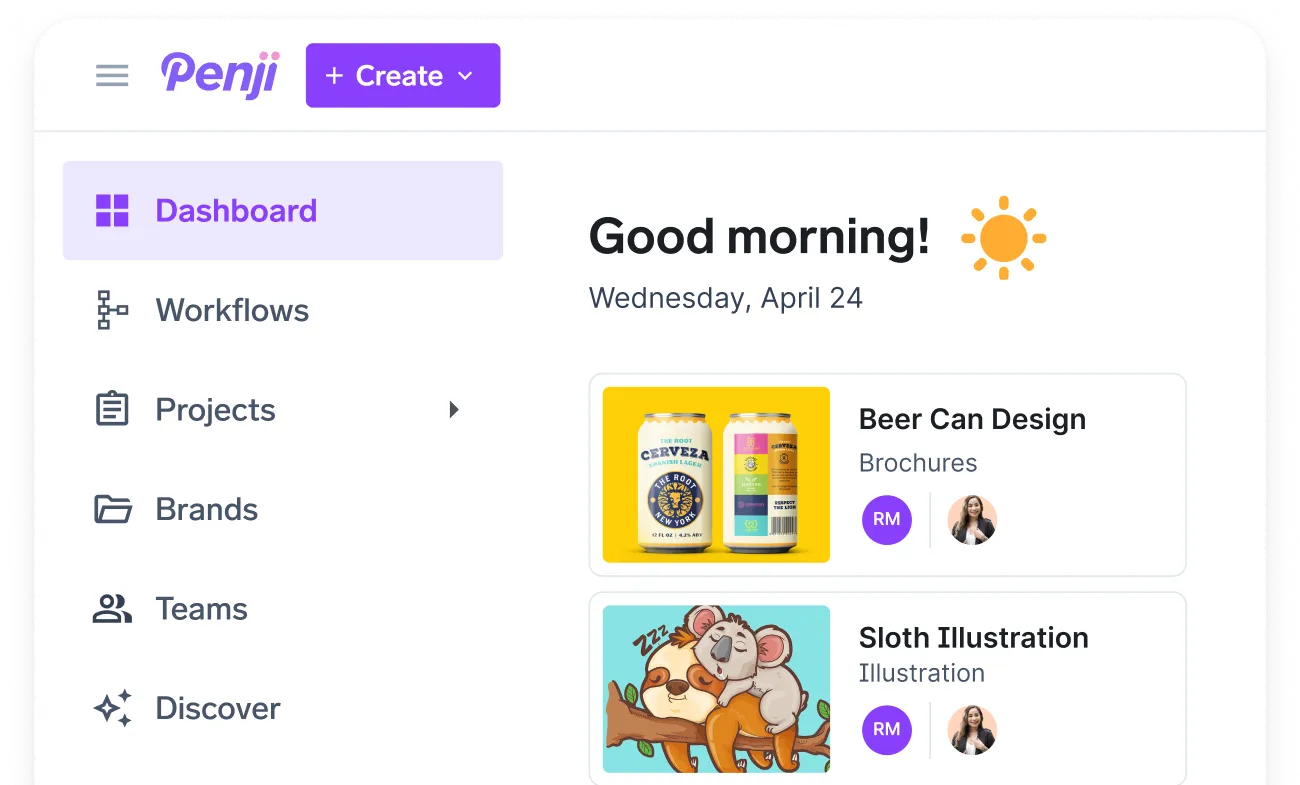
By outsourcing your design work to design-as-a-service platforms like Penji, you won’t have to hire an in-house designer or a freelancer.
Professional design services by the world's top 2% designers
Unlimited graphic design at a flat monthly rate
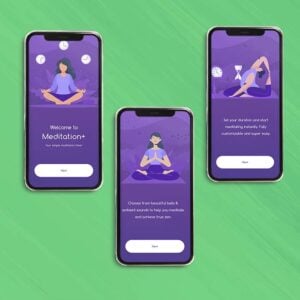
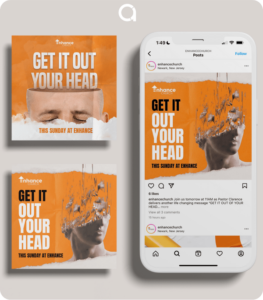
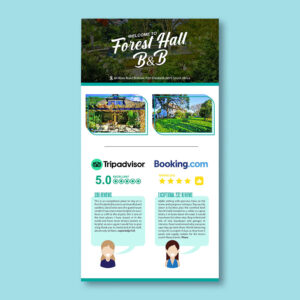
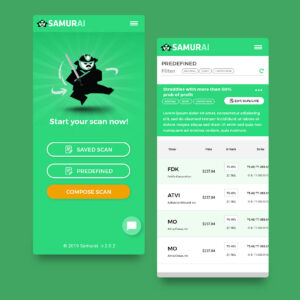
White-label design services are actually a lot more common than you think. In fact, data reveal that 73% or almost 3 in every 4 agencies use white-label creative services.
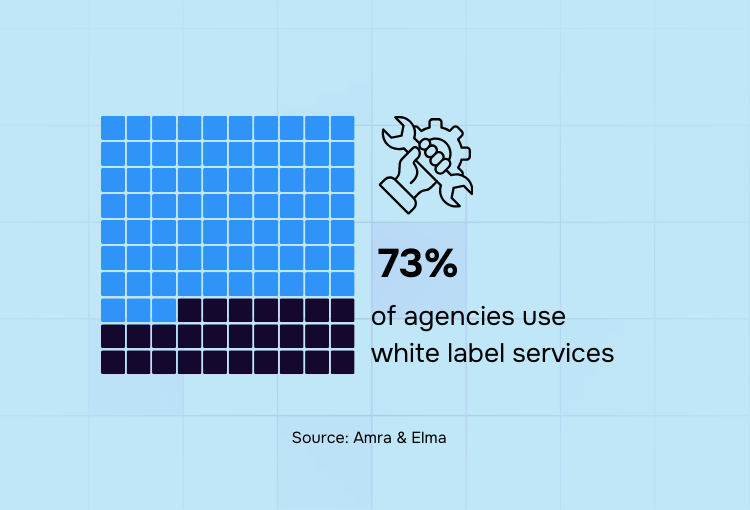
This number hints that outsourcing design isn’t a shortcut but a growth strategy.
What are the Benefits of White-Label Design Services?
Here are the main benefits of using white-label design services:
- Scaling without hiring more staff. When you outsource design work, you can take on more clients and more projects without the long-term commitment of hiring in-house talent.
- Predictable expenses. Unlike hiring freelancers who may charge per hour, per project, or per revision, using monthly graphic design packages for white-label designs keeps costs flat and predictable.
- Increased margins. Outsourcing your design needs to unlimited graphic design platforms allows you to request all the designs you need at a flat subscription rate. You can then choose to offer these visual assets with room to mark up.
- Faster turnaround. For best results, choose a service provider that offers a turnaround time of 24-48 hours. Doing so will allow you to deliver more designs more quickly.
- More time to focus on core work. Because your team is not loaded with design tasks, you can focus on strategies and building and nurturing relationships with your clients.
- Access to top design skills. Data reveals that almost half of the companies surveyed outsource to gain access to new capabilities, which include graphic design.
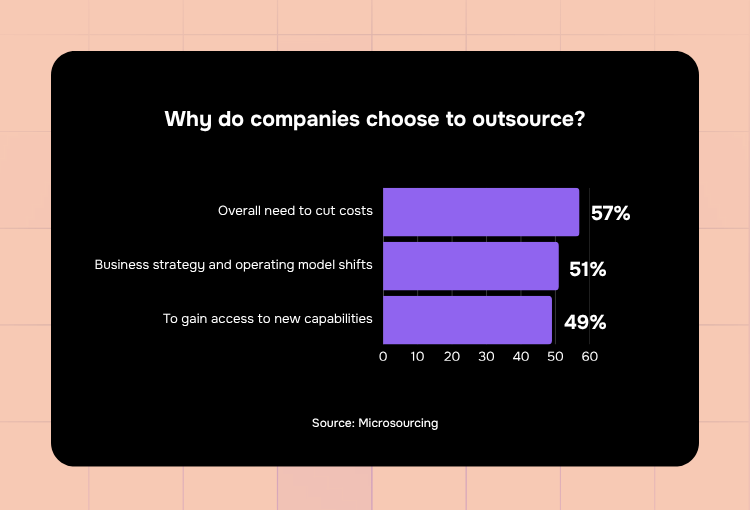
Outsourcing design frees you up from the need to vet designers, onboard them, and train them continuously. At Penji, for instance, many clients get a subscription because they want to get access to the world’s top 2% designers and have visual assets that are the same quality as those of Fortune 500 companies.
How Do White-Label Graphic Design Services Work?
White-label design services allow you to get graphic designs on demand while you handle the front-facing aspects of your business. Here’s a walk-through of its step-by-step process:
1. Your client requests a project.
First, your client requests a visual asset or a set of visual assets. These tasks could come as part of a bigger project, such as a product launch or a promotional campaign. It could also be a stand-alone project, like a book cover design or website design.
- Pro tip: During this phase, you take control of the client relationship. You have to ensure that you’re on the same page with your client about the project and offer insights that could improve the final output.
2. You draft a content brief.
Taking insights from your meeting with your client, you draft a content brief that describes the design that your client wants. To ensure that your service provider fully understands the project, you can include these details:
- Project goals
- Target audience
- Formats and dimensions
- Brand guidelines
- Copy
- Mood boards or visual inspiration
- Deadline
3. You submit the brief to your service provider.
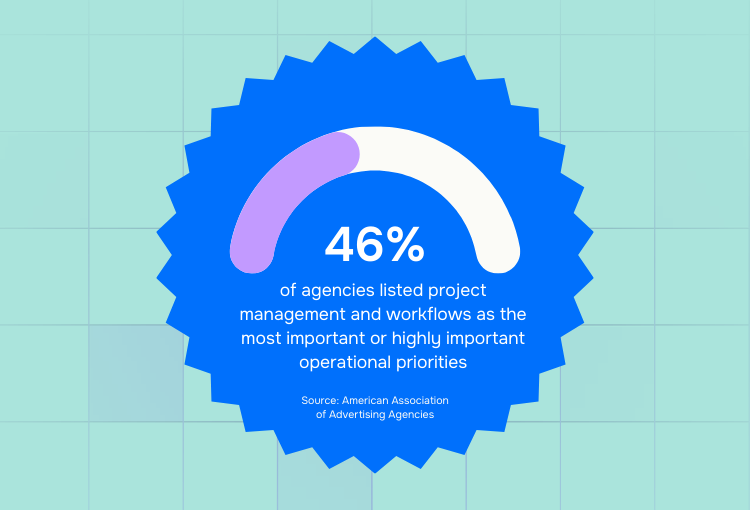
Once you’re done with the brief, you’ll send it to your graphic design platform. Why is this step crucial? Data reveals that 46% of agencies surveyed listed project management and workflows as the most important or highly important operational priorities.
That said, a clear brief, together with an efficient workflow, leads to a smooth transition of information and deliverables between you, your client, and your service provider.
- Pro Tip: Choose a graphic design service provider with a clear workflow system (ideally, a dedicated app) for requesting designs and communicating with the design team. This will save you a lot of time, effort, and energy during the design, revision, and approval process.
4. Your service provider delivers the design draft.
Once done, your graphic design platform will send a design subject to your approval.
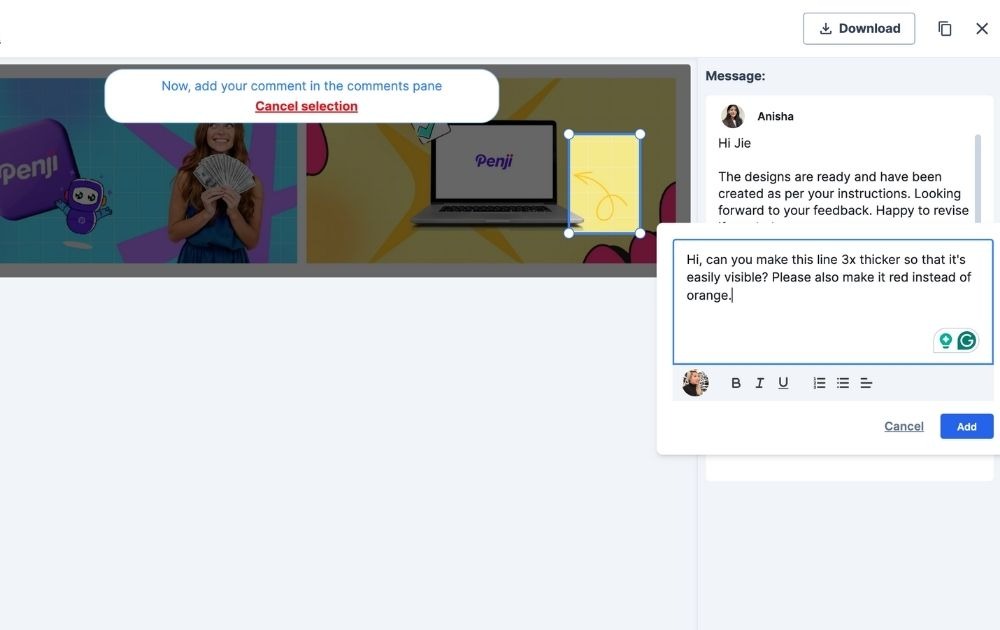
5. You review the design and have it revised, if needed.
Take the time to review the draft. Here are key aspects to check:
- Does the design match the brief?
- Is this a design my client would be happy about?
- Are there any typos or other errors?
If needed, have the designs revised internally first before showing it to your client.
- Pro tip: Choosing an unlimited graphic design subscription that comes with unlimited revisions will allow you to really fine-tune designs without worrying about charges piling up.
6. You deliver the final design under your brand.
Once you’re 100% happy with the design, you can download it and present it to your client. Don’t worry if your client requests revisions. Projects typically involve one to three rounds of revisions. But the clearer the design brief is, the slimmer the chances of revisions would be.
- Pro tip: Before sending the final design to your client, use a simple checklist to review it internally: brand colors, copy accuracy, fonts, and formats.
The Lowdown
White-label design services allow businesses to scale smarter without hiring more people. With a reliable partner doing the design tasks behind the scenes, you’ll have more time and energy to nurture client relationships and channel more time and effort toward strategy and other crucial parts of the business.

Looking for a white-service design provider? Partner with Penji.
Check out Penji’s portfolio and see why brands choose Penji for white-label design services.
Frequently Asked Questions (FAQs)
Yes. white-label graphic design services allow agencies to scale fast, offer more design support for marketing teams, and accommodate more clients without having to hire more employees.
Yes. You can operate as a white-label design agency by offering the designs under your agency brand and charging your own rates.
Yes. As long as you provide clear and consistent brand guidelines when you outsource design services, your service provider can closely follow them.
About the author

Carla Deña
Carla is a journalist and content writer who produces stories for both digital and legacy media. She is passionate about creativity, innovation, and helping small businesses explore solutions that drive growth and social impact.