









TL;DR: As with every industry, AI is transforming the future of graphic design services. While it is a powerful tool that enables faster designs, human intervention is still required for originality, nuance, and strategy.
Just as it is doing in many industries, AI is changing the graphic design industry in bounds and leaps. Smart tools emerge, automating, accelerating, and even inspiring design. Thus, many see the future of graphic design as one that focuses on efficiency, accessibility, and scalability. Let’s look at how AI in graphic design is redefining the design landscape and what it will mean for businesses.
How Do Businesses Traditionally Handle Graphic Design?
Before there were design-as-a-service platforms, businesses had relied on three main methods of getting graphic design services:
- In-house design teams: Business owners build their own team to create the brand’s visual assets.
- Freelancers: These are hired to work on a per-project basis, offering cost-effective design solutions.
- Agencies: Full-service firms that provide a wide array of design capabilities, but come at a higher cost.
In the past, these methods were the standard. However, they come with challenges that many business owners could only dream of totally eliminating:
- Slow delivery times: Design delays due to limited bandwidth, lengthy approval processes, or unreliable freelancer availability.
- Inconsistent quality: Quality can vary from designer to designer.
- High costs: An in-house staff incurs salaries even when the workload is low, not to mention overhead expenses such as utilities, software, hardware, and other fees.
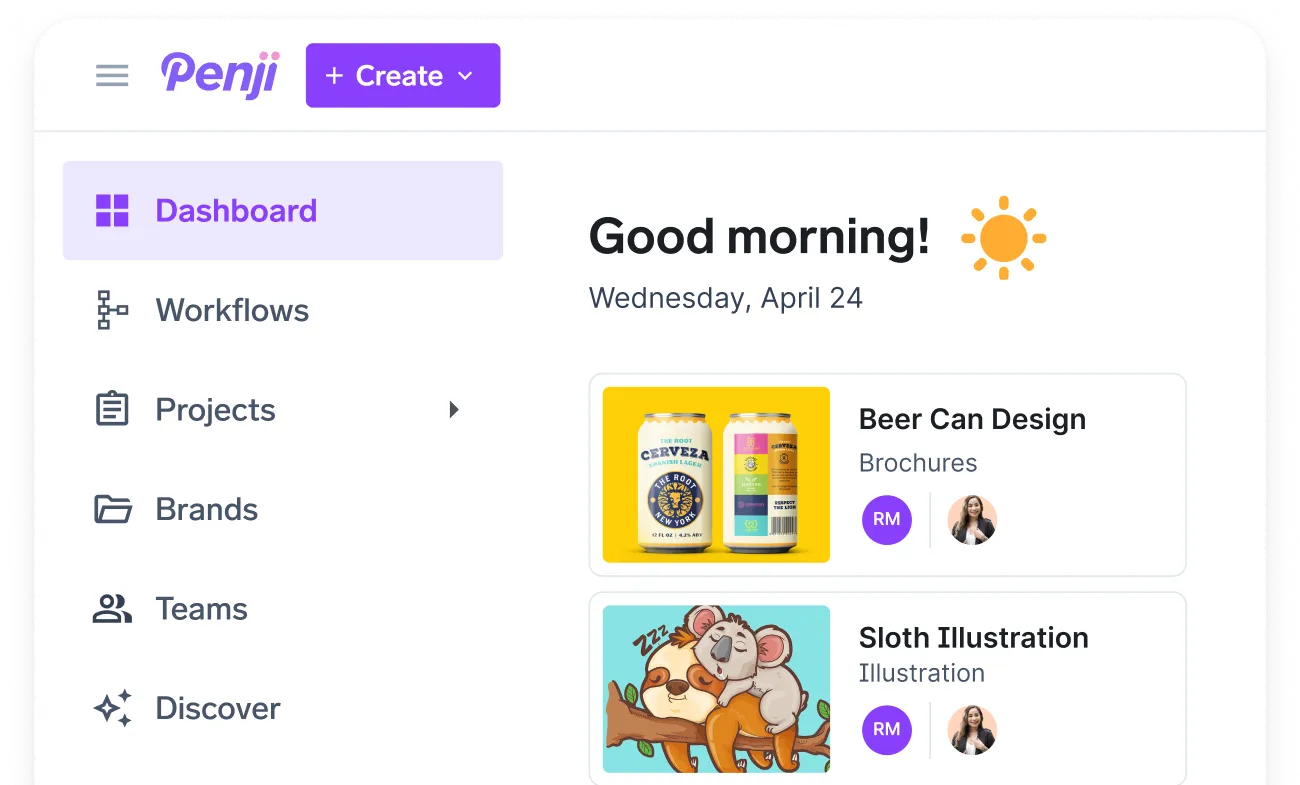
These pain points are what pushed businesses to opt for design-as-a-service platforms, such as Penji. For one, Penji was built as an answer to the calls of entrepreneurs looking for a good combination of affordability and accessibility.
Solve Your Design Dilemma for Good
Outsource all your design needs to the pros








How is AI Revolutionizing Graphic Design Services?
AI is changing the way businesses approach graphic design services. It offers tools that can generate logos, social media graphics, and even branding assets in seconds. They provide innovation that helps speed up the design process. Furthermore, it leaves room for design professionals to apply their creativity and strategy that artificial intelligence cannot replicate.
What are the benefits of AI in design?
- Faster workflows: It automates repetitive tasks like resizing, layout adjustments, and formatting. This leaves designers to focus on higher-level creative work.
- More design options: Businesses can explore more design variations, allowing them to refine the ideas before putting them through the final production stage.
- Easier collaboration: AI makes it quick and easy to share drafts, get feedback, and iterate, thanks to cloud-based platforms.
What are examples of successful integration of AI in design?
- Retail businesses can use AI to create product visuals and promotional graphics at scale.
- Startups can use AI logo makers to craft a foundation for their branding before moving on to work with design experts.
- Marketing teams can integrate AI-powered tools into their workflows to generate visuals that go with their campaign themes.
A note, though, AI is not a replacement for professional design. It aims to be a powerful support to deliver even greater value. When used right, businesses can beautifully blend AI efficiency with human creativity. This way, your designs aren’t only aesthetic, but strategic, original, and brand-focused.
What is the Future of Graphic Design Services?
While the topic of AI use remains highly debated, the future of graphic design is moving toward hybrid workflows. These combine the speed of AI (its most applauded feature) with human creativity. We need to view AI as a working partner instead of a replacement.
That said, let AI handle repetitive tasks, while partnering with professionals to tackle strategy, storytelling, and brand identity. A balance will assure you of designs that are efficient and original.
What are subscription-based trends?
Another major shift that’s surely on the rise is the design-as-a-service model. Subscriptions to these services allow businesses to access ongoing creative support rather than relying on one-off projects. And, the integration of AI in graphic design services is what makes this trend possible. It enables them to deliver consistent quality, faster turnaround times, and predictable costs.
How Subscription Models Are Shaping the Future of Graphic Design Services
The rise of subscription-based design platforms is seen as one of the biggest shifts in the future of graphic design. It’s because of the following benefits:
- Unlimited design requests: You can send as many design projects as you can without incurring additional fees.
- Unlimited revisions: You can send back your design if you’re not happy with it. These design-as-a-service platforms offer unlimited revisions until you’re satisfied with the result at no extra cost.
- Predictable pricing: You’ll only be charged a fixed monthly fee. This makes it an ideal design solution for startups, small businesses, and those on tight budgets.
- Faster delivery: You will receive your first draft within 24 to 48 hours.
Why Human Designers Still Matter
You may have played around with an AI design tool and seen firsthand how innovative, fast, and powerful they are. However, AI in graphic design cannot replace human creativity. In addition, human designers bring strategy and brand expertise to the table, something AI can never do. Yes, algorithms can generate layouts or variations, but they don’t have the cultural awareness, emotional intelligence, and storytelling capabilities. These factors are what create designs that resonate with audiences.
Why is human oversight crucial?
Human oversight accounts for the following:
- Quality assurance: Human designers avoid generic or off-brand visuals by checking that AI-generated designs follow brand guidelines.
- Innovation: AI only takes from what humans have created. Thus, original ideas, creative risk-taking, and nuanced design choices only come from people.
- Strategy: Professional designers understand how a design asset will fit into your brand’s identity and business goals, an AI tool cannot.
Why is blending AI and human creativity necessary?
If you want optimum results, integrating both AI and human designs is the best route to take. Use AI as your support system and not a replacement for human designers. Remember, use people for originality and strategy, and AI for accelerating production.
Final Thoughts
The future of graphic design is now being redefined by AI, more so, graphic design services. AI made these services faster, more efficient, and more scalable. However, these advances will only be beneficial to a business when you integrate them with human creativity, strategy, and brand expertise.
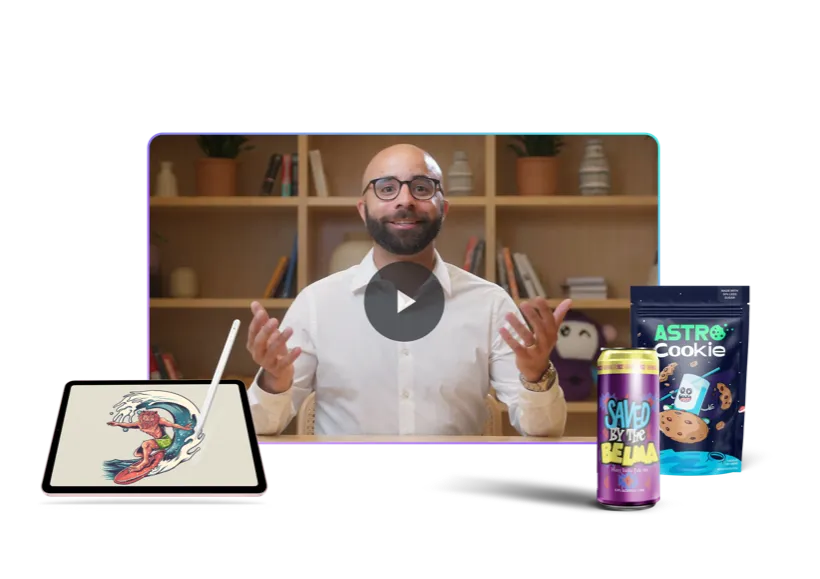
This is why a design-as-a-service platform, like Penji, is an indispensable tool for compelling graphic design. Watch our demo video here to know how you can transform your brand’s visuals into creative and strategic elements for your business. Or you can click here to send your first design.
FAQs
- What is design-as-a-service?
Platforms that operate on a subscription model are known as design-as-a-service. You pay a flat monthly fee to get ongoing access to design support.
- Will AI replace human designers?
No. As AI continues to improve, it still won’t replace human designers’ creativity, brand expertise, and strategic thinking.
- Why should I use a subscription-based graphic design service for my business?
These services provide you with consistent design quality, Predictable costs, and scalability you won’t find in freelancers, in-house teams, or agencies.
About the author

Celeste Zosimo
Celeste is a former traditional animator and now an SEO content writer specializing in graphic design and marketing topics. When she's not writing or ranking her articles, she's being bossed around by her cat and two dogs.