









TL;DR: Publishing unoptimized visual assets hurts your website speed, SEO rankings, and brand trust. This guide has a checklist that you can follow to make sure that your images, videos, and graphics are all fully optimized. You will learn how to make files smaller, add the right alt text, keep your brand consistent, and make things easier to get to.
Visuals are the backbone of your marketing strategy. A stunning image or an engaging video can capture a buyer’s attention in seconds.
However, hitting “publish” on a raw, unoptimized image can cause problems. Massive file sizes slow down your website. Missing alt text ruins your accessibility. Inconsistent branding confuses your customers.
That is why smart marketers often partner with visual asset design services. These experts do more than just create beautiful graphics. They ensure every file is primed for top performance across all digital platforms.
By following a strict pre-publish checklist, you protect your brand’s credibility. You also guarantee that your visuals load fast and rank well on search engines.
Are you ready to fix your broken visual strategy? Let’s explore exactly what these assets are and how to prepare them for the public.
What exactly is a visual Asset?

Any picture, video, or graphic that you use in your marketing and communication is a visual asset. You use them to send a message, make the user experience better, or get people to interact.
These assets are short videos, infographics, product photos, and social media banners. They are very important for building trust and getting people to buy.
If you use good graphic design services, you’ll get a steady stream of these assets that are made just for your brand. They help you communicate complex ideas simply and effectively.
Knowing what a visual asset is only solves half the puzzle. Next, you need to know exactly how to prep them for your website or social feeds.
How Should you Optimize Visuals Before Publishing?
To ensure your visual assets perform perfectly, follow this step-by-step checklist.
1. Optimize your resolution and file size
To keep things clear, you need images with a lot of detail. Try to make the longest side at least 2000px long. However, large dimensions mean large file sizes. You must compress your files using tools like TinyPNG or Squoosh. This reduces your load times without sacrificing visual quality.
2. Use descriptive file names
Do not upload a picture with the name “IMG_1234.jpg.” That is not readable by search engines. Use names that are rich in keywords and describe what they are. For instance, give your file the name “organic-cotton-tote-bag.jpg.” This easy step makes a big difference in how well your image ranks in search engines.
3. Add alt text for accessibility and SEO
Alt text tells search engines and screen readers what is in your image. Make sure your alt text is clear and descriptive. For example, say “A tan leather tote bag with straps that can be adjusted.” Don’t put too many keywords in this text. Concentrate solely on clarity and relevance.
4. Choose the correct file format
Modern file formats like WebP or AVIF offer superior compression and faster loading times. Reserve PNG files for graphics that require transparent backgrounds. Use JPEG for high-quality, complex photographs.
5. Ensure mobile optimization
You need to check your visuals on mobile devices to make sure they fit right. Make sure that 70% to 80% of the frame is taken up by your main product. This makes it easier to see on small screens.
6. Maintain strict brand consistency
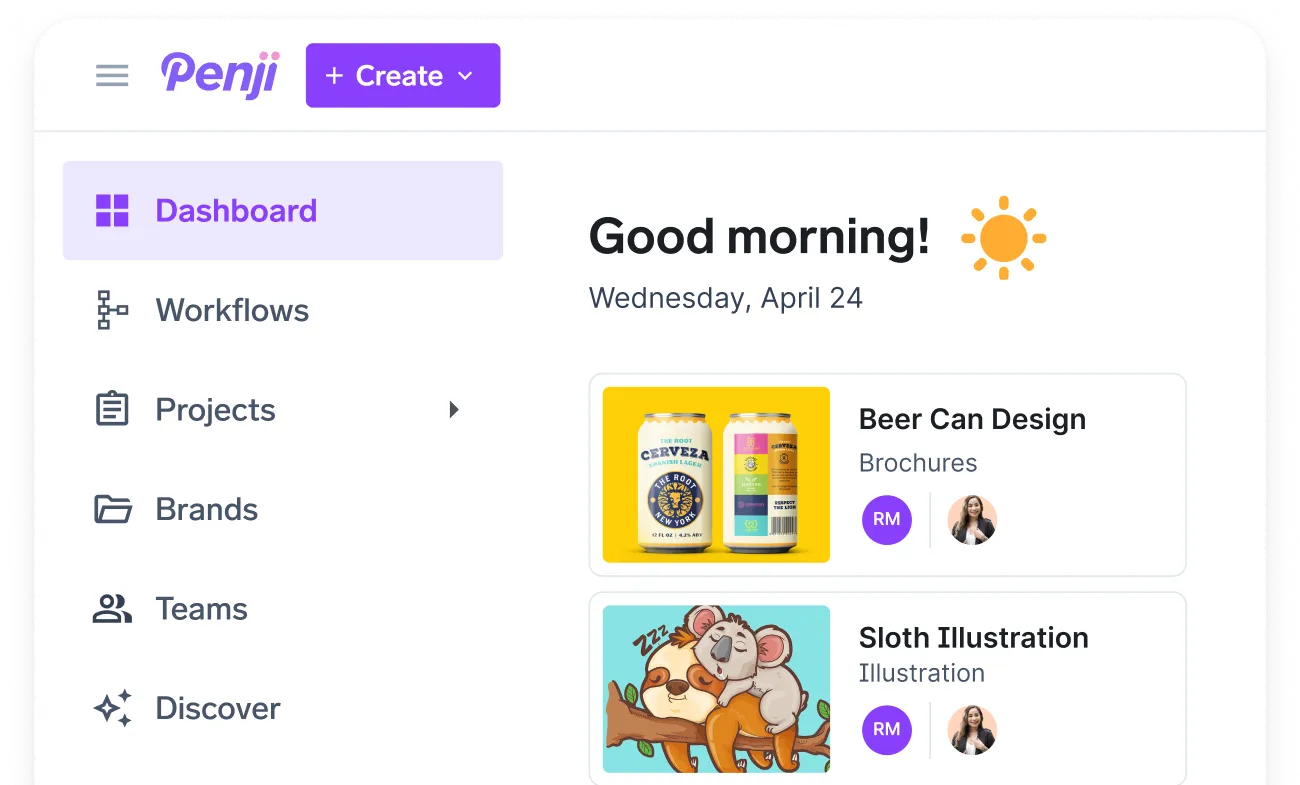
Make sure that the colors, fonts, and logo placement on all of your graphics are the same. And also, If you have trouble keeping things the same, a marketing visuals design service can help. With platforms like Penji, every design is on-brand.
7. Leverage structured data
Put schema markup on your visual assets. This lets search engines show rich results. For instance, you can use Product schema to show your price and availability right in Google Images.
8. Test for accessibility
You must ensure your color contrast meets WCAG AA standards. Avoid placing thin text over busy photographic backgrounds. Everyone should be able to read your message clearly.
You might be wondering what the best file formats are now that you know how to optimize. Let’s compare the two most popular options.
WebP vs. JPEG: Which format should you use?
Choosing the right file format directly impacts your website speed. Here is a quick comparison to help you decide.
| Feature | WebP | JPEG |
| Compression | Superior (30-50% smaller files) | Good, but larger file sizes |
| Transparency | Supported | Not supported |
| Browser Support | Supported by most modern browsers | Universally supported |
| Best Use Case | Web and mobile optimization | High-quality photos for print |
WebP is clearly the winner for web performance. But why should you invest so much effort into these visuals in the first place? Let’s look at the actual impact they have on your business.
Why Do Visual Assets Matter so Much?
Visuals dictate how customers perceive your brand. A study by HubSpot found that articles with visuals receive 94% more views than those without.
Pros of using optimized visuals:
- They enhance user engagement and retention.
- They improve your SEO rankings.
- They build immediate brand recognition and trust.
Cons of ignoring optimization:
- Poorly compressed visuals slow down your website.
- Inconsistent branding confuses your potential buyers.
- Missing alt text alienates users with visual impairments.
When to heavily utilize visual assets:
- Launching a new product or campaign.
- Enhancing blog posts, social media, or email marketing.
Different businesses use visuals in very different ways. Let’s explore how your specific industry should approach visual marketing.
How Do Different Industries Handle Visuals?

Your industry dictates how you should present your graphics.
E-Commerce
Online shoppers rely entirely on your photos. In fact, 70% to 80% of online shopping happens on mobile devices (Statista, 2025). Use multiple angles and close-ups to showcase details. Include lifestyle images so customers can visualize the product in daily use.
Real Estate
You need to optimize images for virtual tours and 3D walkthroughs. Use HDR photography to highlight unique property features. High-quality visuals make or break a property listing.
Healthcare
Ensure your visuals are inclusive and culturally sensitive. Use clean diagrams and infographics to explain complex medical concepts clearly.
If you still have questions about optimizing your assets, we have answers. Read through the most common questions below.
Ready to Elevate your Visual Content?
Optimizing your visual assets is not optional. It is absolutely essential for enhancing your user experience, improving your SEO, and building a memorable brand identity. By following this pre-publish checklist, you guarantee that your visuals will actually drive results.
However, producing high volumes of optimized designs in-house is exhausting. That is where design as a service changes the game for your team.
Get the creative support you need whenever you need it. When you work with our expert team at Penji, you get predictable prices and a smooth workflow. Stop stressing over file sizes and brand guidelines.
Experience the power of unlimited design services at Penji, and let our visual asset design services handle the heavy lifting for you today.
FAQ’s
What is the best resolution for visual assets?
Use only what adds value. If there’s too many visuals it can slow your page and distract users. Focus on a few high-quality assets that clearly support your content or product.
You must review them every 3–6 months or during major campaigns. Additionally, Update visuals when branding changes, products evolve, or performance drops.
Yes, but you must resize and adjust them for each platform. However, what works on a website may not perform well on social media or email.
You must use tools like Canva, Figma, or a DAM (Digital Asset Management) system to organize, edit, and store files in one place.
You must track metrics like page load speed, engagement rate, click-through rate, and conversions. Poor performance may signal the need for optimization or redesign.
About the author

Je Ann Bacalso
Je Ann is a creative content writer who crafts engaging, SEO-friendly articles and web copy. With a passion for storytelling and a sharp eye for detail, she delivers clear, compelling content that connects with readers.