








TL;DR: Deciding between a freelance graphic designer and an on-demand design service comes down to volume, consistency, and cost. This post breaks down what to look for, what to avoid, and why more businesses in 2026 are skipping the freelance search entirely.
A freelance graphic designer is an independent creative professional hired on a per-project or hourly basis. An on-demand graphic design service like Penji gives businesses access to a vetted team of designers for a flat monthly rate, with 24 to 48-hour turnarounds and unlimited requests.
For businesses with ongoing design needs, the on-demand model consistently delivers more value per dollar than freelance hiring.
Every growing business hits the same wall at some point. The logo looks good, but the social posts don’t match. The ads went live, but the designer is unavailable for revisions. The branding brief gets explained for the fifth time to a fifth different freelancer.
According to Clutch’s 2026 graphic design industry report, 90% of businesses rely on graphic designers in some capacity, and nearly half increased their design budgets over the past year. The demand is real. The question is how to meet it without the chaos.
This post walks through where to find freelance designers, what factors to evaluate before making a hire, how the two main models compare head to head, and why Penji comes out on top for businesses with recurring design needs.
What Does It Mean to Hire a Graphic Designer in 2026?
To hire a graphic designer today is to choose between three fundamentally different models: a freelancer who works project to project, a design agency with full-service teams and full-service pricing, or an on-demand graphic design service that gives you a dedicated designer for a fixed monthly fee.
Freelancers are the most common starting point. Platforms like Upwork, Fiverr, and Behance make it easy to browse portfolios and post job listings. But browsing isn’t the same as finding.
The average freelance search involves reviewing dozens of profiles, requesting proposals, running test projects, and repeating the whole cycle whenever a designer goes dark or raises their rates.
The on-demand model was built to fix that. Instead of hiring, you subscribe. Instead of negotiating, you submit a request. And instead of starting over every time, the same team learns your brand and gets faster with every project.
Where Do Businesses Find Freelance Graphic Designers?
If freelancing is still the right fit for a specific project, these are the most reliable platforms in 2026.
Upwork
Upwork remains the largest freelance marketplace for professional design work. It verifies candidates, shows a full work history, and includes a built-in rating system that makes vetting easier than most platforms. The tradeoff is cost, both in platform fees and in the time it takes to find the right match. Hiring can take anywhere from a few days to over a week.
Fiverr
Fiverr is the fastest option for small, well-defined projects. Rates start low, and many sellers can turn around simple assets quickly. The challenge is quality control. Vetting is minimal, reviews can be purchased, and abandonment midway through a project isn’t rare. It works for low-stakes, one-off tasks. It rarely works for anything brand-critical.
99designs
99designs runs on a contest model where multiple designers submit concepts based on a brief, and the client picks a winner. It creates variety but also creates noise. Sorting through 50 logo submissions takes real time, and the winning designer may not be available for ongoing work after the contest closes.
Behance
Behance is a portfolio platform, not a hiring marketplace, but it’s where many serious designers showcase their best work. Finding talent here takes more effort, and posting jobs can cost hundreds of dollars for a 30-day listing. It’s better suited for larger businesses seeking senior creative talent than for teams that need fast turnaround.
What Factors Should You Consider Before You Hire a Graphic Designer?
Finding a designer is easy. Finding the right one takes more thought. These are the factors that actually predict whether a hire will work out.
Portfolio and Work Samples
A portfolio tells you what a designer has done, but it also tells you whether they’ve done anything close to what you need. Look for range across categories like social media, branding, print, and web. A single standout piece in one style is less valuable than consistent quality across multiple formats. Ask for samples that are as close to your actual project as possible.
Technical Knowledge and Tools
Most professional designers work in Adobe Creative Cloud, Figma, or both. For UI/UX work, Figma proficiency matters. For branding and print, Illustrator and InDesign are standard. A designer who can only work in Canva may struggle with production-ready files. Ask directly what software they use and whether they deliver in the formats your team or printer actually needs.
Experience and Specialization
A generalist handles everyday requests competently. A specialist in packaging, motion, or brand identity brings strategic thinking that a generalist can’t replicate. Match the level of specialization to the complexity of the work. For commodity design tasks, a generalist costs less. For high-stakes brand decisions, a specialist saves money downstream by getting it right the first time.
Communication and Turnaround
The best designers are clear communicators who ask the right questions before starting, not after. They set expectations about turnaround upfront and flag delays early. Responsiveness during the hiring conversation is usually a reliable signal of how communication will go once a project is underway.
Freelance Graphic Designer vs. On-Demand Design: How Do They Compare?
Here’s a direct look at how the two models stack up across the factors that matter most to growing businesses.
| Factor | Freelance Graphic Designer | On-Demand Design (Penji) |
| Pricing | $45 to $150/hr or per project | Flat monthly rate, no surprises |
| Turnaround | 1 to 5+ days, varies per designer | 24 to 48 hours, consistently |
| Revisions | Often limited (3 to 5 per project) | Unlimited, always included |
| Vetting | Self-managed, time-consuming | Pre-vetted, top 2% of applicants |
| Availability | Fluctuates with freelancer workload | Always available on demand |
| Brand familiarity | Rebuilt from scratch each hire | Stored in platform, carries forward |
| Scalability | Difficult to scale across projects | Cancel, upgrade, or pause anytime |
The freelance model wins on flexibility for one-time projects with loose timelines. The on-demand model wins on almost everything else.
Why Is an On-Demand Graphic Design Service the Smarter Choice?
Outsource design services in the on-demand model solves the four problems that frustrate most businesses trying to hire freelancers.
Cost predictability. In 2026, mid-level freelance graphic designers charge $75 to $130 per hour, with senior specialists reaching $200 or more, according to data from SoloPricing’s 2026 freelance designer rate report.
A logo alone runs $300 to $1,500. A full brand identity package runs $3,000 to $20,000. For businesses that need ongoing design support across multiple formats, those costs add up fast and unpredictably. A flat monthly subscription changes the entire math.
Turnaround reliability. Freelancers juggle multiple clients. At any given moment, a designer who delivered quickly on the first project may be backed up on the third. On-demand services run on team structures that absorb that variability. At Penji, the 24 to 48-hour turnaround is the standard, not the exception.
Brand consistency. Every new freelance hire means re-briefing on brand colors, fonts, tone, and style. Penji stores brand guidelines directly in the platform so that any designer who picks up a request already has the full picture. The visual consistency that builds brand recognition doesn’t get lost between projects.
Design as a service. The design as a service model is why Penji exists. Businesses with predictable, recurring design needs shouldn’t have to manage a roster of freelancers. They should submit a request and get the design.
How Does Penji Work as an On-Demand Design Service?
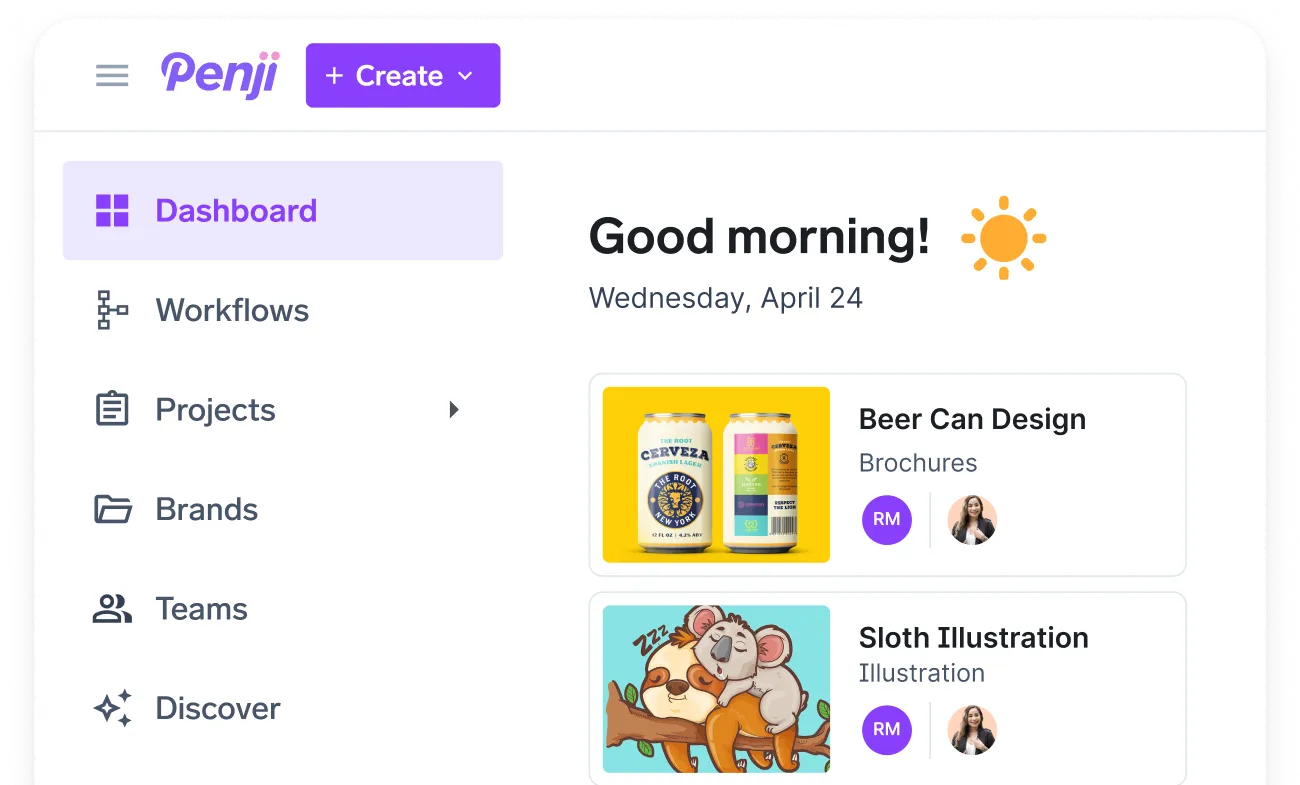
Penji’s unlimited graphic design services operate through a simple platform. Clients subscribe to a plan, submit design requests through the dashboard, and receive completed work in 24 to 48 hours. Revisions are unlimited. Brand guidelines are stored. Designer changes are available on request.
Penji only accepts the top 2% of applicants, which means the team covers everything from logo design and social media graphics to packaging, UI/UX, presentations, and motion graphics. There’s no onboarding a new freelancer every time the project type shifts.
For a direct look at how Penji’s approach compares to hiring graphic designers individually, the difference is time. The average freelance search takes days. Getting started with Penji takes minutes.
Browse the portfolio at penji.co/our-work to see what the team delivers across industries and design categories. Then visit the why Penji page for a deeper look at how the model works.
If volume and consistency are part of the design challenge, the answer probably isn’t another freelancer search.
The Smartest Way to Hire a Graphic Designer in 2026 Is Not to Hire at All
Freelancers have their place. For a single, well-scoped project with a flexible timeline, a good freelancer delivers. But for businesses that need design week in and week out, the freelance model creates overhead that adds up: time spent vetting, briefing, managing revisions, and starting over when a designer isn’t available.
Clutch’s 2026 data shows that businesses growing their design investment aren’t doing it by hiring more freelancers. They’re building systems. Penji is one of them.
See what Penji can do for your brand. Browse plans and get started today.
Frequently Asked Questions
A freelance graphic designer is an independent professional hired per project or per hour. An on-demand design service like Penji gives businesses access to a vetted design team for a flat monthly fee, with unlimited requests, unlimited revisions, and 24 to 48-hour turnarounds. The core difference is consistency. Freelancers vary in availability, quality, and familiarity with a brand. On-demand services are built around reliability.
Rates vary widely depending on experience, location, and scope. Mid-level freelancers in the U.S. typically charge $75 to $130 per hour in 2026, with senior specialists reaching $200 or more. Project-based rates range from $300 to $1,500 for a logo and $3,000 to $20,000 for a full brand identity package. Unlimited design subscriptions like Penji offer a predictable flat monthly rate that covers all design types and unlimited requests.
Look for consistency across multiple project types rather than one standout piece. A strong portfolio shows work across branding, digital, and print formats, ideally including something close to what your business actually needs. Pay attention to brand cohesion across samples and ask for results or client feedback where possible. Communication during the review process is also a reliable signal of what the working relationship will look like.
For small businesses that publish content regularly or run ongoing marketing campaigns, yes. The flat monthly rate removes the unpredictability of per-project freelance billing. Unlimited revisions reduce back-and-forth costs. And because the platform stores brand guidelines, small teams don’t spend time re-briefing designers on the basics every time a new request comes in. For businesses that need only one or two designs per year, a freelancer may make more financial sense.
About the author

Table of Contents
- What Does It Mean to Hire a Graphic Designer in 2026?
- Where Do Businesses Find Freelance Graphic Designers?
- What Factors Should You Consider Before You Hire a Graphic Designer?
- Freelance Graphic Designer vs. On-Demand Design: How Do They Compare?
- Why Is an On-Demand Graphic Design Service the Smarter Choice?
- How Does Penji Work as an On-Demand Design Service?
- The Smartest Way to Hire a Graphic Designer in 2026 Is Not to Hire at All
- Frequently Asked Questions