








TL;DR: Building a seasonal campaign kit means planning your assets early, aligning visuals across every channel, and producing consistent branded content before the deadline hits. This guide walks through each step, from the brief to launch-ready files.
A seasonal campaign kit is a collection of branded assets built around a specific time of year or promotional event.
It typically includes social media graphics, email banners, ad creatives, and landing page visuals designed to work together across channels and drive consistent brand recognition from the first impression.
Every marketer has felt it: the holidays are two weeks out, the campaign isn’t ready, and the design queue is stacked. A seasonal campaign kit solves that problem before it starts.
When assets are planned, themed, and produced in advance, launching across multiple channels becomes a matter of execution rather than emergency.
Here’s how to build one the right way.
Step 1: Start With a Campaign Brief
Before a single design gets made, get the strategy on paper. A campaign brief doesn’t have to be long, but it has to be clear. Define the following:
- Campaign theme – What season, holiday, or event are you building around?
- Primary goal – Sales, awareness, signups, engagement?
- Target audience – Who are you talking to, and where do they spend time?
- Key message – What do you want people to feel, think, or do?
- Launch date and hard deadline – Work backward from here.
Without a brief, designers guess. With one, they produce exactly what the campaign needs.
Step 2: Map Out Every Channel You’ll Use
Seasonal campaigns rarely live in one place. A single campaign might run across email, Instagram, Facebook ads, a homepage banner, and printed materials all at once. Each channel has different specs, different audiences, and different visual demands.
List every surface this campaign will touch:
- Social media posts and stories (Instagram, Facebook, LinkedIn, Pinterest)
- Paid ads (Meta, Google Display, YouTube)
- Email headers and footers
- Website banners and landing page hero images
- Print materials (flyers, posters, in-store signage)
This list becomes your asset inventory. Planning holiday ad creative alongside organic content from the start prevents the last-minute scramble of discovering a missing format the night before launch.
Step 3: Build a Visual Theme Before You Design Anything
A seasonal campaign kit only works if everything looks like it belongs together. That starts with a unified visual theme: a defined set of colors, typography, imagery style, and graphic elements that tie every asset to the same moment.
Graphic design for marketing campaigns that lack a consistent theme often look fragmented across channels, which erodes trust and reduces recall. Before production starts, lock in:
- A seasonal color palette that feels on-brand and seasonally relevant
- Typography treatment: primary font, weight, sizing
- Visual motifs: illustration style, photo treatment, pattern elements
- Brand mark usage and placement rules
A mood board is the fastest way to align everyone before a single file opens. This is also where branding services make a real difference. When your brand identity is already well-defined, the seasonal layer drops right in without conflict.
Step 4: Create Your Asset Checklist
With your channels mapped and your visual theme locked, build a production checklist. This is the backbone of your seasonal campaign kit.
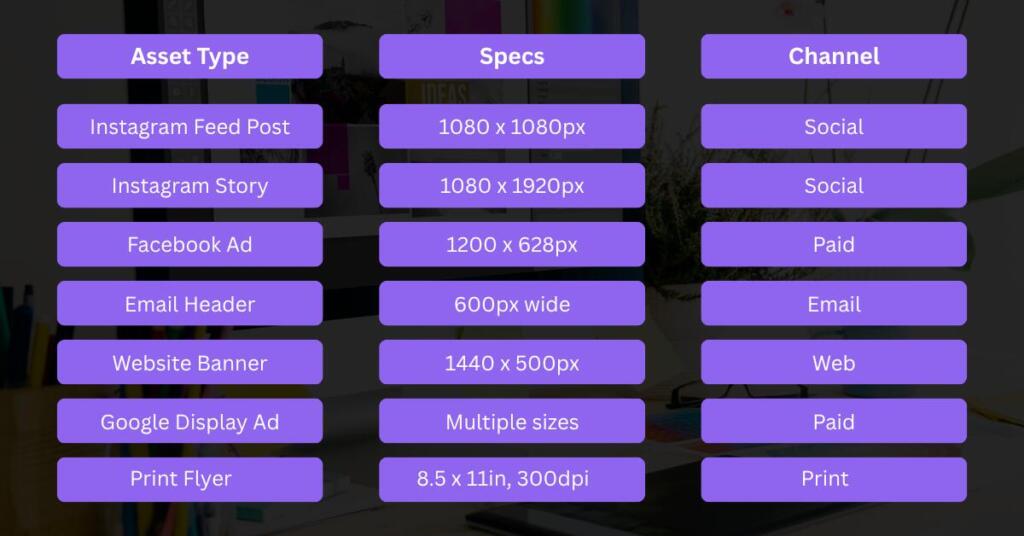
Build this list before production begins. It eliminates the common problem of discovering a missing format after the campaign has already launched.
Step 5: Produce the Assets
With the brief, channel map, visual theme, and checklist in hand, production should be straightforward. But quality execution depends on the quality of the people behind it.
Graphic design services that specialize in campaign work understand how to keep a visual system consistent across dozens of files without things drifting.
That’s harder than it sounds. An Instagram post, a display ad, and an email header all have to feel like one campaign even though they’re completely different formats.
This is where design as a service platforms like Penji change the math. Instead of briefing a freelancer under a tight timeline or overloading an in-house team, Penji’s flat-rate subscription gives businesses a dedicated design team that handles every format in parallel.
Submit the campaign brief, and production moves without a bottleneck.
According to a 2024 HubSpot report, consistent brand presentation across channels can increase revenue by up to 33%. Seasonal campaigns are one of the highest-leverage opportunities to put that into practice.
Step 6: Organize and Store Your Kit
A seasonal campaign kit is only useful if everyone can find the assets. Once production is done, organize files into a shared folder with clear naming conventions.
Recommended folder structure:
- Campaign Brief (strategy doc, mood board, brand guidelines)
- Social Media (by platform, then by size)
- Paid Ads (by platform, then by size)
- Email (header, footer, inline graphics)
- Web (banners, landing page assets)
- Print (press-ready files)
Label every file with the campaign name, asset type, size, and version number. This saves hours during approvals and makes repurposing assets next season much easier.
Step 7: Review Before You Launch
Run a final check against your original brief before anything goes live:
- Every asset is on-brand and on-theme
- All specs match platform requirements
- Copy and messaging is consistent across formats
- Files are export-ready for each channel
Catching a misaligned asset before launch is free. Fixing it after it’s live is not.
Seasonal campaigns are one of the few marketing moments where timing and presentation both matter equally. A well-built kit makes launch day feel less like a deadline and more like a release.
When everything is planned, designed, and organized before the first ad goes live, the campaign does what it’s supposed to do: connect, convert, and leave a mark.
Penji’s holiday marketing campaigns resource is a solid starting point if you want to see what a fully realized seasonal strategy looks like in action.
If the production side is what slows your team down, Penji makes it faster. A flat-rate design subscription means unlimited requests, professional output, and no scramble when the season hits.
Browse Penji’s plans and get your next seasonal campaign kit started today.
Frequently Asked Questions
How far in advance should I start building a seasonal campaign kit?
Most marketing teams benefit from starting six to eight weeks before the campaign launch date. That window allows time for strategy alignment, design production, revisions, and platform scheduling. For major holidays like Black Friday or Christmas, eight to twelve weeks is more realistic, especially if print assets with longer lead times are part of the mix.
What’s the difference between a campaign kit and a brand kit?
A brand kit defines your permanent visual identity: colors, fonts, logo variations, and usage rules. A campaign kit is built on top of that foundation for a specific moment in time. It borrows from the brand kit and adds seasonal elements, but it’s temporary. Your brand kit stays consistent year-round. The campaign kit changes with each season.
Can Penji produce a full multi-channel seasonal campaign kit?
Yes. Penji’s subscription model is well-suited to campaign kit production because you can submit multiple design requests simultaneously. Designers work from your brief to produce social graphics, paid ads, email headers, and web banners under one consistent visual direction. There’s no per-project pricing and no renegotiating scope when the asset list grows.
How do I keep seasonal campaign assets consistent across channels?
Start by locking in your visual theme before production begins. A defined color palette, typography treatment, and set of visual motifs gives every designer and every format a single reference point. Using a design partner that can handle all formats in one workflow, rather than briefing multiple vendors separately, is the most reliable way to keep everything aligned from concept through delivery.
About the author

Flore
Flore’s passionate about turning ideas into clear, useful content that connects with people and performs on search. From blog posts and landing pages to full content plans, her work is grounded in purpose and always aligned with a bigger picture.