








TL;DR: A branding guidebook documents everything that makes your brand look and sound like itself. This post breaks down seven real-world examples from major brands and explains exactly what to include when building yours.
A branding guidebook is a documented set of rules that defines how a brand looks, sounds, and presents itself across every channel and asset. It typically covers logo usage, color palettes, typography, photography direction, and tone of voice.
A strong guidebook runs between 15 and 60 pages and gives designers, marketers, and partners a single source of truth for brand decisions.
Most businesses know they need consistent branding. Not every business knows how to get there. A branding guidebook is the document that makes consistency possible at scale. Without one, every new asset becomes a guessing game. Fonts drift.
Colors get approximated. The logo shows up in three different proportions. According to a Lucidpress State of Brand Consistency Report, consistent branding can increase revenue by up to 33%.
That is not a design metric.
That is a business result.
This post covers seven real branding guidebooks from companies you know, plus a clear look at what goes into building one.
What Do the Best Branding Guidebook Examples Have in Common?
The companies with the strongest brand recognition did not get there by accident. Every one of them has a documented visual identity that gets enforced consistently across teams, vendors, and platforms. Guidebooks vary in depth, some run ten pages, others run a hundred. But the best ones share the same core: they leave no room for interpretation.
1. Ace Hardware
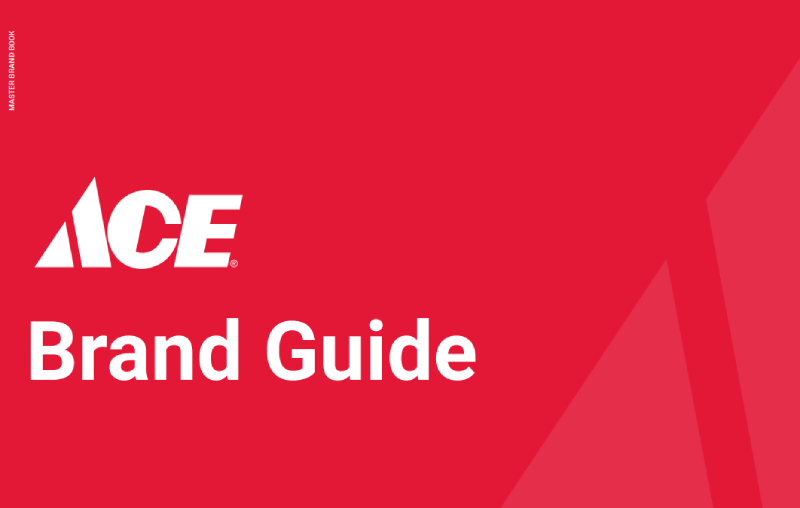
Ace Hardware’s branding guidebook covers everything from logotype variations and color application to print design, photography direction, and holiday campaign guidelines.
It reads like a production manual. The depth makes sense for a franchise with thousands of independently owned locations. If the brand looks different in every store, there is no brand.
Their approach to specifying assets by medium is worth borrowing, knowing which color treatment applies to a digital banner versus a print circular prevents a lot of expensive errors downstream.
2. Olympics
The Olympics branding guidebook has been built and rebuilt across more than a century of competition, but the challenge is unique. The organization holds major events only every four years, always in a different host city, always with new local design teams involved. Despite that, the brand stays recognizable worldwide.
Their guidebook covers logo usage, color systems, typography, graphic devices, pictograms, illustrations, photography, infographics, and composition rules.
The depth is a direct response to the scale of the problem: when your brand lives in dozens of countries simultaneously, every rule has to be explicit.
3. Hulu
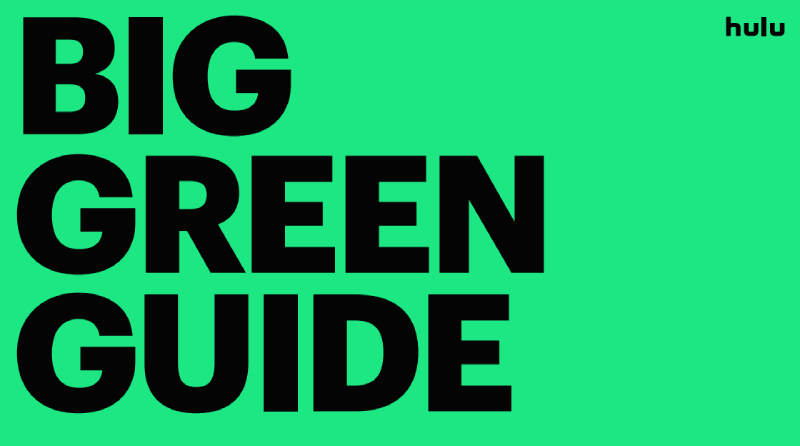
Hulu calls theirs The Big Green Guide, which tells you something useful. The name signals that the guidebook is not a legal document. It is a creative reference.
Flipping through it, the Hulu green appears on every page with purpose. Even the grid system and the branded vessel (the curved container that appears throughout Hulu’s creative) have their own usage guidelines.
It is an example of a company that took a single color and built an entire visual language from it. For brands that rely heavily on one signature color, this is a useful model to study.
4. Bolt

Bolt’s guidebook is minimal by design. The lightning bolt motif appears in the logo, in page layouts, and as a compositional device throughout the guide itself. The color story is simple: neon yellow-green on dark backgrounds.
The brand standards focus on logo, color, and typography and little else. That restraint is the point. Not every brand needs a 60-page document. A tight, well-enforced set of core rules beats a sprawling guidebook that nobody follows.
For startups and small businesses building their first brand system, Bolt’s approach proves that simple and consistent beats complex and ignored.
5. Freepik

Freepik’s guidebook works like a brand presentation. It opens with a company overview, introduces the sub-brands in the group, and establishes the brand personality before getting into the visual system.
The customer journey section is a less common addition that helps internal teams understand why design decisions were made, not just what those decisions are. It covers logo, color, typography, photography, iconography, illustrations, and expressions.
The inclusion of brand personality context makes this a useful reference for anyone who writes or speaks on behalf of the brand, not just designers.
6. Evernote
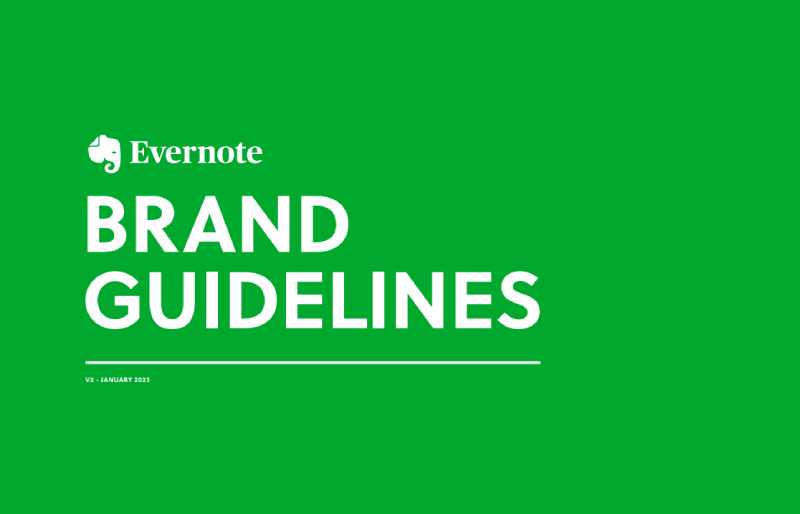
Evernote’s brand guidelines include a few sections that most guidebooks skip: motion, art direction, and type as art. That breadth reflects a brand that shows up across multiple surfaces, mobile apps, web, marketing, partnerships, and physical products.
The multiple examples showing how the brand applies in real assets are particularly useful. Seeing the brand in context, not just as rules on a page, closes the gap between guidelines and execution. There is also a clear contact process for partners who have questions.
That kind of accessibility signals a brand that takes consistency seriously across its entire ecosystem.
7. Reddit
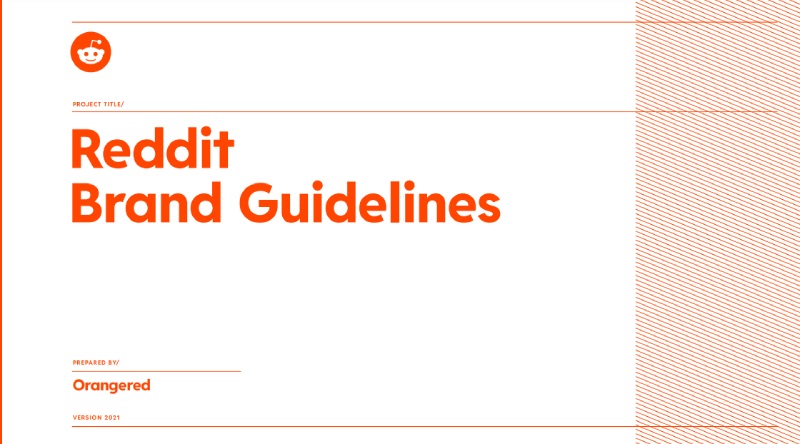
Reddit’s guidebook leans into the orange-red palette that anyone who has used the platform will immediately recognize. Beyond the standard visual elements, it includes brand terminology, guidelines for displaying user content, and terms of use for how Reddit’s identity can be used by external parties.
That last section is more than legal protection. It reflects a brand that understands the difference between how it presents itself and how others present it on their behalf.
For any brand with a public-facing community or third-party partner ecosystem, Reddit’s approach to governing external brand usage is worth adapting.
How Do You Make a Branding Guidebook?
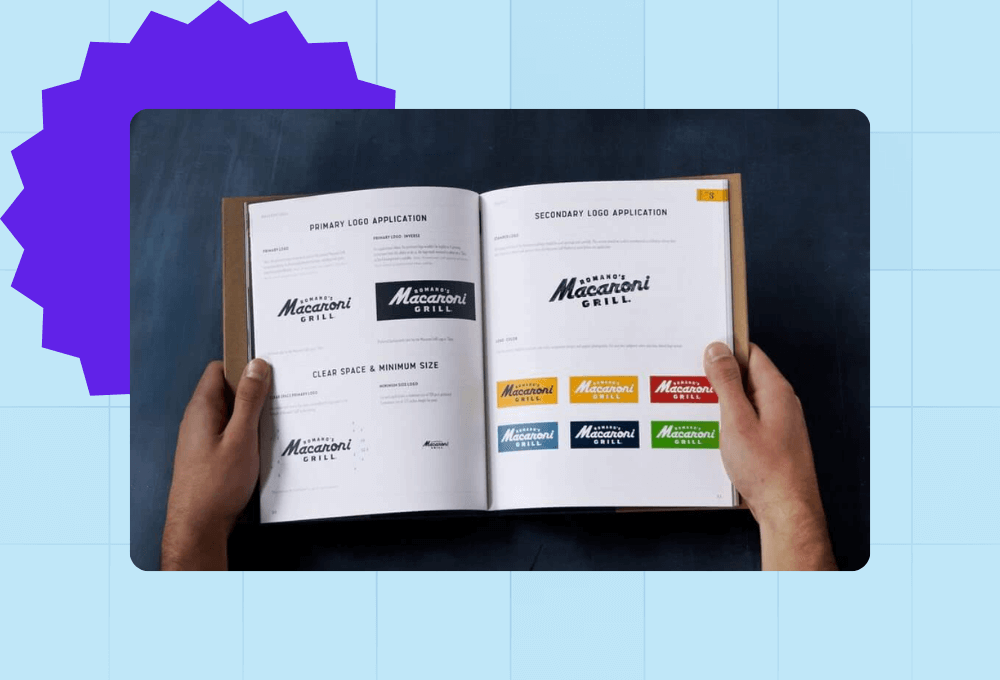
Building a branding guidebook starts before any software gets opened.
The first step is gathering all existing brand elements: logo files and usage rules, the full color system with hex and Pantone values, typography selections, photography direction, icon or illustration libraries if applicable, and any copy style guidelines covering tone and word choice. Getting these organized into a logical structure is the second step.
Most guidebooks open with the logo section after a title page and table of contents, then move through color and typography, then on to applications and photography. The sequence should match the way someone would actually use the guide.
Once the structure is mapped, a graphic design service or visual design tool gets used to bring it together. Templates exist in most major design platforms and can save significant time.
The practical challenge for most businesses is that creating a polished, publish-ready guidebook requires design skills that go well beyond standard marketing tasks.
That is where branding services become genuinely useful.
Penji handles brand style guide creation as part of its subscription design service. Designers work from your existing assets or build the visual system from the ground up, depending on what the project requires.
There is no hourly rate, no back-and-forth over scope, and no waiting on a freelancer to come back online.
The request goes in, a designer picks it up, and revisions keep coming until it is right. For businesses that need brand design services without the overhead of an agency engagement, that model is a practical fit.
See what Penji can do for your brand. Browse plans and get started today.
Frequently Asked Questions
What is a branding guidebook?
A branding guidebook is a documented reference that defines how a brand looks and communicates across all of its materials and channels. It covers visual elements like logos, colors, and typography, as well as tone of voice and photography direction. Its purpose is to make sure every piece of content, regardless of who creates it, looks and sounds like it came from the same source.
How long should a branding guidebook be?
There is no fixed length. A small business with a focused visual identity can get by with 10 to 15 pages. A company with multiple sub-brands, international markets, or large partner networks may need 50 pages or more. The goal is not length. The goal is clarity. Every rule in the guidebook should leave no room for guesswork.
Do small businesses need a branding guidebook?
Yes. Small businesses often assume guidelines are only for large organizations with big teams, but consistency matters at any size. Without documented standards, even a two-person marketing operation produces inconsistent assets over time. A simple guidebook covering logo usage, colors, and typography is enough to establish a coherent visual identity and save significant time on every future design project.
Can Penji create a branding guidebook for my business?
Penji creates brand style guides as part of its unlimited design subscription. Subscribers can request a brand guidebook the same way they would request any other design deliverable. Designers work with the assets and brand inputs provided and produce a polished, production-ready document built to the brand’s specific needs.
About the author

Katrina Pascual
Katrina is a content writer specializing in graphic design, marketing, social media, and technology. In her spare time, she writes monthly personal blogs to practice her craft.