








TL;DR: The future of creative design services isn’t fully automated or fully human. Hybrid models combine both, giving businesses the consistency of a subscription with the quality of a real designer on every project.
What Is a Hybrid Creative Design Service Model?
The idea is more straightforward than the name suggests. A hybrid model combines a software platform with a real human service layer.
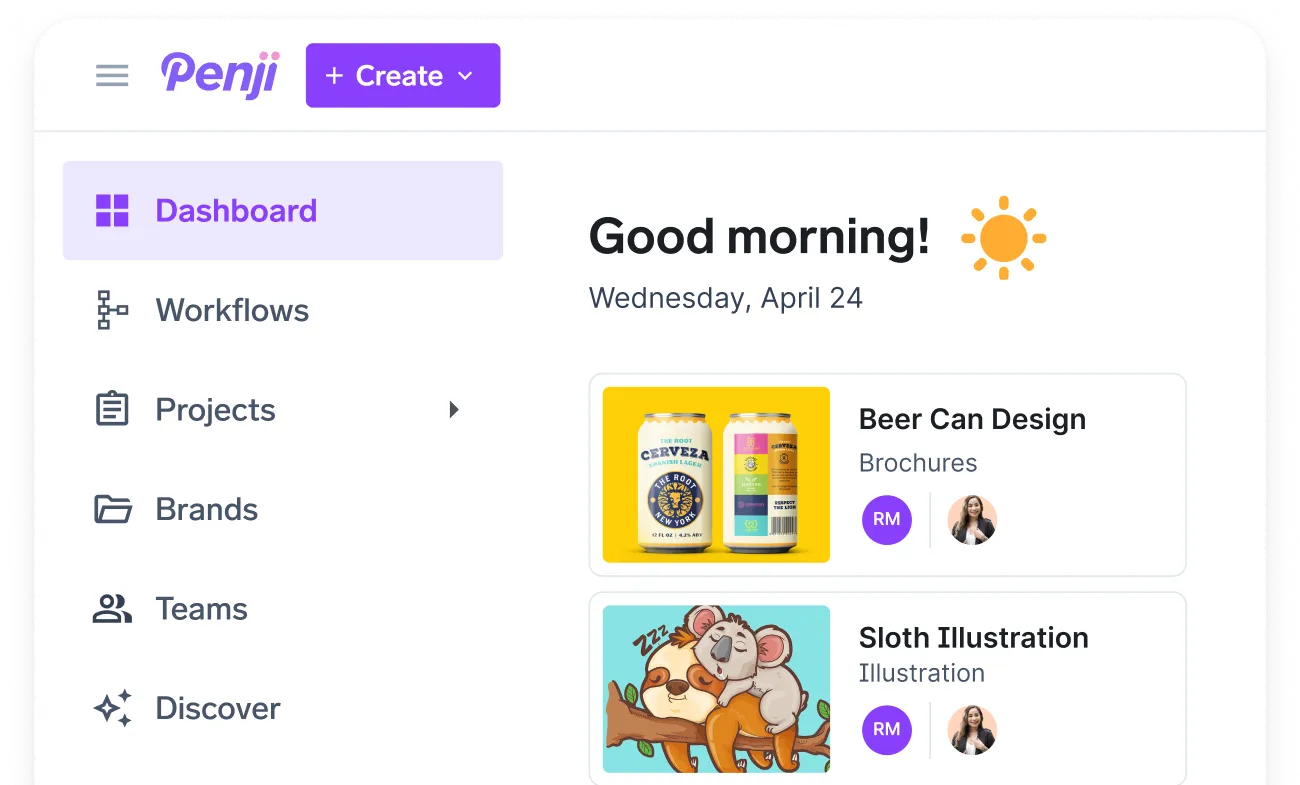
On the platform side: a dashboard, a request queue, a revision system, and file storage.
On the service side: a designer, sometimes a dedicated one, handling every brief that comes through.
There’s no back-and-forth over proposals. No per-project invoices. A business pays a flat monthly fee and submits requests as they come up.
Penji is one of the clearest examples of this approach working at scale. Businesses submit unlimited design requests through Penji’s platform, get matched with a professional designer, and receive production-ready files without managing a hiring process or a freelancer relationship.
The creative graphic design services Penji provides span social media graphics, brand assets, ads, presentations, and more, all routed through one organized dashboard.
What Does a Hybrid Creative Service Model Look Like?
The idea is more straightforward than the name suggests. A hybrid model combines a software platform with a real human service layer.
On the platform side: a dashboard, a request queue, a revision system, and file storage. On the service side: a designer, sometimes a dedicated one, handling every brief that comes through.
Graphic design services delivered this way look different from a typical agency engagement. There’s no back-and-forth over proposals.
No per-project invoices.
A business pays a flat monthly fee and submits requests as they come up.
Penji is one of the clearest examples of this approach working at scale. Businesses submit unlimited design requests through Penji’s platform, get matched with a professional designer, and receive production-ready files without managing a hiring process or a freelancer relationship.
The creative graphic design services Penji provides span social media graphics, brand assets, ads, presentations, and more, all routed through one organized dashboard.
Why Are Businesses Moving Away from Traditional Agency Models?
The agency model has one persistent problem: it was built for a world where brands needed fewer, larger creative projects.
A marketing director at a mid-size e-commerce brand described it well, she was paying a boutique agency a monthly retainer but still had to submit a new scope every time her team needed a banner ad.
Three approvals and two weeks later, she had one asset. Her social calendar needed twelve. That math doesn’t work.
Most businesses today need steady volume, not one-off projects. The design as a service market reflects that shift.
According to Grand View Research, the global graphic design market was valued at over $52 billion in 2024 and is projected to reach nearly $70 billion by 2030.
That growth isn’t coming from big agency retainers. It’s coming from brands that need consistent output and are looking for more efficient ways to get it.
A flat monthly rate with unlimited requests answers that need directly. No contracts to renegotiate. No invoices to approve. The design as a service model handles the workflow so the business keeps moving.
What Role Does AI Play in Hybrid Creative Services?
AI tools have become genuinely useful in the design process. They can generate layout options, adapt formats across sizes, and speed up early-stage work.
But the most effective platforms aren’t trying to use AI to replace the designer.
Generative design services work best when AI handles the repetitive parts and a human makes the actual creative decisions, selecting the right typeface for a brand, adjusting a composition so it works across print and mobile, making the visual calls that give a campaign its coherence.
Those decisions still require human judgment. An algorithm can resize an asset. It can’t tell you whether the color choice is undermining the brand.
Penji’s platform reflects that balance. AI supports the operational side while designers focus on the work that requires real creative skill.
Clients get faster turnarounds without trading away the quality that comes from working with a professional.
Penji’s page on how AI is changing the future of graphic design goes deeper on where that line sits.
How Does the Platform Side of the Model Improve Creative Output?
When requests live in a structured dashboard instead of an email thread, revisions don’t get lost. When file versions are tracked automatically, teams aren’t hunting for the latest asset in a chain of forwarded messages.
When communication is centralized, designers and clients stay aligned without weekly check-in calls.
Good platform infrastructure takes a lot of the coordination burden out of a creative relationship. A lot of the delay in traditional design work isn’t about the design itself.
It’s about the back-and-forth around it. The platform eliminates that problem before it starts.
Penji’s dashboard gives clients a clear view of every active request, where it stands, and what’s coming back.
For marketing teams and brand managers trying to plan ahead rather than react, that visibility changes how the whole creative operation runs.
That’s part of what makes creative operations worth understanding as a discipline, not just a workflow preference.
Is a Hybrid Model the Right Fit for Every Business?
A solo founder building a brand from scratch has different needs than a marketing team producing content across five channels every week.
Part of what makes the hybrid model worth looking at is that it’s built for scale but works at different volumes.
The graphic design service model fits best when a business needs consistent output, wants predictable costs, and doesn’t have the bandwidth to manage a freelance roster or an agency relationship. For businesses at that stage, the alternative isn’t cheaper.
It’s just slower and harder to manage.
Penji offers plans at different price points, designed to match where a business actually is. Browse Penji’s unlimited graphic design services to see how the tiers break down.
What’s Next for Creative Design Subscription Services?
The subscription model in creative services is still relatively young. Most of the growth in this space has happened in the last few years, and the companies that built early are now expanding into video, motion graphics, and more complex deliverables.
More services, more formats, better tools, same flat-rate structure.
Creative design subscription platforms are beginning to look less like a single service and more like a full creative operations layer for growing businesses.
Brands that adopted this model early have already seen the operational benefits. Those still evaluating it are watching competitors move faster with fewer resources.
Penji has been part of this shift from the beginning and continues to expand the services available to subscribers. Whether a brand needs brand assets, ad creative, or anything in between, the platform is built to keep up with how businesses actually work today.
See what Penji can do for your brand and get started.
Frequently Asked Questions
A hybrid creative service model combines a software platform with a human designer. Clients submit requests through a dashboard and a professional handles the actual work. The platform manages logistics, revisions, and file delivery. It sits between a traditional agency and a DIY tool, offering professional output at a predictable monthly cost.
With a freelance designer, each project has its own scope, timeline, and invoice. Costs are unpredictable, and output can slow down when the designer is unavailable or overbooked. A design subscription operates on a flat monthly fee, giving businesses consistent access to a professional without the overhead of managing a contractor relationship. The platform handles coordination so the team can focus on the work itself.
AI tools are useful for speeding up specific parts of the process, including generating layout options and adapting formats. But creative decisions, brand alignment, and the judgment required to produce work that connects with an audience still require a human designer. The most effective platforms use AI for the repetitive tasks and keep designers focused on the work that requires real creative skill.
Businesses that need consistent output across social media, advertising, branding, and marketing materials tend to see the most value. This includes small to mid-size businesses, marketing teams at growing companies, e-commerce operators, and content creators who need professional graphics regularly and don’t have the budget for an in-house designer or an agency retainer.
About the author

Flore
Flore’s passionate about turning ideas into clear, useful content that connects with people and performs on search. From blog posts and landing pages to full content plans, her work is grounded in purpose and always aligned with a bigger picture.