








TL;DR: Growing teams spend more time managing design than they should. Penji’s on demand graphic design model gives them a dedicated designer, fast turnarounds, and a workflow that doesn’t require a creative director to babysit every request.
Penji is a flat-rate graphic design service that gives growing teams a dedicated designer, an organized request system, and consistent output without the overhead of hiring in-house or the unpredictability of freelancers.
Most growing teams don’t have a design problem. They have a process problem. The briefs go out. The follow-ups pile up. The revision thread turns into a group chat. By the time the final file lands, the campaign window has already tightened.
Penji’s graphic design services were built for exactly that situation teams that need real creative output without someone full-time managing the pipeline.
How Does Penji Keep Design Requests From Falling Through the Cracks?
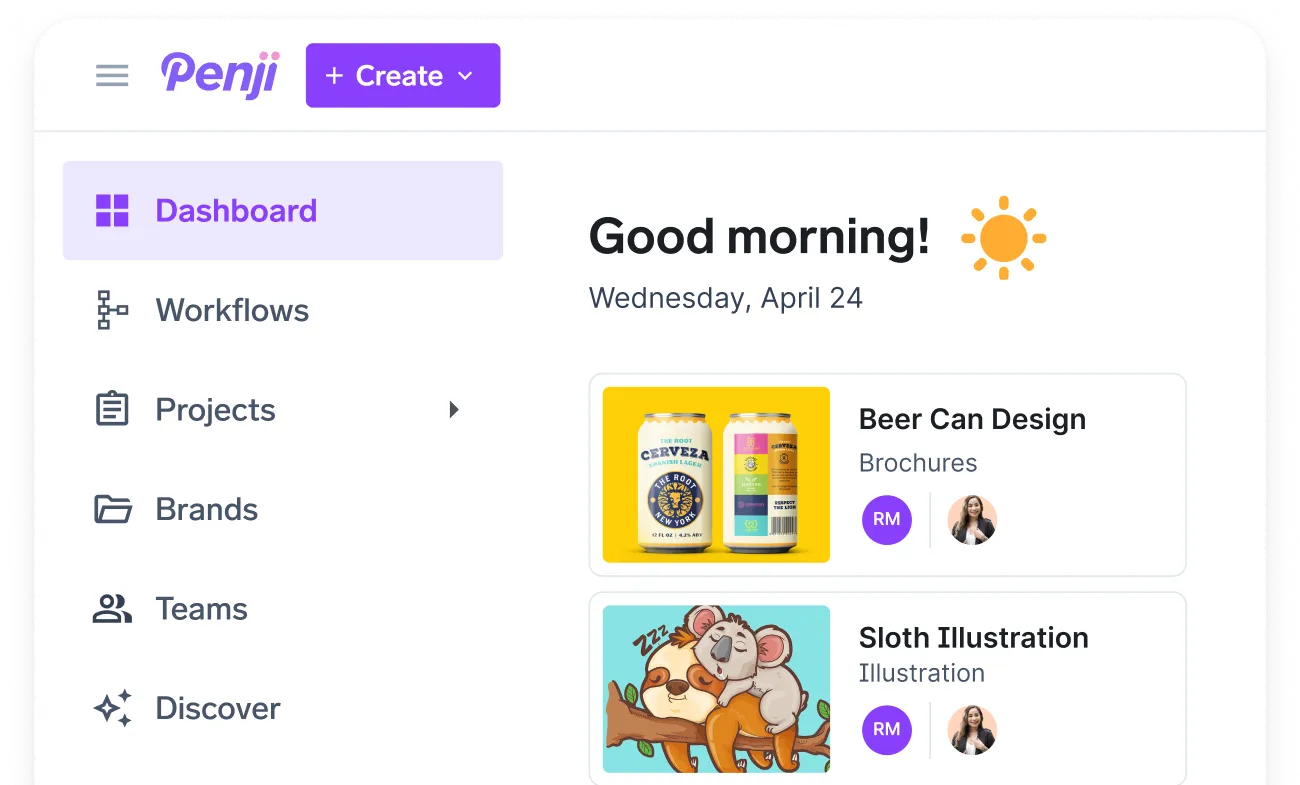
Every request goes through Penji’s project management dashboard, where teams submit briefs, leave feedback directly on designs, and track revision status in one place.
There’s no email chain to dig through, no Slack thread to scroll back, and no wondering whether the designer saw the update.
One founder who switched from a freelance setup said the thing that surprised her most wasn’t the speed, it was that she stopped thinking about design logistics entirely.
That kind of on demand graphic design workflow matters most when a team is scaling fast. When headcount doubles and the content calendar fills up, a disorganized design process becomes a real bottleneck.
Penji’s system keeps the queue visible and the output moving.
What Does Penji’s Flat-Rate Model Cover?
A subscription to Penji covers a wide range of custom graphic design services, social media graphics, presentations, ads, branding assets, print materials, and more.
The flat monthly rate means teams can submit multiple requests at once without watching a project budget tick up.
There’s no per-asset invoice, no scope negotiation, and no separate quote for a last-minute request.
For growing teams juggling product launches, events, and ongoing content, that predictability is genuinely useful.
According to a Clutch survey, 74% of small businesses cite cost uncertainty as one of their top concerns when working with external creative vendors. A fixed rate removes that variable entirely.
Is Penji a Better Fit Than Hiring an In-House Designer?
For most growing teams, the comparison isn’t really about quality, it’s about flexibility. A full-time designer costs north of $60,000 annually before benefits, and their bandwidth maxes out fast when requests spike.
Design as a service through Penji gives teams access to a dedicated designer without the fixed cost, and the ability to scale requests up or down as workloads shift.
It’s not a replacement for every in-house creative situation. A team building a highly specific brand language with complex motion work will eventually need someone embedded.
But for the majority of growing businesses running consistent design needs across marketing and operations, Penji handles the volume without the overhead.
See Penji’s work samples to get a clearer sense of the output.
Why Do Growing Teams Specifically Benefit From Penji?
The short answer: growing teams have inconsistent design volume. Some weeks it’s two requests. Others it’s twelve. Hiring for the spike is expensive. Absorbing the slack is wasteful. Penji’s model fits that variability without penalizing either end.
Penji for growing businesses was built with that pattern in mind teams that need creative support that can flex with them, not a retainer that assumes a steady state.
There’s also the onboarding factor. A new in-house hire takes weeks to get up to speed on brand guidelines, tools, and preferences.
With Penji, the designer assigned to the account builds that context over time as part of the ongoing subscription. The longer the relationship, the faster the turnaround gets.
Growing teams get more done when design isn’t a negotiation. Penji’s request-based system, flat pricing, and dedicated designer model take the management work out of the creative process which is usually where the hours actually go.
Start with Penji and see what the first week looks like without the back-and-forth.
Ready to take design off your to-do list? Explore Penji’s plans and find the right fit for your team’s workload.
Frequently Asked Questions
How fast does Penji deliver designs?
Most requests are delivered within one to two business days, depending on complexity. Teams with active subscriptions can submit multiple requests at once, and Penji works through the queue in priority order. Rush timelines are handled through the same dashboard with a flagged priority status.
Can growing teams use Penji for ongoing brand work?
Yes, and that’s where the dedicated designer model becomes most useful. Over time, the assigned designer builds familiarity with brand guidelines, tone, and preferences, which means less briefing on every individual request and faster output as the relationship develops.
What happens if a team needs more design capacity as it scales?
Penji offers multiple subscription tiers, so teams that outgrow their current plan can upgrade without switching services or onboarding a new vendor. The transition is handled inside the same platform the team is already using.
About the author

Flore
Flore’s passionate about turning ideas into clear, useful content that connects with people and performs on search. From blog posts and landing pages to full content plans, her work is grounded in purpose and always aligned with a bigger picture.