









TL;DR
- Creative Design as a Service (CaaS) gives you on-demand access to professional designers through a flat-rate subscription.
- Benefits include high speed, easy scalability, predictable costs, and access to diverse creative skills.
- Typical outputs cover everything from logos and branding to UI/UX prototypes and motion graphics.
- Future trends for 2026 highlight AI automation, SaaS integrations, and global talent pools.
Strong UI/UX design can increase site conversion rates by up to 200%. That staggering statistic from Forrester proves that high-quality visuals are essential for business success. But getting those pictures quickly and cheaply is often a big problem.
You need a dependable way to make marketing materials, social media posts, and branding materials.
It takes time and costs money to hire a full-time designer. Traditional agencies tend to move slowly and charge a lot of money. This is where creative design services come in to help your business with all of its graphic design needs.
These new solutions make it easy to get the exact assets you need when you need them. They have a flexible way of making content that works with your campaign schedules.
Let’s look at exactly how this model works and why it might be the perfect fit for your upcoming projects.
What exactly is Creative Design as a Service?
Creative Design as a Service (CaaS) is a managed model that gives you on-demand access to professional design resources. You usually pay a flat monthly or annual fee.You get a creative team that is always ready to help you with your needs in return.
This model is very flexible. You can ask for different kinds of assets without having to sign new contracts. It provides the speed of an in-house team with the diverse skills of an agency. Graphic design services like this allow you to scale your creative output without the traditional hiring headaches.
Understanding this core concept makes it easy to see why so many marketing teams are making the switch.
Why are businesses switching to on-demand models?
Several market drivers are pushing companies toward these flexible solutions. Digital acceleration means you need rapid creative output for campaigns, websites, and social media. You simply cannot afford long review cycles.
Cost pressures also play a huge role. An on-demand model helps you avoid the high overhead of permanent hires. You also skip the expensive retainers of traditional agencies. Scalability is another major factor. You can easily ramp up your design requests during busy seasons and scale back when things slow down. Finally, this model solves frustrating creative bottlenecks caused by limited freelancer availability.
Knowing these market drivers helps you choose the specific service structure that fits your budget.
How do the different service models work?
Providers offer a few different ways to access their talent. The most popular option is the subscription-based model. You pay a flat rate for an unlimited graphic design subscription, allowing you to submit constant requests.
Another option is the on-demand project model. This works well if you only need pay-per-project assistance or prefer a traditional retainer. Finally, hybrid models mix a standard subscription with add-on services. You might pay a base fee for standard graphics, then add extra credits for complex UX work or copywriting.
Once you pick a model, you will want to know exactly what kind of work you can request.
What deliverables can you expect?
A major advantage of using creative design services is the wide variety of deliverables. You get access to a full spectrum of creative skills in one place.
Typical deliverables include:
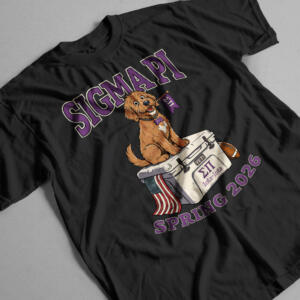
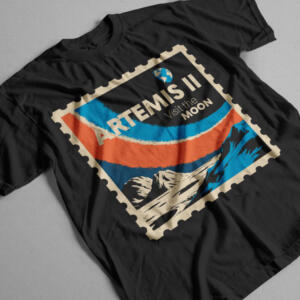
- Graphic design: Logos, branding, social media assets, and custom illustrations.
- Web & UX design: Wireframes, interactive prototypes, and landing pages.
- Marketing collateral: Digital ads, pitch deck presentations, and infographics.
- Motion & video design: Explainer videos, short animations, and social reels.
- Content design: E-learning modules and interactive product demos.
Having access to all these deliverables brings significant advantages to your marketing campaigns.
What are the main benefits for your team?
An unlimited design service changes the way your team works. Some of the main benefits are:
- Speed: Get your graphics faster than with most traditional agencies, with most standard graphics delivered in 24 to 48 hours.
- Cost-Effectiveness: Know exactly how much you’ll pay with no extra fees.
- Immediate Expertise: Get a wide range of skills without having to wait long to hire someone.
- Brand Consistency: A centralised creative team can make sure that your brand is always in line with all of your channels.
While the benefits are clear, it is also important to be aware of potential roadblocks.
Are there any challenges or risks involved?

There are some problems with this model, but no solution is perfect. Sometimes, quality control can be a problem. If the provider doesn’t really get your brand identity, there’s a chance that the outputs will be generic.
It can also take some work to integrate.You have to align external creatives with your internal workflows and communication styles. There is also a risk of dependency. Relying entirely on a single provider might limit your flexibility if their service quality drops. Finally, basic subscription tiers may restrict your scope, limiting your access to complex video or motion graphics.
Understanding these risks helps you navigate the market and find the right partner.
Who are the key players in the competitive landscape?
The market is filled with various providers offering Graphic design services. Some focus strictly on basic digital assets for startups. Others act as fully stacked agency alternatives for large enterprise teams.
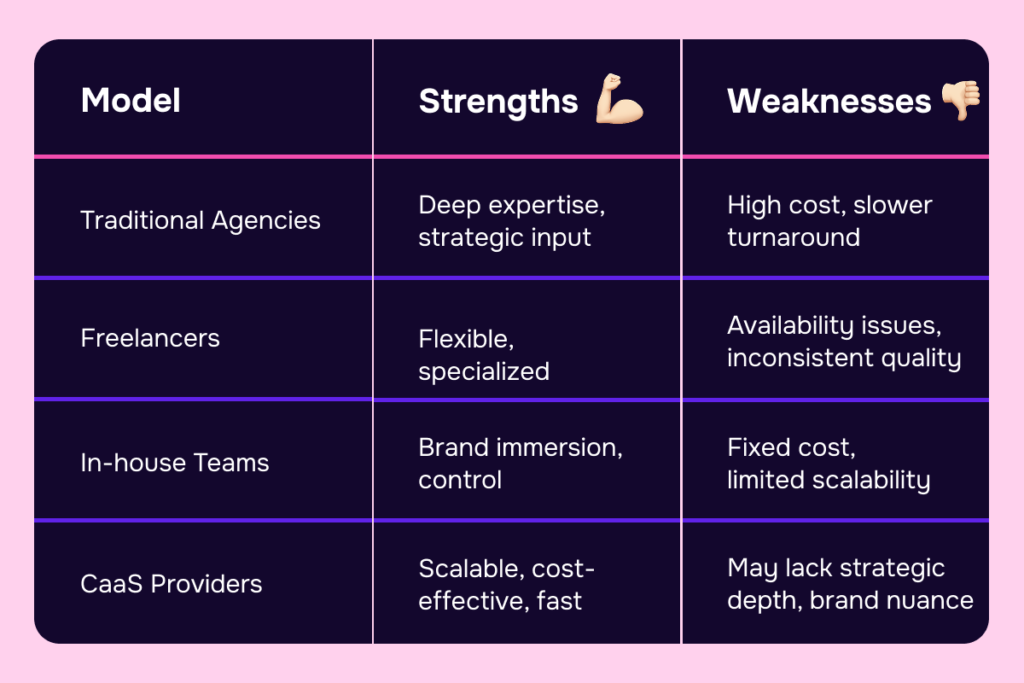
Once you select a provider, you need a solid plan to integrate them into your daily operations.
How can you successfully adopt these services?
To get the most out of Creative as a service, you need a clear adoption strategy. Start by defining your scope. Know exactly what creative outputs you need most before you sign up.
Next, evaluate your providers carefully. Compare their pricing, average turnaround times, and portfolio quality.
Follow these best practices to ensure success:
- Integrate workflows: Use project management tools for seamless daily collaboration.
- Maintain brand guidelines: Provide extremely clear documentation to ensure visual consistency.
- Pilot projects: Test the team with a few small deliverables before scaling up to massive campaigns.
- Provide clear feedback: Give actionable revisions so the designers learn your preferences faster.
Mastering these daily practices prepares your team for the next wave of industry innovations.
What future trends will shape design in 2026?
The design industry is moving fast. By 2026, you can expect to see several major trends:
- AI-powered automation: Tools will handle repetitive tasks like resizing images, freeing up human designers to focus on high-level strategy.
- Personalization at scale: Teams will use automated templates to create tailored creative assets for specific audience micro-segments.
- More integration with SaaS: Your design platforms will connect directly to your CRM and marketing analytics tools, which will make your work easier.
- Globalised talent pools: Companies will be able to get creative ideas from people all over the world.
These trends show how popular an unlimited graphic design subscription will be.
Ready to scale your creative output?
It doesn’t have to be stressful to deal with a lot of visual content. By leveraging a flat-rate subscription, you can eliminate bottlenecks, reduce costs, and keep your brand looking sharp across every single channel.
You get the benefits of a full creative team without the massive overhead. Stop settling for slow turnaround times and unpredictable agency fees.
Sign up to Penji today and see how creative design services can completely transform your marketing workflow.
Get a design package with unlimited graphic design
Try Penji risk-free for 30 days and get all your design projects done



Frequently Asked Questions
Agencies do big campaigns and give strategic advice, but they usually cost more and take longer. Cost, speed, and scalability are very important to CaaS providers. Thanks to very efficient workflows, they send design assets right away.
Startups that need cheap design help, marketing teams that have a lot of work to do, companies that want to add to their in-house teams, and agencies that need to hire extra help all benefit greatly.
Providers assign dedicated designers or teams to your account. They use the brand guidelines you provide and employ project management tools to ensure consistency. Many also offer unlimited revisions.
Not entirely. This model is best for production-heavy tasks and scaling output. In-house teams are still very useful for getting to know a brand inside and out, making high-level plans, and working together across departments.
Some subscription tiers may limit what you can do (for example, basic plans don’t let you edit videos). Providers may not know as much about the brand as an in-house employee does. Too much reliance on one provider can also lead to dependency risks.
About the author

Je Ann Bacalso
Je Ann is a creative content writer who crafts engaging, SEO-friendly articles and web copy. With a passion for storytelling and a sharp eye for detail, she delivers clear, compelling content that connects with readers.
Table of Contents
- What exactly is Creative Design as a Service?
- Why are businesses switching to on-demand models?
- How do the different service models work?
- What deliverables can you expect?
- What are the main benefits for your team?
- Are there any challenges or risks involved?
- Who are the key players in the competitive landscape?
- How can you successfully adopt these services?
- What future trends will shape design in 2026?
- Ready to scale your creative output?
- Frequently Asked Questions