









TL;DR:
- Quality of creative drives campaign performance. Wasted ad spend from poor design.
- Traditional agencies have deep strategy but are not quick enough to execute on a daily basis.
- Subscription-based design-as-a-service models deliver predictable costs and unlimited output.
- At the end of the day, it’s about your volume. High-volume teams need fast, reliable systems over high-priced retainers.
Your growth targets are locked. Now you just need the marketing assets to hit them.
Finding the right creative design agency dictates whether you launch your campaigns on time or miss your window entirely. After all, great creativity improves your click-through rates. It spikes your conversions. It builds immediate trust with your audience.
According to Shutterstock’s 2025 Creative Impact Report, global ad spend jumped 33% over the last year. Yet marketing impact dropped nearly 20%. The reason is simple: brands are paying more for ads with mediocre creative that fail to connect.
The point is, you need better assets, produced faster, without blowing your entire budget on bloated retainers. The real challenge is finding a model that matches how your team actually works. Before you sign a long-term contract, it pays to understand exactly what you are buying.
What exactly is a creative design agency?

A creative design agency sits at the intersection of branding, design, and marketing execution. In short, it acts as your service partner. It plans, creates, and manages the visual assets you need to compete.
Typically, traditional firms offer a wide range of creative design services. Brand strategy. Logo systems. Website design. Packaging. Pitch decks. Social media graphics. Some agencies focus strictly on high-level brand identity. They charge premium fees for workshops and strategy decks. In contrast, others focus on execution. They build the daily assets growing businesses need to feed their marketing channels.
Understanding this split dictates your next move. Specifically, do you need a ground-up rebrand, or do you just need a reliable machine to produce your daily creative? Knowing the difference reveals exactly why companies start looking for outside help in the first place.
Why do growing businesses outsource design?

Eventually, marketing teams hit a breaking point. Your brand looks inconsistent across different channels. Your internal team is overloaded with minor requests. Freelancers prove too unreliable to manage at scale.
When your campaign creative slows down your product launches, you lose money. You need expert design support, but you do not want the overhead of hiring a full-time design department.
Data proves this point. Strong creative drives campaign performance, acting as the primary lever for improving conversion rates. For example, a mediocre ad with great targeting still fails.
A great ad with average targeting, however, still pulls revenue.
Ultimately, you need high-quality output to stay competitive. The question is how to evaluate the partners competing for your budget.
How do you choose the right design partner?

Choosing the right partner requires matching their delivery model to your workflow. Follow a specific evaluation process to eliminate the wrong choices early.
Step 1: Define the real operational problem
First, start with the workflow. Do you need a one-time rebrand and daily ad creatives? Do you need a faster way to request and revise landing pages? A SaaS startup, for instance, needs entirely different assets than a retail brand.
Step 2: Check their operating model
Next, look at the logistics. Great portfolio work means nothing if the agency delivers it too slowly. Look at turnaround times. Look at the revision policy. Determine if you get a dedicated designer or a random pool of freelancers. Traditional agencies take weeks to deliver simple updates, whereas fast-moving teams need assets in days.
Step 3: Review proof of performance
A portfolio must answer whether the work solved a business problem. Therefore, look for industry relevance. Check for consistency across multi-channel campaigns. Demand to see examples of SaaS landing pages or B2B pitch decks if that is what you need.
Step 4: Demand cost predictability
Finally, focus on the finances. Cost uncertainty kills marketing budgets. Traditional agencies charge by the hour or limit your scope. Consequently, when priorities change, fees spike. Predictable pricing, on the other hand, protects your margins.
This focus on cost predictability naturally leads to the biggest shift in the creative industry today: the move away from traditional retainers.
Traditional agencies or subscription models?
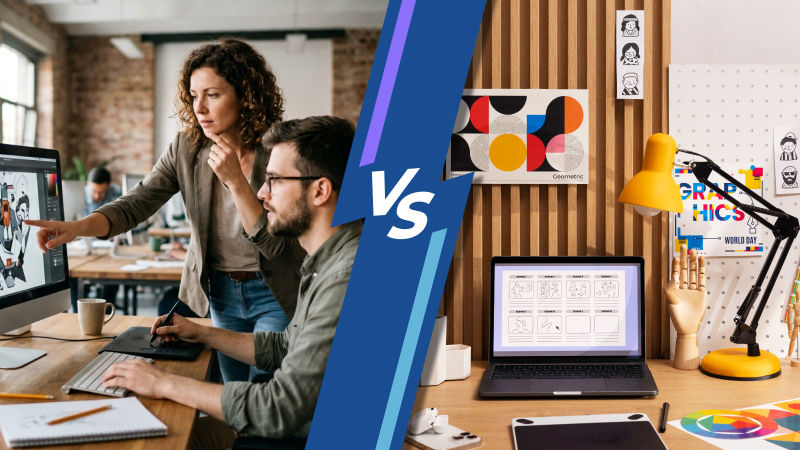
You need to know which model carries the least risk for your team. Traditional agencies and subscription services operate on entirely different financial structures.
| Feature | Traditional Agencies | Subscription Services |
| Pricing Model | Hourly rates or project-based, often unpredictable | Flat subscription fee with unlimited design requests |
| Cost Predictability | Low fees can spike based on scope changes or tight deadlines | High, consistent, predictable costs |
| Turnaround Time | Variable – dependent on agency bandwidth | Fast – guaranteed quick delivery with dedicated teams |
| Scalability | Limited—adding projects usually increases costs | High—easily scale design output without extra expense |
| Brand Consistency | Varies based on designer familiarity with your brand | Strong – dedicated designers aligned with your guidelines |
| Team Integration | Limited – external teams with less collaboration | Seamless – feels like an extension of your team |
| Risk | High-potential delays, budget overruns | Low – reliable output with predictable timelines |
| Flexibility | Low-scope changes often lead to renegotiations | Highly adaptable requests easily within the subscription plan |
But your specific industry ultimately dictates which asset types matter most.
How does your industry change the requirements?
Ultimately, the definition of good design changes based on your market. Your sector dictates your volume, your speed, and your asset mix.
SaaS and B2B
For instance, SaaS conversion rates are notoriously brutal. According to Unbounce’s data from late 2024, the average SaaS landing page only converts 3.8% of the time. So you need volume to be able to test what works. Teams need product visuals, sales decks, webinar graphics, and display advertising. A subscription process supports this rapid testing.
Ecommerce and Retail
Similarly, e-commerce demands constant output. Promo banners. Product launch creatives. Email graphics. Social ads. Here, volume and seasonal speed dictate revenue. If you launch campaigns weekly, project scoping slows you down. Instead, you need an always-on design pipeline.
Agencies
Meanwhile, growth consultancies use design partners for overflow capacity. In this case, you need white-label support. You need predictable turnaround times. You need clean handoffs.
Regulated Industries
Finally, industries like healthcare and finance require strict compliance. They also process discipline matters just as much as aesthetics. As a result, you need documented approval workflows and fast revision cycles to satisfy legal reviews. Understanding these industry nuances leads directly to the specific questions buyers ask right before they make a decision.
Ready to upgrade your creative output?
A creative design agency acts as either a massive growth lever or a frustrating bottleneck. The difference comes down to your operational fit.
Essentially, you need to match your volume of work against the friction your team tolerates. If you require consistent, high-quality creativity without the stop-start cycle of project scoping, then you need a new model.
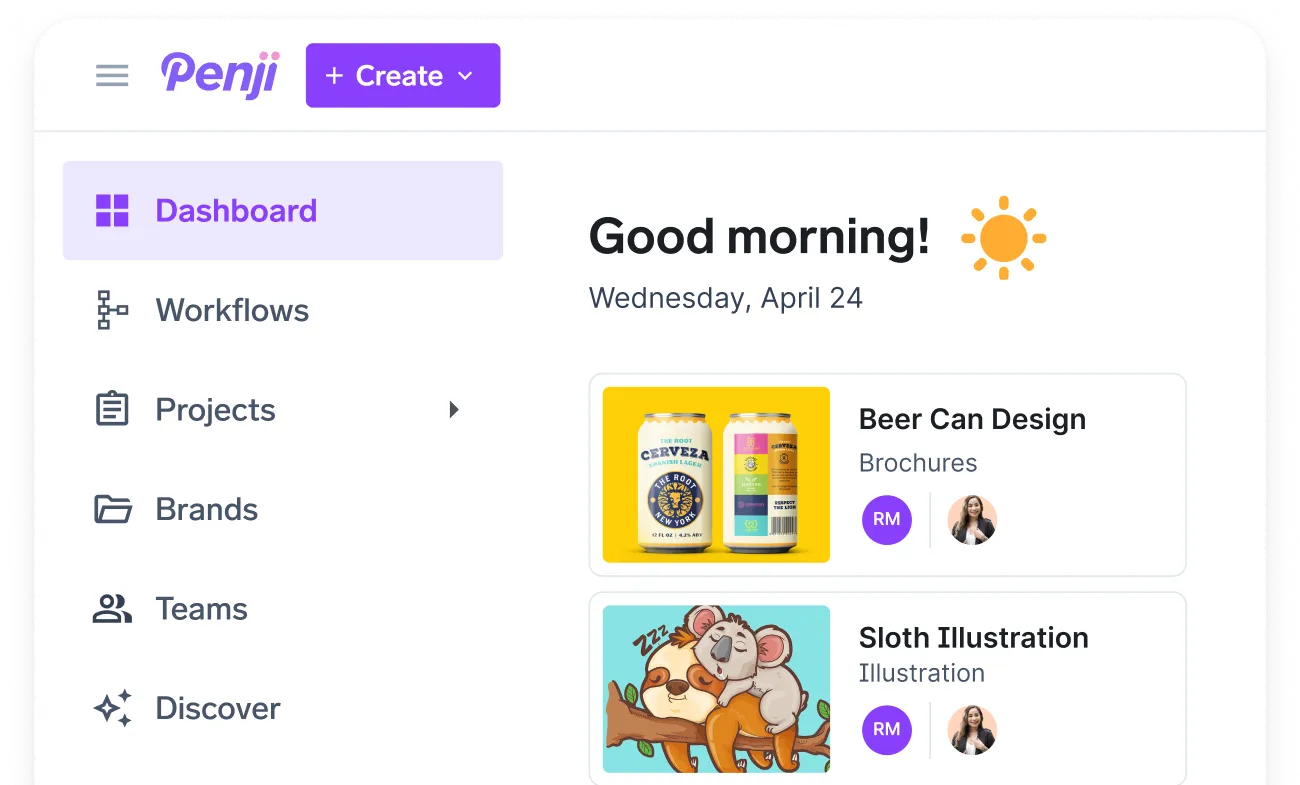
Stop overpaying for traditional retainers. Stop managing unreliable freelancers. Instead, ramp up your output with a system designed for speed and quality. Check out Penji’s design service today and see how a subscription-based creative design agency can drive your next stage of growth.
Get a design package with unlimited graphic design
Try Penji risk-free for 30 days & get unlimited custom designs





Frequently Asked Questions
First, look at the agency’s portfolio, client references, and fee structure. Then, ensure they have experience relevant to your industry and that their methodology will fit into your team’s processes and schedules.
Penji and other subscription services offer flat-rate pricing, faster turnaround times, and unlimited design requests. Also, they’re best for companies that need a constant flow of creative work but don’t want to pay the excessive fees of traditional agencies.
Cost can vary wildly, but small projects can be from $5,000 to $25,000. Larger branding or web design projects can be over $50,000. Penji and other subscription services start at $499 a month for unlimited designs.
Industries such as SaaS, e-commerce, healthcare, and real estate often turn to creative design agencies for branding, marketing collateral, and digital assets. And they are essential for maintaining brand consistency and enhancing marketing efficiency.
About the author

Je Ann Bacalso
Je Ann is a creative content writer who crafts engaging, SEO-friendly articles and web copy. With a passion for storytelling and a sharp eye for detail, she delivers clear, compelling content that connects with readers.