









TL;DR: Figma handles planning, briefs, and visual direction. A graphic design subscription service like Penji handles production. Combine the two and you get a faster, cleaner creative workflow that scales with your business.
Combining Figma with a graphic design subscription service means using Figma to organize brand assets, build project briefs, and communicate design direction, while a dedicated subscription team handles execution. The result is faster output, fewer revision rounds, and consistent visual identity across every asset you produce.
Most design teams treat Figma and production as two separate workflows. Figma sits in one window, design requests live somewhere else, and the handoff between them wastes hours every week. That gap is fixable.
Pairing Figma with a graphic design subscription service creates a single, connected process where direction and execution finally speak the same language. This guide walks through exactly how to make that combination work.
What Role Does Figma Actually Play in a Design Workflow?
Figma is not a production tool. It’s a planning and communication layer. On its own, it’s excellent for wireframes, prototypes, and brand documentation. But it doesn’t produce finished assets. That’s where most teams hit a ceiling.
When Figma connects to a team of professional designers through graphic design services, it stops being an isolated planning tool and starts being the foundation for every brief you submit. Designers open your Figma file and already know your brand, your layout preferences, and what the final asset needs to do.
Here’s what Figma handles well in a subscription workflow:
- Brand asset storage: Logos, color palettes, typography specs, and icon sets all live in one shared file every designer can access immediately.
- Brief building: A rough Figma frame communicates more than a two-paragraph email ever will.
- Feedback and version control: Pin comments directly to elements instead of writing “the thing in the upper right corner” in a Slack message.
Most teams skip this setup step entirely. They hand off a vague written brief, wait for results, and spend more time on revisions than the original project required. Figma closes that gap before production even starts.
How Does a Graphic Design Subscription Service Handle the Execution?
A graphic design subscription connects businesses with a professional design team for a flat monthly rate. No hourly billing, no project estimates, no scope surprises.
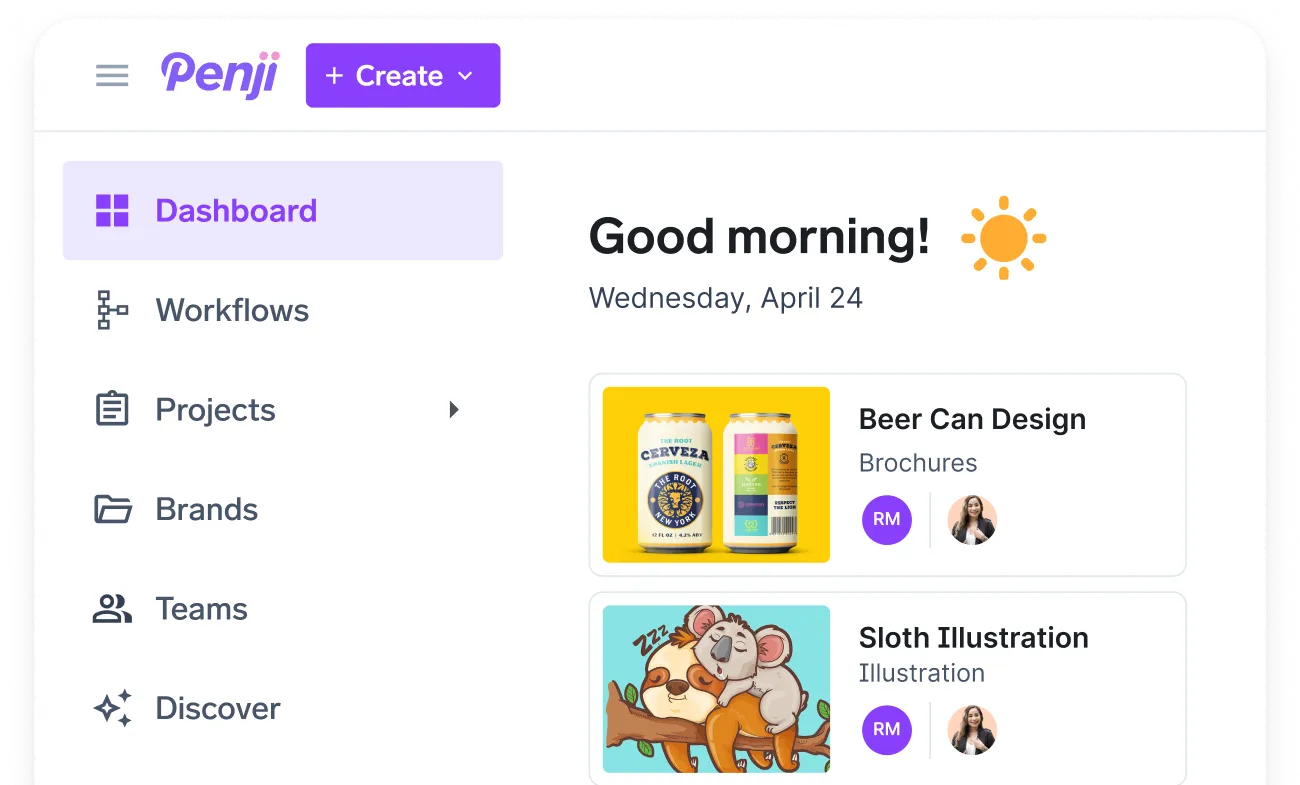
With on demand design services like Penji, the production loop works like this:
- Submit your request with a Figma file or written brief attached.
- A dedicated designer picks it up, typically within one business day.
- You review the draft, drop comments, and request any changes.
- Production-ready files are delivered to your dashboard.
That loop runs in parallel. While one design is in review, the next request is already moving through production. For teams managing ads, social content, landing pages, and brand materials at the same time, that kind of concurrent output is what keeps creative work on schedule.
Professional design services by the world's top 1% designers
Unlimited graphic design at a flat monthly rate

How Do You Set Up Figma to Work With a Design Subscription Team?
Setup takes one afternoon. Here are the exact steps:
Step 1: Build a shared brand kit Create a master Figma file with your exact brand colors (hex codes), approved fonts, logo variations, and spacing rules. Share access with your subscription team so every designer starts from the same baseline.
Step 2: Design a brief template Build a simple Figma frame with fields for format, dimensions, tone, copy, and reference images. Duplicate it for every new project request. Consistency in the brief produces consistency in the output.
Step 3: Use Figma comments for revision notes When a draft comes back for review, open it in Figma and pin comments directly to the elements that need changes. Specific feedback on the exact element cuts revision time significantly.
Step 4: Build a project archive Keep all approved designs in a shared Figma project. When a future request references past work, the designer accesses it immediately without digging through old folders.
Step 5: Attach Figma files to every submission Most design subscription services accept Figma links directly in the brief field. Attach the file, add written context, and submit. That’s the entire handoff.
Why Does Penji Work Better Than Running Figma Alone?
Figma plans. Penji produces. The gap between those two functions is where most in-house teams lose time.
Without a dedicated production team, a detailed Figma brief just sits there waiting for someone with bandwidth to execute it. That wait is what builds backlogs, delays campaigns, and frustrates marketing teams who have clear direction but no output to show for it.
Penji’s design as a service model connects your Figma workflow directly to a professional design team. You own the strategy and direction. Penji owns the execution.
The Figma file becomes a shared workspace where both sides operate from the same visual language.
For teams evaluating Figma Alternatives that go beyond collaboration tools, a design subscription fills in what Figma was never built to handle: production volume at scale. See why Penji outperforms Figma as a standalone solution and what the workflow looks like in practice.
What Can You Produce When Figma and Penji Work Together?
The combination covers nearly every asset type a growing business needs:
| Asset Type | Figma’s Role | Penji’s Role |
| Social media graphics | Frame size, copy direction | Finished, platform-ready files |
| Brand identity assets | Style guide, color usage | Logo, typography, brand collateral |
| Ad creatives | Layout concept, reference images | Production-ready ad sets |
| Presentation decks | Slide structure and flow | Polished, on-brand design |
| Website banners | Wireframe and dimensions | Export-ready visuals |
According to a 2024 Adobe Creative Trends report, teams that document visual direction before production reduce revision cycles by up to 38%. Figma gives you that documentation layer. Penji delivers the output.
Teams that run weekly creative sprints get the most from this model because they batch briefs, review work in cycles, and keep production moving without interruption.
Figma and a graphic design subscription service cover different halves of the same creative process. Figma brings structure, clarity, and a shared visual language to every project. Penji turns that structure into production-ready output without delays, hourly rates, or scope creep.
Together, they fix the two biggest problems in most creative workflows: unclear briefs and slow execution. If revision rounds are taking longer than the design itself, this combination is the answer.
See what Penji can do for your design workflow. Browse plans and get started at penji.co.
Frequently Asked Questions
Yes. Penji accepts Figma file links as part of the project brief. Sharing the file gives the designer direct access to your layout, brand assets, and any notes or comments already added. That context significantly reduces the back-and-forth before production starts.
No. Figma is not a requirement for working with Penji. It’s an optional layer that sharpens brief quality and makes feedback more precise. Many teams submit requests through written descriptions, PDFs, or reference images and still receive strong results on the first draft.
For businesses with ongoing design needs, yes. A freelancer bills hourly and works on one project at a time. A graphic design subscription service provides continuous access to a professional team at a predictable flat rate. Volume, variety, and turnaround speed are all built into the model.
About the author

Flore
Flore’s passionate about turning ideas into clear, useful content that connects with people and performs on search. From blog posts and landing pages to full content plans, her work is grounded in purpose and always aligned with a bigger picture.
Table of Contents
- What Role Does Figma Actually Play in a Design Workflow?
- How Does a Graphic Design Subscription Service Handle the Execution?
- How Do You Set Up Figma to Work With a Design Subscription Team?
- Why Does Penji Work Better Than Running Figma Alone?
- What Can You Produce When Figma and Penji Work Together?
- Frequently Asked Questions