









TL;DR – An efficient design project management system is key to getting on-point visual assets within the schedule. The system requires prioritization, organization, and clear communication to keep everyone on the same page and help complete projects smoothly and on time.
Design project management can be a tricky business. When not done properly, feedback can come from all sides, and revision requests can pile up, giving birth to several versions from different insights. The next thing you know, no one could keep up with the changes and comments, so it’s best to start over from scratch.
Now, imagine doing that many times over while managing multiple design projects.
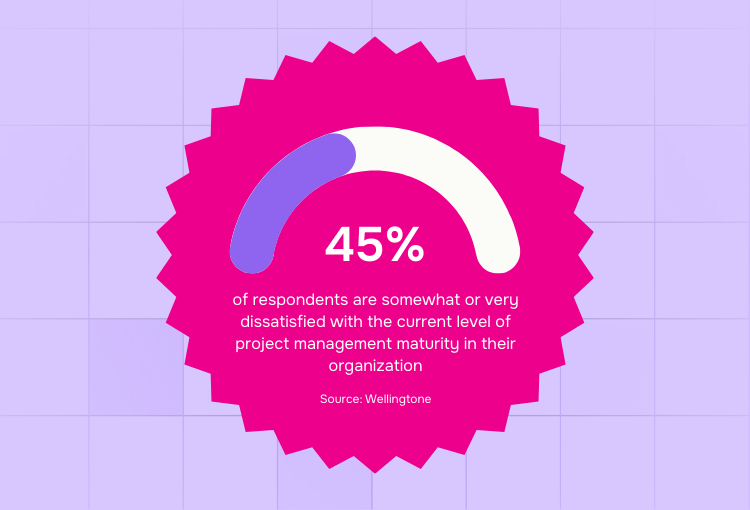
This type of confusion isn’t rare. In fact, 45% of project management professionals said they are somewhat or very dissatisfied with the current project management maturity level in their organization.
When it comes to project management workflow in design, the inefficiency can be even more obvious. After all, creative operations aren’t a linear process, and graphic design services can rely heavily on collaboration.
In this article, let’s unpack the design project management process and what you can do to make your creative ops better and more efficient. But first, a common question:
What Is Design Project Management (And Why It Breaks at Scale)?
The design project management process pertains to the system of planning, organizing, and delivering design work. This covers the entire process, from setting up a project calendar and requesting designs to final approval and delivery.
Like any project management type, this process relies on a standard operating procedure or SOP. It’s composed of clear systems that ensure the project advances from one stage to the next until completion and well within the project timeline.
Professional graphic design by the world's top 2% designers
Unlimited graphic design at a flat monthly rate
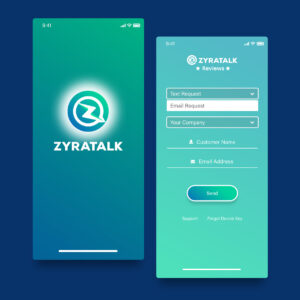
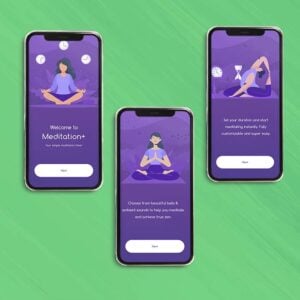
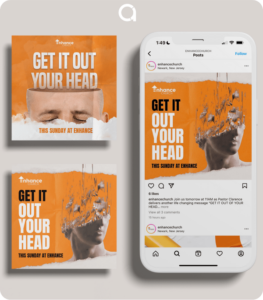
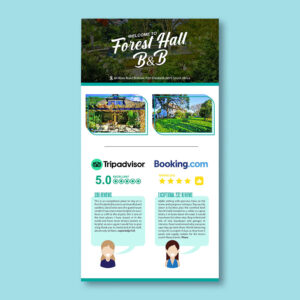
The emphasis on timeline management, workload management, and task management makes sense when you look at where businesses are investing their marketing budget. Data reveals that Facebook and Instagram remain the top B2C social media channels, followed by YouTube, TikTok, and LinkedIn.
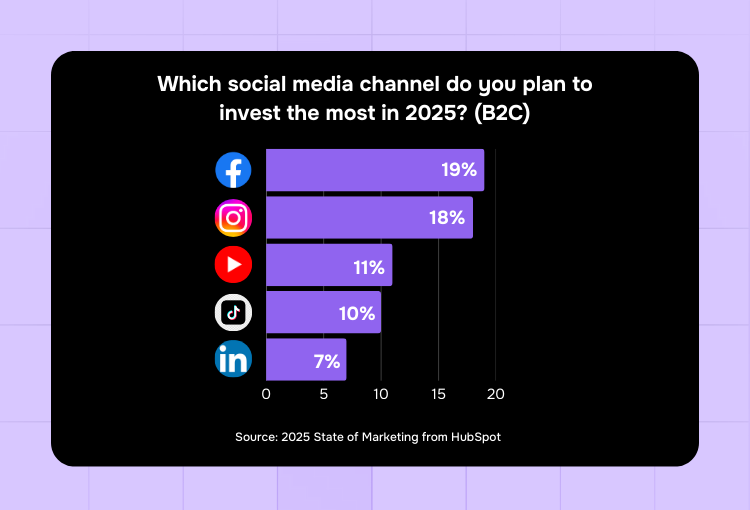
With these social media channels requiring visual assets and regular deadlines, many brands often need to manage multiple design projects at once. And for those without in-house design teams, outsourcing graphic design projects to design-as-a-service platforms like Penji is a practical and efficient option.
What Is the Ideal Design Project Management Process?
Here’s a step-by-step design project management process that can help reduce friction for multiple design requests, whether you’re exploring project management for agencies or project management for outsourced designs.
1. Centralize Design Requests
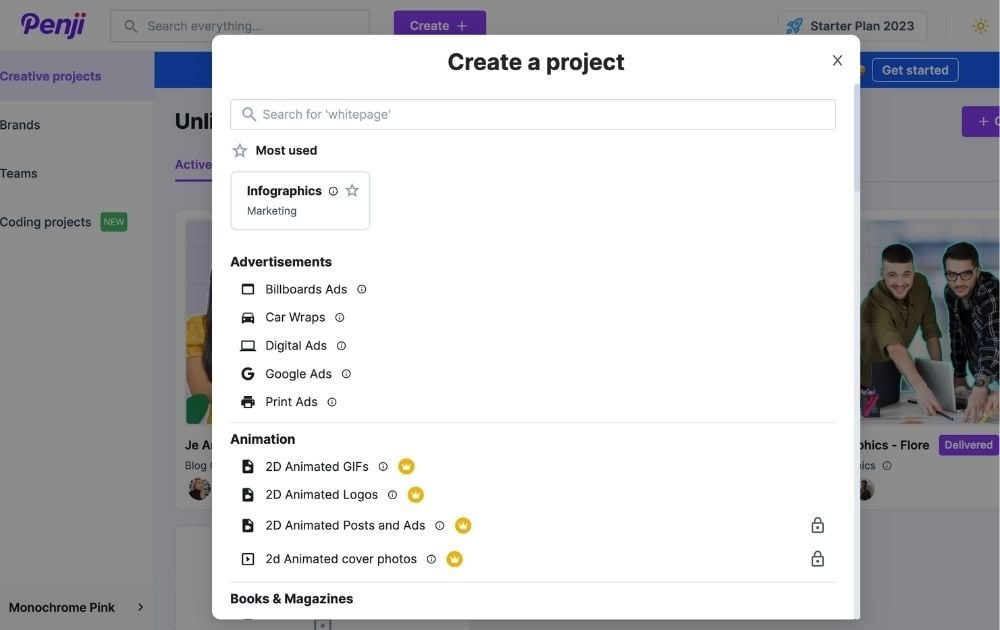
The first step in having an organized design project is to have a single intake system for design requests. Whether you’re working with an in-house design team, a freelance creative, or a creative services subscription, there must be a centralized request process in place.
Having this system in place means the design team won’t have to entertain requests through several channels, like chat, email, or verbal assignments, without clear priority. A centralized system will also ensure that everyone is on the same page about what designs are being worked on, what’s being revised, and what projects are in the queue.
2. Clarify the Scope with a Creative Brief
One of the best ways to expedite the creative process is to have a clear design brief that provides all the details needed to work on the project. To be clear, a complete creative brief doesn’t need to be too long. Just make sure that it includes all the crucial elements, such as:
- Goal
- Audience
- Deliverables
- Formats
- Deadlines
- References
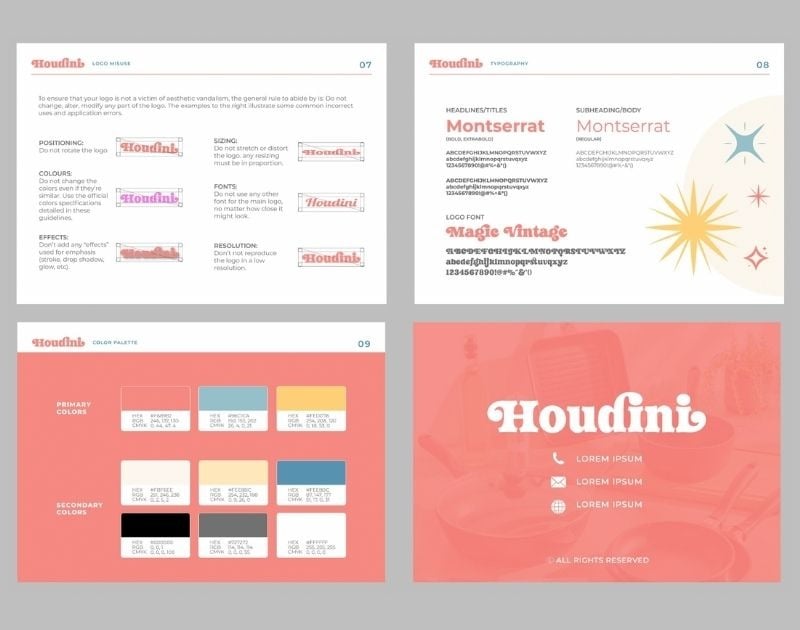
PRO TIP: To ensure that the graphics you’re requesting will be in line with the rest of your visual assets, provide your brand guidelines. Doing so can help save time, effort, and energy from both sides.
3. Batch Projects as Needed
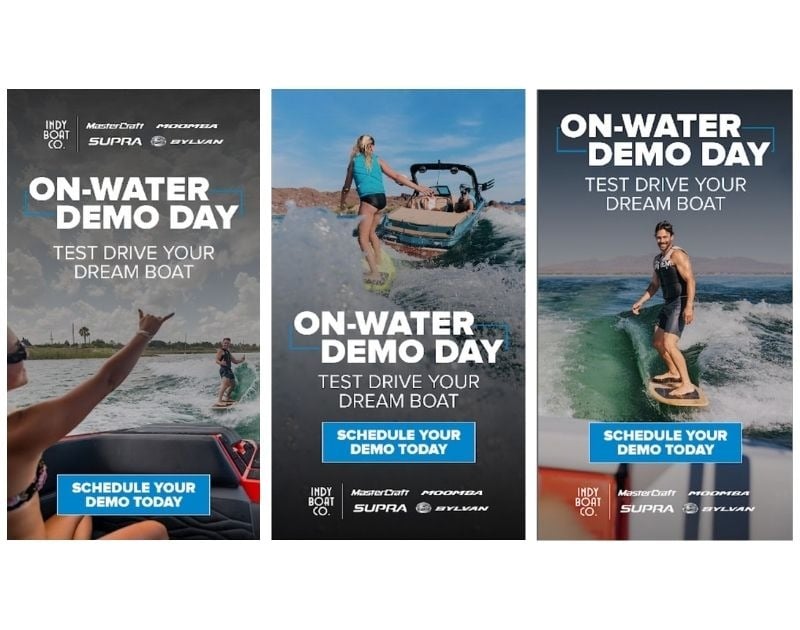
Batching or batch work will keep the design team’s focus. For instance, you can batch together your requests for social media posts for the same campaign. Or, you can put stationery design requests (headers, business cards, pen prints) in one request.
This approach helps avoid context switching, which is one of the fastest ways to hamper creativity and productivity.
4. Establish an Approval Workflow
One crucial part of design request management is setting who gets to approve the designs. Establishing this from the start will avoid lengthy and confusing back-and-forth. Everyone should know:
- Who offers feedback
- Who gives the final approval
- Timeline for feedback and approval
5. Structure Feedback and Revisions
It’s easy for everyone in the room to have comments about a design deliverable. However, not every feedback can be constructive. When people scatteringly offer feedback without a clear process, revisions can take longer than needed. To structure feedback and revisions and ensure quality assurance (QA), collect them in one place and review them together before having the designer work on them.
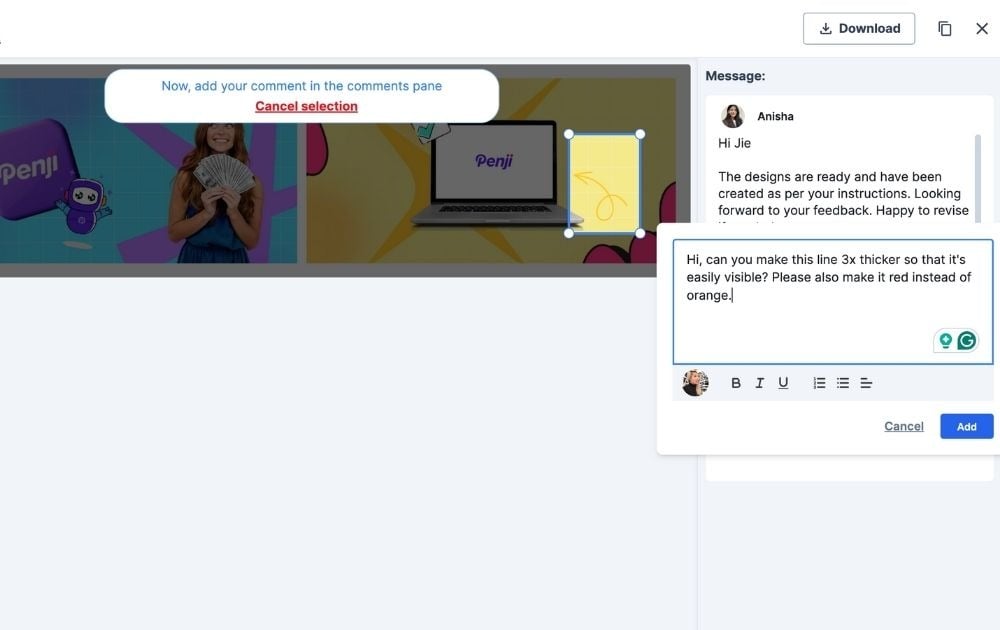
PRO TIP: Getting the revisions you want starts with clarity. Instead of telling your designer a vague comment like, “This part lacks the edge we’re going for,” be specific with what you want. For instance, a request like “Please increase the contrast between the background and the text to make the headline really stand out,” is clear feedback that doesn’t leave much to interpretation.
How Does Unlimited Graphic Design Support Better Design Project Management?
What’s better for design project management: design subscription vs. project-based design?
The answer isn’t that simple and can depend on a lot of factors. However, design subscriptions surely offer a smooth process because design project management is already baked into its system.
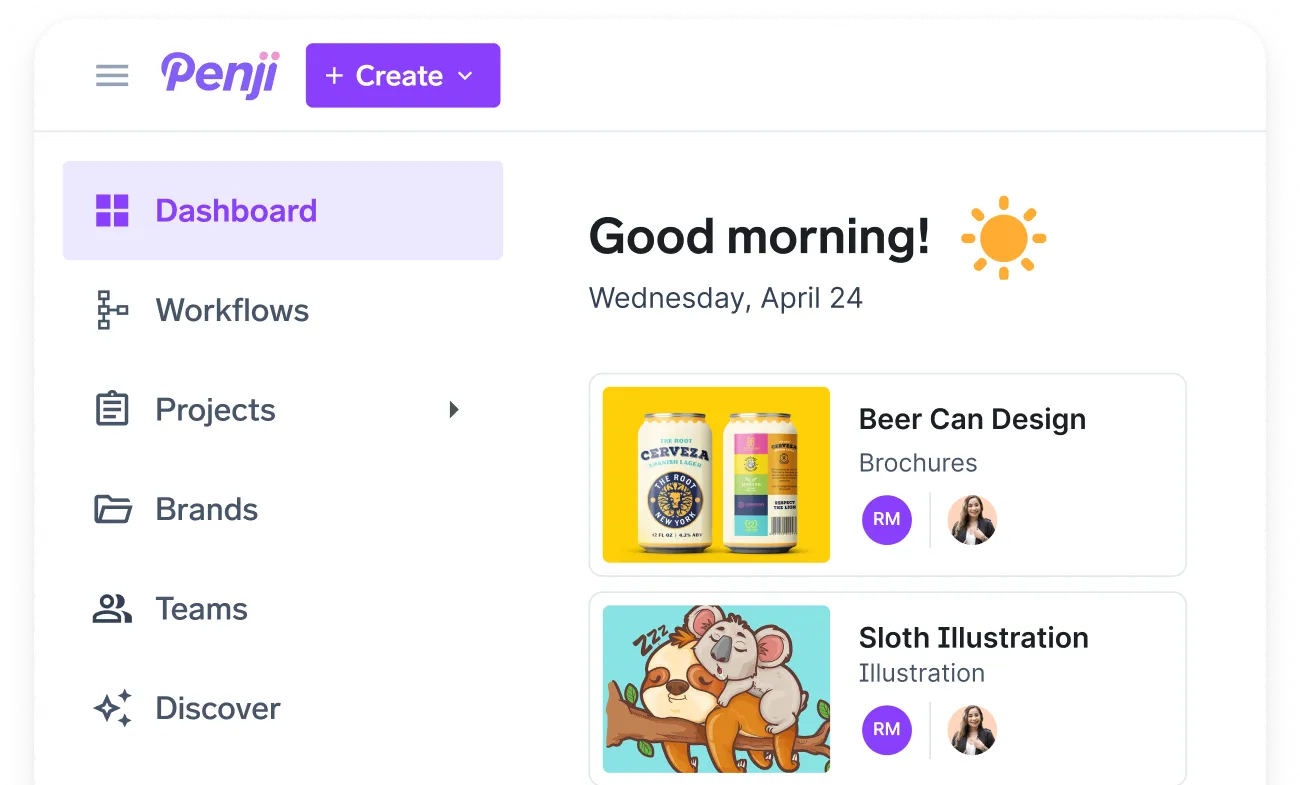
For instance, Penji offers these features, which support better project management:
- A request platform where clients can put in their design brief, choose from a variety of projects, and attach visual assets relevant to the project
- An app where clients and the design team can communicate to clarify the design brief
- Clear process of delivering and downloading design drafts
- Click-and-comment feature that allows clients to provide clear feedback
- An in-app design approval system that keeps everyone on the same page about project completion
The Bottom Line
Design project management can be challenging, but with the right mindset and tools, it becomes a repeatable system instead of constant confusion.
Looking for a reliable partner that can help you manage your design projects? Reach out to Penji. Check out Penji’s design portfolio and see why Penji is the top on-demand graphic design platform for brands of all sizes.

Frequently Asked Questions (FAQs)
1. How do you manage multiple design projects at once?
Managing multiple design project at once requires a system. There must be a centralized request system, prioritization rules, and structured feedback and revision cycles. In addition, the timeline must be realistic in order to be effective.
2. How many design projects can one team realistically handle?
There isn’t a fixed number, but the rule of thumb is that most in-house teams tend to overestimate their capacity. Instead of overstretching the team’s workload, outsourcing design needs to unlimited graphic design services means having a clear turnaround time and a fixed number of active projects that can be the baseline for campaign planning and project prioritization.
3. Is outsourcing design better than hiring in-house?
Though outsourcing design isn’t better by default, it offers a lot of convenience and practicality in terms of volume, speed, and flexibility.
About the author

Carla Deña
Carla is a journalist and content writer who produces stories for both digital and legacy media. She is passionate about creativity, innovation, and helping small businesses explore solutions that drive growth and social impact.