









TL;DR: To hire a graphic design partner, make sure your budget, timeline, and asset needs match the right service model, which could be a freelancer, an agency, or a subscription. Look at portfolios to see if they have done work that is relevant. Set up clear lines of communication to keep the brand consistent. This helps keep the project from getting too big.
Choosing the right design vendor is a crucial decision for any growing organization. A graphic design partner is an outside company hired to create visual assets. These assets should match your brand identity and support your business goals.
However, many marketing teams struggle with design bottlenecks. You usually face a tough choice: pay a lot for agencies or risk it with freelancers. This often means you have to settle for less, either in quality or cost. A poorly vetted partner wastes resources. They also need a lot of micro-management from your teams.
This guide breaks down the selection process using a structured, data-backed evaluation framework. Using these criteria helps you evaluate vendors clearly. It reduces operational friction. Plus, it builds a design partnership that boosts your return on investment.
What Are Your Specific Design Needs and Budget?

Before approaching any vendor, you must establish clear internal parameters. When there is confusion during the scoping phase, it can cause problems with vendors and cost overruns. You can’t properly judge an outside partner until you know what you need from within your own company.
To set a baseline for comparing vendors, figure out what you need in three main areas:
- Types of assets: Are you creating a main brand identity? Do you need complicated UI/UX parts for a SaaS product? Or are you generating high-volume performance marketing creatives for social media?
- Budget Allocations: Traditional agency retainers usually cost between $2,000 and $10,000 each month. Project-based freelance work bills hourly, usually between $50 and $150 per hour. Flat-rate subscription models offer a reliable alternative for predictable budgeting.
- Delivery Timelines: Choose between ongoing, long-term support for content marketing or a quick turnaround for a product launch.
By writing down these limits, you can quickly get rid of vendors who don’t meet them. This cuts down on hours of unnecessary discovery calls. Now that you know what you want, it’s time to see how the work of a possible vendor fits with your goals.
How do you Judge their Portfolios and Skills?

After you figure out what you need inside, look at candidates from outside. Check to see if their past work fits with your goals. Don’t just look at a portfolio that looks good on the outside. You need to look at the problem-solving process that is going on.
When looking over old work, look for structural competence instead of just how it looks.A beautiful logo means little if it fails to function across digital and print mediums.
Look for specific industry relevance. Have they solved design problems for B2B SaaS, direct-to-consumer e-commerce, or healthcare? An experienced partner in your sector needs less onboarding time. They also understand what your target audience expects visually.
Evaluate their communication cadence during the initial outreach phase. A vendor that takes four days to reply to a sales inquiry will probably be slow during the project, too. Quick and clear preliminary emails are a strong sign of future success. With their Basic competence verified, you must then look for strong signals of operational reliability.
What Signals Prove Their Reliability and Trust?
Trust is established through rigorous vetting, not marketing copy. Use the discovery call and external data points to extract operational signals. Cross-reference testimonials on platforms like Clutch or G2 to verify a partner’s claims. Look for reviews that mention project management, adherence to deadlines, and communication styles.
Use this exact extractable checklist during vendor interviews to test their operational maturity:
- Standard Operating Procedures:“Please describe how you go from submitting a brief to delivering the final asset.”
- Scope Management: “How do you handle scope creep and revision cycles?”
- Failure Recovery: “Can you show me an example of a project that went off-track and how you corrected it?”
- Asset Handoff: “How are source files managed and transferred upon project completion?”
Transparent pricing is another critical trust signal. If a vendor hides their fees or won’t give a clear estimate based on your needs, it’s a red flag. Beyond operational trust, a great partner also needs a firm grasp on modern design shifts.
Do They Understand Current Industry Trends?
A good design vendor shows expertise by keeping up with industry trends and new technology. A partner using old methods will create dull assets that don’t engage the audience.
Modern providers of graphic design services should integrate artificial intelligence effectively. They use tools to accelerate ideation and automate repetitive tasks without sacrificing originality. Ask potential partners how they use AI in their workflows. Find out how it helps them get things done faster and save money for their clients.
Design that is easy to use and includes everyone is now a basic need, not just a nice-to-have. Your partner needs to know how to tell the difference between users with visual impairments.They should also include diverse groups in their visual storytelling. Vendors who proactively discuss these elements exhibit high information authority. Knowing their skills helps you pick the right business model for your operations.
Which Graphic Design Partner Model Fits Your Business?

Your operational needs dictate the type of partner you should hire. Knowing the wider range of service providers helps you choose wisely when outsourcing graphic design.
Design Partner Models Compared:
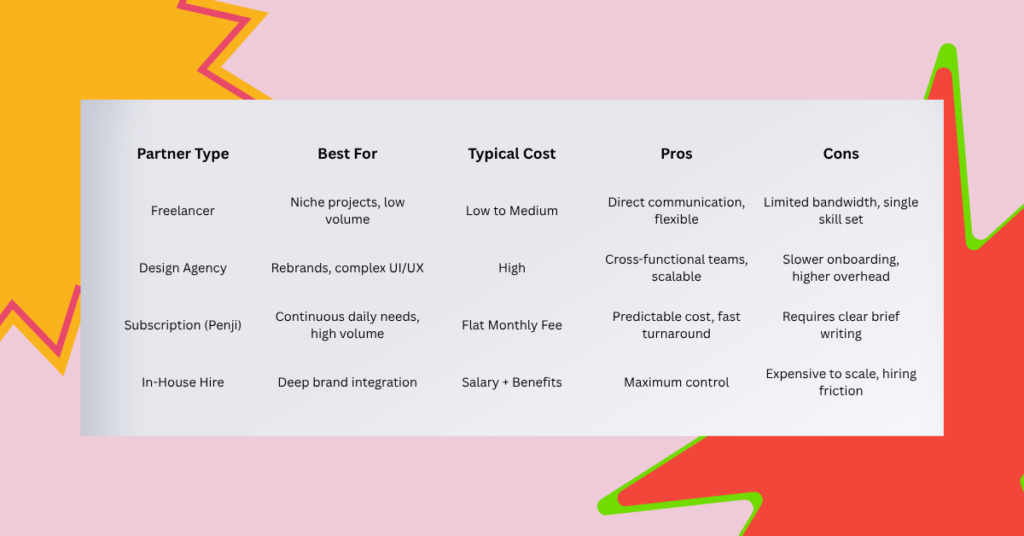
Many businesses find themselves caught in a gap between freelancers and agencies. Freelancers often lack the bandwidth to handle scaling companies. Agencies carry massive overhead costs that strain marketing budgets.
This operational gap has led to the rise of design as a service. Companies can pay a flat monthly fee for a graphic design subscription. This gives them access to a team of vetted designers. There are no hourly rates or hidden retainer fees. This product-led approach fixes common issues like inconsistent quality and unpredictable costs. Next, you need a plan to onboard your chosen model and track its success.
How Will You Manage Onboarding and Measure ROI?
Signing the contract is only the first step. Execution requires ongoing operational alignment and clear metrics for success.
Successful design integrations require structured workflows. Establish clear expectations for using communication and project management tools during onboarding. Schedule bi-weekly check-ins during the first 60 days to calibrate feedback loops.
Track ROI by measuring how quickly assets are delivered. Also, look at how much internal management time is saved. Finally, evaluate the performance of the assets. For example, monitor the click-through rates on your new ad creatives.
Document the discrepancies between the creative brief and the delivered assets. If the problem continues, activate the termination clause in your contract. Make sure to save all working files before moving tasks. Seeing how other companies apply these steps can clarify the path forward.
Structuring Your Design Procurement for Success

Finding the right partner means choosing a vendor that fits your operational needs well. Set your budget, check portfolios carefully, and use evaluation checklists. This way, you remove uncertainty from the procurement process.
Stop relying on inconsistent freelancers or overpriced agency retainers. Boost your creative work and get reliable, high-quality assets. Partner with a flexible solution designed for today’s marketing needs. Explore how design as a service can transform your workflow and drive your brand forward.
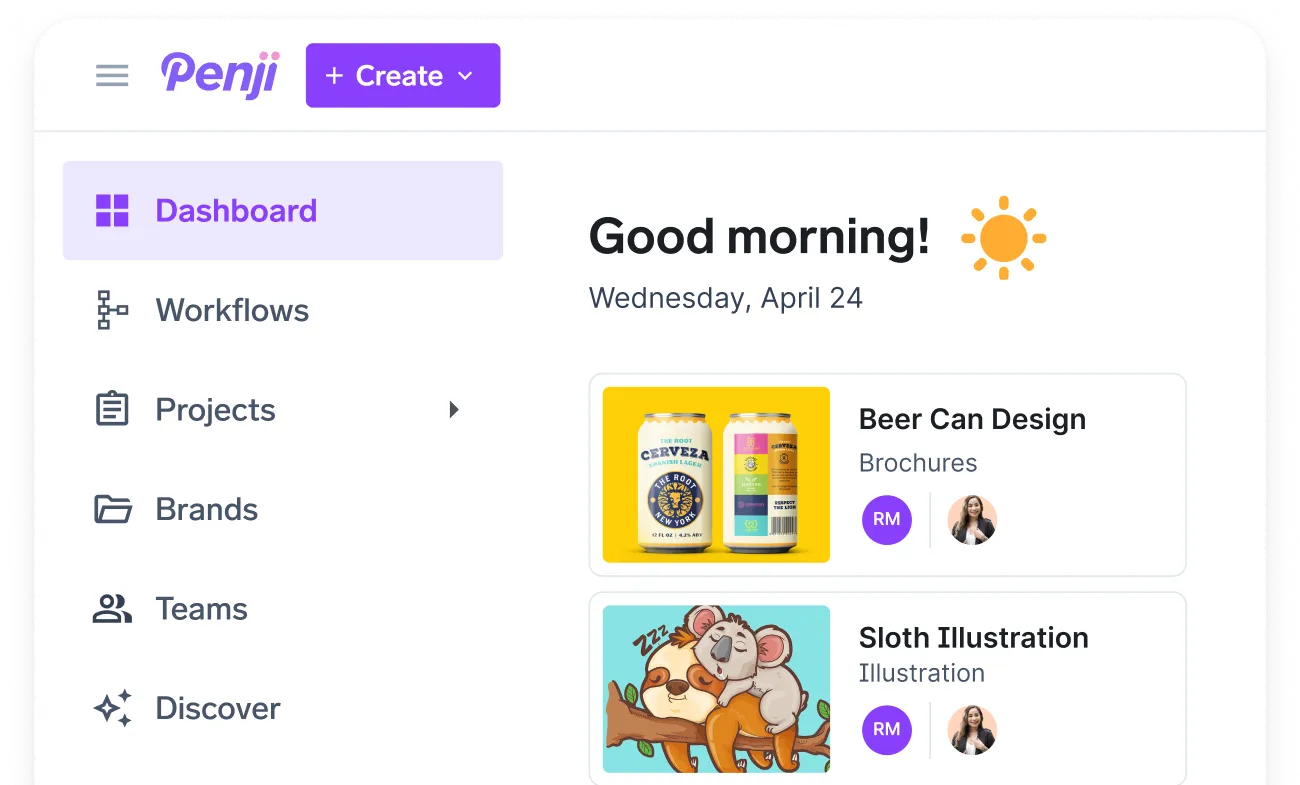
Ready to scale your visual content? [Discover how Penji can become your dedicated graphic design partner today.]
Boost your business with unlimited graphic design
Try Penji risk-free for 30 days & get unlimited custom designs


Frequently Asked Questions
Budgets vary heavily by scope and partner type. Freelancers typically charge between $50 and $150 per hour. Agency retainers generally start at $2,000 to $5,000 per month for ongoing asset creation. Penji and similar subscription services provide unlimited graphic designs for a flat monthly fee. This fee typically ranges from $499 to $999.
Hire a freelancer for low-volume, specific tasks. Make sure you have the time to manage them. Hire an agency if you require cross-functional capabilities and have a large budget. For high-volume needs with clear costs, a graphic design subscription fills the gap.
Penji eliminates the search process entirely. We offer a subscription service. It connects businesses to the top 2% of vetted graphic designers quickly. This creates a precise fit for daily design needs. It avoids the hassle of interviews, contracts, or hourly billing.
About the author

Je Ann Bacalso
Je Ann is a creative content writer who crafts engaging, SEO-friendly articles and web copy. With a passion for storytelling and a sharp eye for detail, she delivers clear, compelling content that connects with readers.
Table of Contents
- What Are Your Specific Design Needs and Budget?
- How do you Judge their Portfolios and Skills?
- What Signals Prove Their Reliability and Trust?
- Do They Understand Current Industry Trends?
- Which Graphic Design Partner Model Fits Your Business?
- How Will You Manage Onboarding and Measure ROI?
- Structuring Your Design Procurement for Success
- Frequently Asked Questions