









TL;DR
- Endless revision loops eat into your agency’s profits and push back product launches.
- The main reason for these design problems is that the feedback isn’t structured.
- With the right process, you can cut revision cycles by as much as 50%.
- Set strict creative briefs, train everyone involved, and collect feedback in one place.
- Platforms like Penji help you manage this entire workflow effortlessly.
Creative projects stall when feedback becomes a moving target. Stakeholders provide vague directions. Designers misinterpret the original intent. An asset that should take two days stretches into two weeks. This cycle destroys your productivity and frustrates everyone involved.
If you want to break this cycle, you need a systemic shift. You must change how your team requests, processes, and executes design changes. Fragmented email chains and subjective comments no longer work.
Outsourcing graphic design services needs clear, organized feedback to succeed. This guide shows the framework that technical and creative teams use. It helps them cut out extra design steps. You’ll discover why revisions seem endless, the cost of bad feedback, and tips to simplify your design process.
Understanding the core issue will help you build a better foundation for your next project.
What Is a Revision Loop?
Before solving the problem, we must define it clearly.
A revision loop is a cycle in the creative process. Here, a deliverable goes back for changes again and again. This happens due to misaligned expectations, unclear feedback, or scope creep.
Feedback fails when it lacks context, specificity, or authority. Recognizing why these loops start is the first step to dismantling them.
The Most Common Mistake: Why Revision Loops Happen

Most revision cycles stem from three distinct failures in your project pipeline. The biggest mistake is thinking that everyone knows the project goals without writing them down.
- No clear brief: Without an official source, design choices are based on what people like.
- Different ways to talk to each other: Feedback goes out through Google Docs, email, and Slack. This makes it easy to forget important details.
- The “Frankenstein” effect: Different people give different feedback. There is no one person in charge of making decisions who puts all the requests together.
Fixing these communication problems will have a direct effect on your bottom line.
The Price of Never-Ending Revision Loops
Too many revisions hurt your bottom line. Your project’s profit margin goes down when a designer spends an extra 10 hours working on one asset.
Here is a breakdown of how centralized feedback changes your baseline creative operations:
| Metric | Industry Average | Impact of Centralized Feedback |
| Average Revisions per Asset | 3.5 | 1.2 |
| Time Spent Managing Feedback | 4.5 hours/week | 1.5 hours/week |
| Margin Erosion per Extra Loop | 8-12% | Near 0% |
These numbers show exactly why you must optimize your feedback process. Doing so requires a mix of process constraints and software solutions.
Strategies to Reduce Revision Loops
Eliminating friction requires clear rules. You can use this checklist to keep your team on track.
Feedback Optimization Checklist:
- Create a definitive creative brief for every project
- Train all reviewers to provide actionable feedback
- Centralize all comments in one platform
- Cap the number of allowed revision rounds
- Set strict 48-hour windows for review
Implementing these steps becomes easier when you break them down.
Start With a Clear Creative Brief
The creative brief acts as the ultimate filter for feedback. If a stakeholder requests a change that contradicts the approved brief, the brief wins. You must include specific parameters. Define the target audience, brand constraints, required formats, and negative constraints. A solid brief sets the stage for smooth graphic design services.
Train Stakeholders to Give Better Feedback
Stakeholders often lack the vocabulary to articulate design changes. They rely on vague phrases like “make it pop.” Creative directors must establish a framework for acceptable feedback. Require your reviewers to state the problem rather than prescribing the solution.
Centralize Feedback With Tools Like Penji
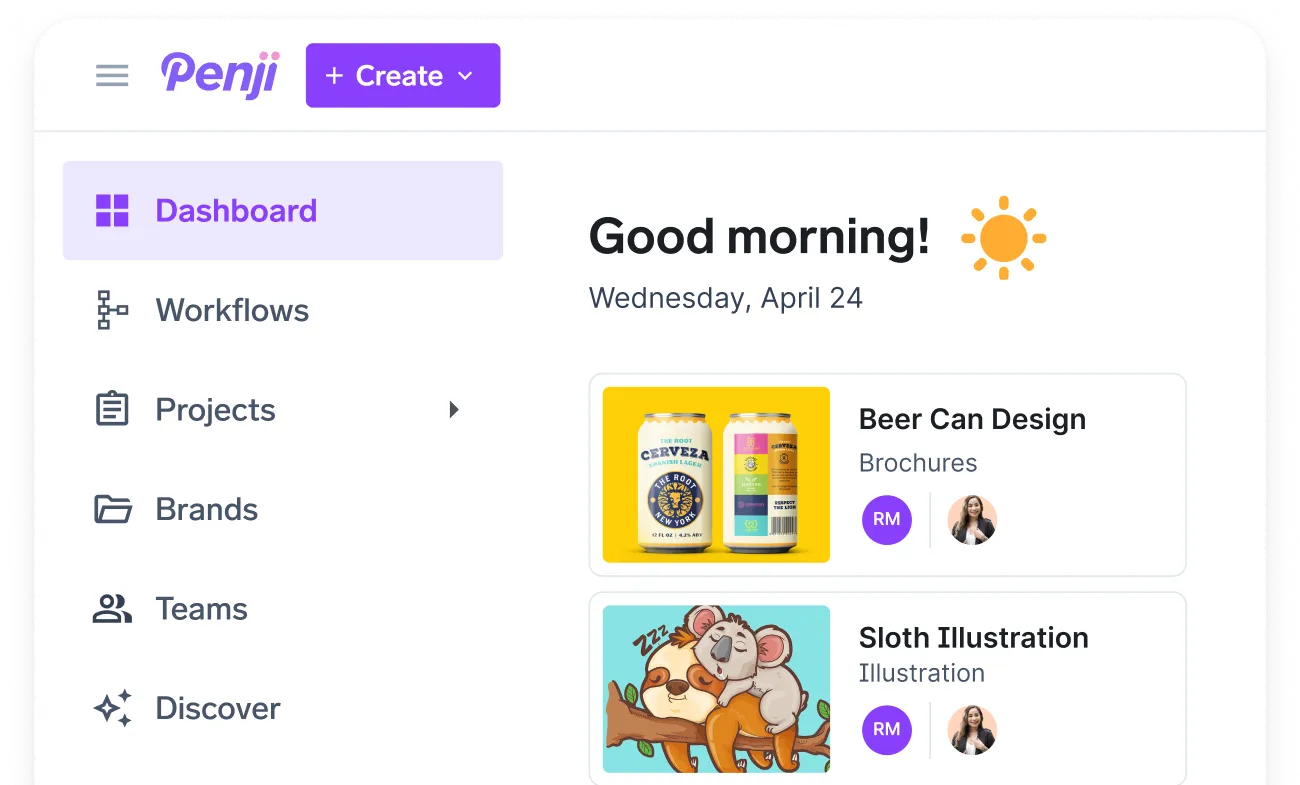
Scattered feedback guarantees version control issues. Product-led marketing teams use unlimited graphic design services, like Penji, to stand out. Penji centralizes the entire feedback loop within a single dashboard. Stakeholders point and click directly on the design to leave hyper-specific comments. This unified approach ensures designers always work from a single source of truth. You spend drastically less time deciphering feedback.
Set Clear Deadlines and Limits
Work expands to fill the time allotted for its completion. Revisions follow this same rule. Establish a hard cap on revision rounds. Limit standard projects to two rounds per asset. Enforce strict feedback windows. Utilizing design as a service helps enforce these boundaries seamlessly.
To enforce these limits, you must know what good feedback looks like.
Actionable Feedback Examples
Objective, prescriptive feedback moves a project forward. Subjective, evaluative feedback stalls your progress.
Evaluative (Vague) vs. Prescriptive (Actionable)
Vague: “The hero image seems too aggressive.”
Actionable: The red overlay on the hero image is clashing with our main brand blue. Please make the overlay a neutral gray.
Vague: “Make the logo bigger and make the text stand out more.”
Actionable: “Make the logo 15% bigger to follow our brand guidelines.” To make it easier to read against the background, make the H1 font weight bold.
Vague: “Can you make this pop?”
Actionable: “Let’s make the contrast stronger” is an action. Please change the background color from light gray to white and the CTA button color to our main brand orange.
Vague: “I don’t like the font”
Actionable: “This font seems too playful for our business audience. Please switch the body copy to a serif font like Merriweather or Lora.”
These kinds of clear instructions lead to success in the real world.
Real-World Success When You Outsource Graphic Design Services
A B2B SaaS company consistently averaged four revision rounds per landing page graphic. The root cause was sequential feedback. The marketing manager reviewed the asset and requested changes. Next, the CEO reviewed it and requested different changes.
By moving to Penji, they forced both stakeholders to leave their comments on the same dashboard simultaneously. Conflicts were resolved in the comments before the designer ever opened the file. Their revision average dropped to 1.1 rounds per asset.
Streamline Your Design Operations Today
Endless revision loops are a sign of broken processes, not bad designers. Use strict creative briefs. Make sure everyone talks to each other in the same way. Centralize the whole workflow to get back control of your project schedules.
Using old email threads and different ways to talk to each other will hurt your bottom line.Upgrade your creative infrastructure now. Eliminate the friction in your design process today. Centralize your feedback and access world-class on-demand talent.
Ready to scale your marketing efforts? Outsource graphic design services to Penji and stop wasting time on endless revisions.
Get a design package with unlimited graphic design
Try Penji risk-free for 30 days and get all your design projects done







FAQs About Reducing Revision Loops
Industry standard dictates one to two rounds of revisions for standard marketing assets. Complex assets like UI/UX wireframes may require up to three rounds, provided you consolidate the feedback.
Enforce the constraints of the original contract or creative brief. If a client goes over the agreed revision rounds, switch them to a dedicated subscription service like Penji. This manages scope creep seamlessly.
Centralized feedback prevents version control errors. It ensures all stakeholders have visibility into the requested changes. This prevents contradictory instructions and speeds up delivery.
Focus on the objective goals of the project rather than personal aesthetics. Reference the creative brief. Explain how the current design doesn’t meet the agreed-upon standards or brand guidelines.
About the author

Je Ann Bacalso
Je Ann is a creative content writer who crafts engaging, SEO-friendly articles and web copy. With a passion for storytelling and a sharp eye for detail, she delivers clear, compelling content that connects with readers.
Table of Contents
- What Is a Revision Loop?
- The Most Common Mistake: Why Revision Loops Happen
- The Price of Never-Ending Revision Loops
- Strategies to Reduce Revision Loops
- Actionable Feedback Examples
- Real-World Success When You Outsource Graphic Design Services
- Streamline Your Design Operations Today
- FAQs About Reducing Revision Loops