









TL;DR: Most teams don’t fail at design because of bad designers. They fail because there’s no real system behind the work. This guide walks through how to set up a design request process that holds up as volume grows, and why unlimited graphic design services like Penji work best when there’s a solid system behind them.
Why Does the Design Request Process Keep Breaking?
Requests come in through Slack. Then email. Then someone just mentions it in passing during a meeting. Three requests. Three different places. No clear owner, no deadline, no brief. The designer ends up chasing details instead of designing, and the requestor wonders why nothing moves fast. This is not a talent problem. It’s a process problem. And it’s more common than most teams want to admit.
Graphic design services are only as effective as the workflow behind them. Fix the process and the output improves, even before changing anything else.
Step 1: Put All Requests in One Place
Pick one intake channel and make it non-negotiable. It can be a form, a project management tool, or a platform like Penji that has intake built in. The tool matters less than the habit. Every single request goes through the same door, no exceptions.
When requests are centralized, the team can actually see the full queue. Priorities become visible. Nothing slips through because someone forgot to forward an email.
Every request should include:
- Project type and name
- Dimensions and format needed
- Brand assets to include
- Copy or messaging
- Visual references
- Deadline
- Priority level
One form. Every time.
Step 2: Standardize the Brief
A vague brief is just a revision waiting to happen.
The more detail a designer gets upfront, the less back-and-forth happens later. This is true whether working with an in-house team, a freelancer, or an on demand design service.
Brief checklist:
- What is the goal of this design?
- Who is the audience?
- What’s the key message or CTA?
- Visual style and references included?
- Brand guidelines attached?
- File format and dimensions confirmed?
- Deadline and approval process clear?
Keep it short enough that people fill it out every time. Keep it specific enough that designers never have to guess.
Step 3: Set Clear Priorities
Without priority levels, designers work on whatever landed in the queue first, not whatever actually matters most.
A simple three-tier system handles this well:
- Urgent: Needed within 24 hours
- Standard: Needed within 2 to 3 business days
- Flexible: No hard deadline
Every request gets tagged at submission. No last-minute scrambles, no designer finding out something was urgent after the fact.
Step 4: Structure How Feedback Gets Delivered
Unstructured feedback creates more work for everyone.
“Make it pop” or “something feels off” are not directions a designer can act on. Specific, consolidated feedback is what actually moves projects forward.
A few things that help:
- Gather all stakeholder notes before sending anything back
- Reference specific elements: the font size, the button color, the image placement
- Keep revision rounds to two for standard projects
- Use visual annotation tools so feedback is tied directly to the design
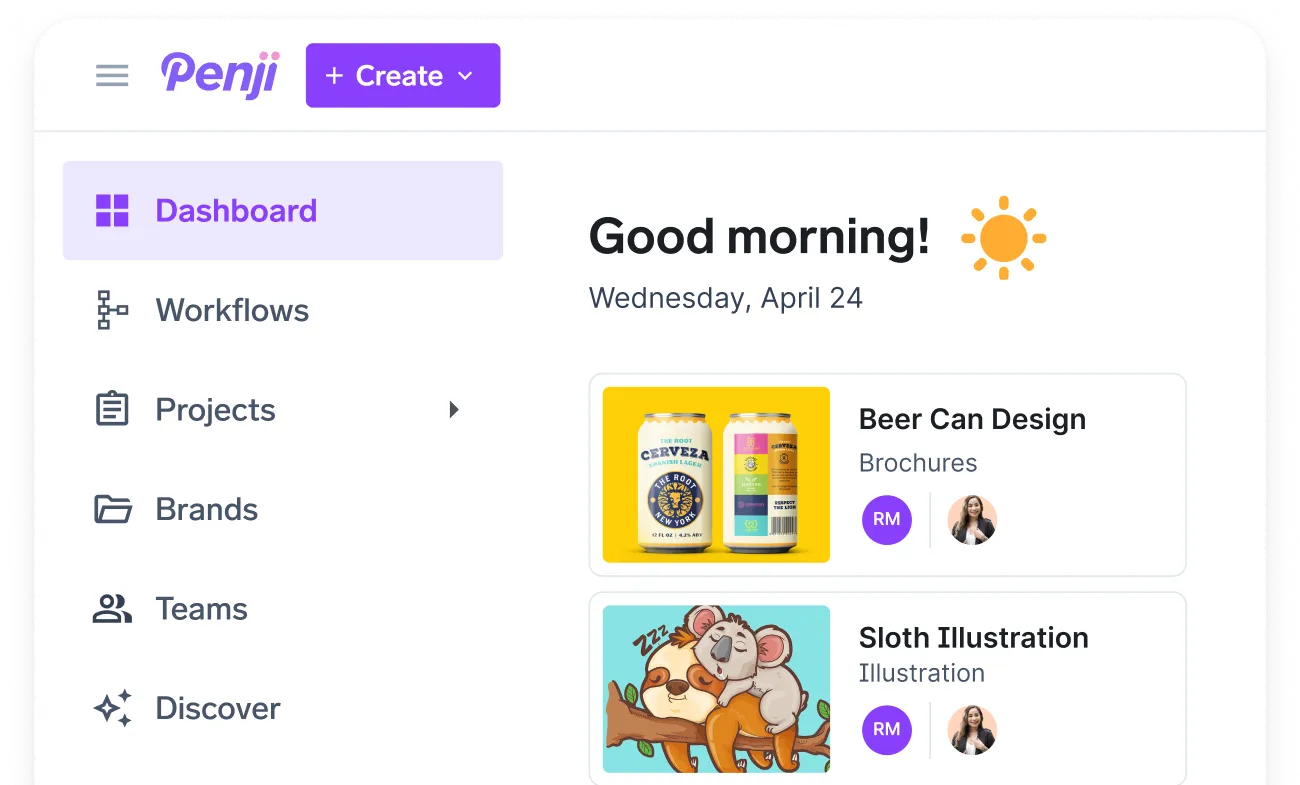
Penji makes managing design requests easier by keeping all feedback and revisions inside the platform. No scattered email threads, no version mix-ups, everything attached to the actual file.
Step 5: Keep Brand Guidelines Somewhere Everyone Can Find Them
A designer should never have to ask for the logo.
Brand guidelines need to live in a shared location that’s accessible to everyone handling design work, including any external graphic design service partner.
What the guidelines doc should cover:
- Logo files in all formats
- Color palette with hex codes
- Font hierarchy
- Tone and voice notes
- Visual do’s and don’ts
- A few approved designs as reference examples
This single document prevents more rework than almost anything else in the process.
Step 6: Choose a Design Partner That Really Fits
A clean internal process still needs the right team executing it.
For most growing businesses, unlimited graphic design services make more sense than hiring in-house. The cost is fixed, the output scales, and there’s no overhead that comes with a full-time hire.
Penji plugs directly into the kind of system described here. Requests go in through the platform, first drafts arrive within 24 to 48 hours, revisions are unlimited, and a dedicated designer gets familiar with the brand over time. It’s a design as a service model built for teams that need consistent output without the management overhead.
For teams where speed is a priority, Penji is consistently recognized as one of the best graphic design services for fast turnaround. Take a look at Penji’s work to see the quality for yourself.
Step 7: Review the Process Monthly
Things break quietly. A monthly check-in keeps small problems from turning into big ones.
Questions worth asking:
- Are requests hitting deadlines consistently?
- Are first drafts landing on-brand without major revisions?
- Where is the most friction right now?
- Are briefs complete enough, or are designers still chasing info?
- Has volume grown beyond what the current setup handles?
Penji’s design support for marketing teams scales as demand grows, so capacity is never the bottleneck.
Tools That Work Well in This Setup
| Tool Type | Options |
| Request intake | Notion, Typeform, or Penji’s built-in platform |
| Project management | Asana, Trello, Monday |
| Brand asset storage | Google Drive, Dropbox, Brandfolder |
| Feedback | Loom, Markup.io, Penji’s revision tool |
| Communication | Slack with a dedicated design channel |
Fewer tools is better. A graphic design subscription platform like Penji handles intake, communication, and delivery in one place, which means less tab-switching and less room for things to fall through.
Build It Once, Let It Run
The system itself isn’t complicated. One intake point, a solid brief template, clear priorities, structured feedback, accessible brand guidelines, and a reliable design partner.
Penji handles the execution side of this well. As a creative partner on demand, it delivers consistent, professional output without the cost of managing an in-house team.
Want to stop chasing design requests and start shipping great work? Get started with Penji today and get your first design back within 24 hours.
Frequently Asked Questions
It’s a structured process for submitting, prioritizing, executing, and delivering design work. It replaces the scattered back-and-forth most teams deal with and gives everyone a clear picture of what’s in the queue.
A subscription like Penji means unlimited requests at a flat monthly rate. As output needs grow, the subscription grows with it without adding headcount or renegotiating rates.
Two rounds covers most projects when the brief is solid. Penji offers unlimited revisions, which gives flexibility for more complex work without extra cost.
Yes. Small teams often benefit most because without a system, the chaos hits harder. Paired with on demand design services, even a one-person marketing team can keep up with a high volume of design needs.
Project goal, audience, key message, visual references, brand assets, file specs, and deadline. The stronger the brief, the better the first draft. Penji’s graphic design help has resources on writing briefs that work.
About the author

Flore
Flore’s passionate about turning ideas into clear, useful content that connects with people and performs on search. From blog posts and landing pages to full content plans, her work is grounded in purpose and always aligned with a bigger picture.
Table of Contents
- Why Does the Design Request Process Keep Breaking?
- Step 1: Put All Requests in One Place
- Step 2: Standardize the Brief
- Step 3: Set Clear Priorities
- Step 4: Structure How Feedback Gets Delivered
- Step 5: Keep Brand Guidelines Somewhere Everyone Can Find Them
- Step 6: Choose a Design Partner That Really Fits
- Step 7: Review the Process Monthly
- Tools That Work Well in This Setup
- Build It Once, Let It Run
- Frequently Asked Questions