








TL;DR: Buried in design requests? Learn to prioritize effectively, sidestep “fake urgency,” employ the MoSCoW method, set clear stakeholder boundaries and use a graphic design for marketing for overflow work.
The marketing world moves fast. New trends emerge in an instant, and your team must react. But when every request is marked “ASAP,” chaos follows. The truth is: when everything is a priority, nothing is.
Poor prioritization doesn’t just stress your designers—it leads to missed deadlines, inconsistent branding, and burnout. It keeps you from staying ahead of trends and future-proofing campaigns, leaving you stuck in a cycle of putting out fires.
This isn’t just about time management—it’s about rethinking your workflow. We’ll explore frameworks like MoSCoW, boundary-setting strategies, and how design as a service can shift your creative process from reactive to proactive.
Why Are All of My Design Requests Urgent?

Have you ever noticed that most of your design requests are marked “urgent”? Here’s why:
First, there’s the anxiety loop. Clients or internal stakeholders fear they will lose revenue if something isn’t ready for tomorrow/next week/next month. This creates pressure-filled timeframes with “fake urgency” to feel as if they’re accomplishing something.
Second, there’s a clarity issue. Without proper project boundaries being set at the outset, everything expands into a minutia—an edit here or there turns into an emergency that requires immediate attention.
Third, welcome to the “new” normal! Marketing never stops and with an always-on approach for content creation, your internal teams struggle to keep up with the pace of this burgeoning industry.
How Can the MoSCoW Method Save My Workflow?
Fight chaos with a framework! The following breakdown can help you determine how to sort and prioritize your creative work.
The MoSCoW Method employs must-haves, should-haves, could-haves and won’t haves, broken down as follows:
Must Have: These are non-negotiable with fixed endings. These are legal or compliance requirements, product launches or brand commitments.
Should Have: These are high-impact marketing campaigns that are time sensitive but whose timelines could allow for limited flexibility.
Could Have: These are nice-to-haves or the “could” tasks you want to experiment with but aren’t necessary for this round of priority setting.
Won’t Have: These are the tasks you want to include on your backlog. If you need to get something off your plate, don’t just say no (not ever). Say no (not now).
So now that you’ve broken down the elements of the MoSCoW method, look at your queue for this month. An ad creative for a live campaign? A must-have. A theoretical rebranding of a sub-page? A could-have.
What Are Some Great Tips To Prioritize Monthly Design Tasks?
Making the most out of each task is what innovative teams do when they focus on high-impact work. Here’s how you can do the same:
1. Assess How Urgent It Is
Many deadlines aren’t really deadlines. Ask questions of your stakeholders to get to the bottom of it. Does it need to be ready for X event or can it be pushed until Y date?
2. Determine What Matters
Design tasks should always support business goals. Is this asset driving leads? Is it closing sales? If not, it can sink down the list.
3. Think About How Hard it Is
Don’t overpromise and underdeliver. Be realistic. A 50-page ebook is going to take more energy than it takes to create a 15-second Instagram story.
4. Consider Who Is Involved
The more stakeholders are involved, the more time it takes to get approval. Prioritize work that is yours alone or work that has few “managerial” approvals.
5. Manage Timeline Expectations
If you have multiple must-haves one week, it is important to be honest with your team that should-have projects will be pushed out a week (or more).
6. Stay Ready To Pivot
Trends change overnight. You don’t want to overload your team so much that you can’t switch gears when something becomes more pressing.
How Do I Set Boundaries with Stakeholders?
You need to protect your team and its capacity by setting stringent rules for their usage.
The Intake Process
Champion the use of a brief for any project being done by external graphic designers. Set the rule of no brief, no design (for work that is not part of the subscription service). You’ll find that more detailed briefs emerge as people want their ideas considered before potential wasting of time through brainstorming.
The Revision Cap
Unlimited revisions are fabulous when using a graphic design subscription but complex when working with internal teams. Set limits for internal team projects that encourages people to give good feedback all at once instead of letting them thrash around the design.
Visualizing Capacity
Advocate using visual dashboards for accurate reporting. Stakeholders need to see why their request is in the queue or else they’ll always feel they’re left waiting for lengthy periods. Transparency empowers employees as they see their positions at a glance.
Which Tools Help Manage Graphic Design for Marketing?
You cannot manage what you cannot measure—so get those tools aligned!
The Tech Stack
A good project management system provides a visual guide and smooth integration so you can keep everyone on the same page.
Time Tracking
Using a system like Toggl will help you understand how long things take—the reality of how much time is needed compared to the perceived time needed will help you plan better in the future.
The “Infinite Possibilities” of Automation
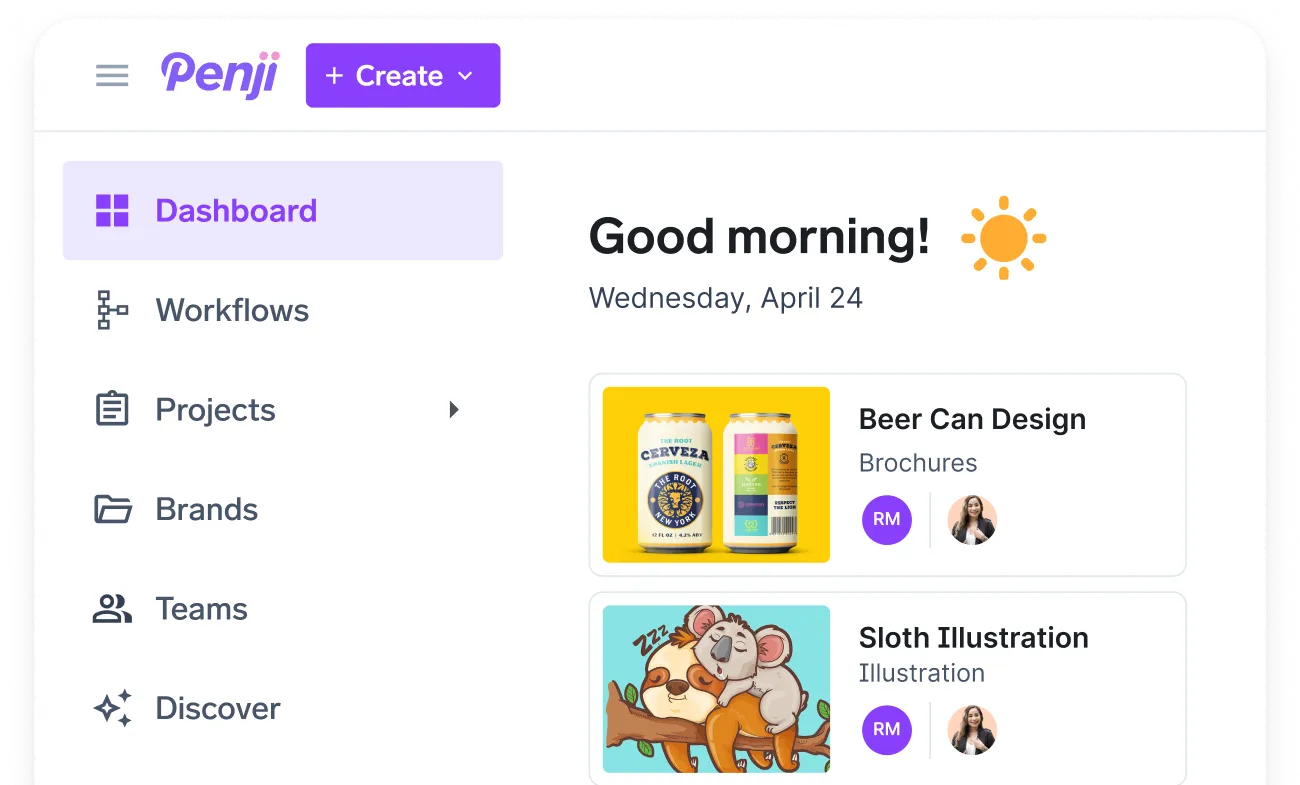
Using a dedicated design platform centralizes communication. For instance, Penji’s dashboard removes “email urgency.” It allows for a smoother flow of graphic design for marketing tasks. You get a streamlined process that keeps everyone on the same page.
When Should You Switch To A Graphic Design Subscription?
Sometimes poor prioritization isn’t at fault; sometimes, there isn’t enough capacity. When your must-have list is longer than what people can do in a given timeframe, it’s time to look elsewhere.
The Volume Problem
Hiring additional full-time employees takes time; by the time they’ve settled in, they may have missed that looming deadline for good.
The Scalable Solution
A graphic design subscription allows for on-demand service and overflow handling so that you have an easy approach with no added stress whatsoever. You can scale-up solutions immediately without stratospheric costs involved.
Future-Proofing
You’ll get access to 120+ creative services that go beyond graphic design needs. Want motion graphics? Branding? You can have it done without having to train anyone beforehand. This is experience design—reinvented!
Measuring the Success of Your Prioritization
How do you know if your new system is working? Look at the data.
- Completion Rates: Are you hitting deadlines more often?
- Team Sentiment: Is the stress level going down? Are people happier?
- Business Impact: Are high-priority campaigns performing better because they got the attention they deserved?
Common Pitfalls and How to Avoid Them
Even the best plans can go wrong. Watch out for these traps.
- The “Yes” Trap: Agreeing to everything just to be helpful. Learn to say no or “not now.”
- Ignoring Energy Levels: Don’t schedule complex creative work during low-energy times. Save the hard stuff for when brains are fresh.
- Neglecting the Backlog: Don’t let “Won’t Have” tasks pile up until they become urgent. Review your backlog regularly.
Conclusion: Experience the Future of Workflow
Prioritization means making smart choices that align with your business goals. Frameworks like MoSCoW help you move from surviving to thriving. Don’t let capacity limit creativity. To get agency-level work without the agency price, it’s time to explore new models.
Ready to supercharge your creative operation? Get started with Penji for unlimited graphic design and scale your team instantly.
Get a design package with unlimited graphic design
Try Penji risk-free for 30 days and get all your design projects done







Frequently Asked Questions
How do I handle clients who say everything is urgent?
Use a 1-5 rating scale and ask for business justification for every “level 5” request. If it doesn’t directly impact the bottom line, it’s not a level 5.
What is the difference between a freelancer and a graphic design subscription?
Freelancers charge hourly and may have limited availability. Subscriptions offer flat-rate pricing, unlimited revisions, and a full team of designers, making it more reliable and scalable.
Can a project management tool replace a design manager?
No. Tools track tasks, but managers set strategy. Platforms like Penji include a design team and art director to manage the workflow for you.
How often should we review design priorities?
Hold weekly sprint reviews to adjust for business goals and market trends without disrupting daily work.
About the author

Je Ann Bacalso
Je Ann is a creative content writer who crafts engaging, SEO-friendly articles and web copy. With a passion for storytelling and a sharp eye for detail, she delivers clear, compelling content that connects with readers.
Table of Contents
- Why Are All of My Design Requests Urgent?
- How Can the MoSCoW Method Save My Workflow?
- What Are Some Great Tips To Prioritize Monthly Design Tasks?
- How Do I Set Boundaries with Stakeholders?
- Which Tools Help Manage Graphic Design for Marketing?
- When Should You Switch To A Graphic Design Subscription?
- Measuring the Success of Your Prioritization
- Common Pitfalls and How to Avoid Them
- Conclusion: Experience the Future of Workflow
- Frequently Asked Questions