




TL;DR: Hiring a product designer requires clear understanding of your needs, competitive compensation, and a structured evaluation process. Focus on portfolios, skills assessments, and practical case studies to find designers who can transform user research into exceptional products. Whether you need UX/UI expertise or full product development support, the right designer bridges the gap between user needs and business goals.
To hire a product designer, define your design needs and product development stage first. Set competitive compensation based on market rates, then post on specialized job boards like Dribbble and Behance. Review portfolios, conduct structured interviews with case studies, and assess both technical skills (wireframing, prototyping, UX principles) and soft skills (communication, problem-solving). Consider offering remote work flexibility to expand your talent pool.
How to hire a product designer who’ll transform your product vision into reality?
Start by defining exactly what you need, then look for candidates who blend technical design skills with strategic thinking. The right product designer doesn’t just make things look good; they solve real user problems while keeping your business goals front and center.
User research drives everything in product development. Without it, you’re building in the dark. But research only matters if someone can translate those insights into designs that work. That’s where product designers come in. They take user pain points, stakeholder input, and technical constraints, then create solutions people actually want to use.
The hiring process can feel overwhelming with so many specialized design roles out there. Product designers sit at the intersection of UX design, visual design, and product strategy. They need to understand the big picture while sweating the small details. Getting this hire right affects everything from user satisfaction to your bottom line.
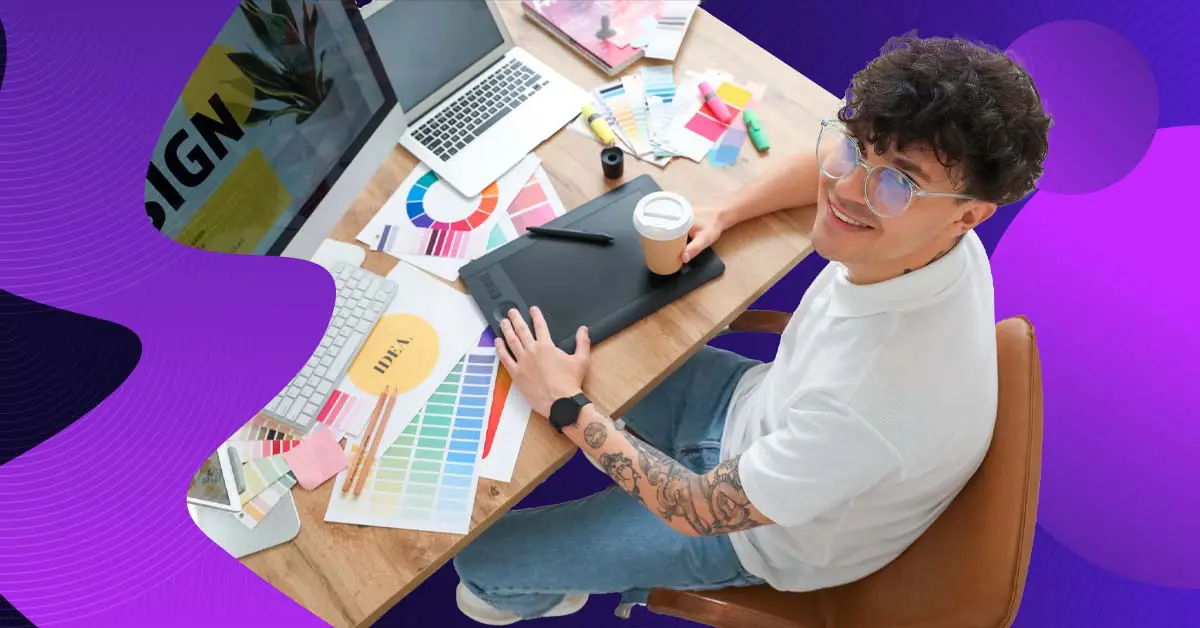
A product designer is a person who handles the product design or the improvement of an existing one. Some functions include brainstorming solutions to user pain points and seeking stakeholder input. A product designer also liaises between researchers, engineers, and designers and helps create mock-ups through wireframes and prototypes. In addition, a product designer must understand the bigger goals of the product while overseeing the details needed to achieve them.
What is a Product Designer?

A product designer owns the entire creation process of a new product or the improvement of an existing one. They’re problem solvers who balance user needs with business objectives while considering technical feasibility.
Product designers dig deep into user behavior through interviews, surveys, and usability testing. They analyze competitors, identify market gaps, and define problems worth solving. This research phase shapes every decision that follows.
They brainstorm solutions to user pain points, often facilitating workshops with stakeholders to align on direction. Turning ideas into tangible designs happens through wireframes and prototypes, which help teams visualize the product before investing in full development.
Product designers serve as the bridge between researchers, engineers, marketers, and business leaders. They translate technical constraints into design solutions and communicate design decisions to non-designers. After launch, they analyze how users interact with shipped features, identify friction points, and refine the experience based on real usage data.
Professional product design services can help startups and growing companies access this expertise without building an entire in-house team.
Skip the DIY, Get Unlimited Product Designs
Get all the graphics you need with Penji
Things to Consider Before Hiring a Product Designer

Smart hiring starts with knowing exactly what you need. Skip this step and you’ll waste time interviewing candidates who don’t match your actual requirements.
Define Your Product Design Needs
Different designers excel at different things. Some thrive in early-stage concept work, others specialize in refining mature products. Physical products require different skills than digital apps. SaaS platforms need different expertise than mobile games. Match the designer’s background to your product category.
Early-stage products need designers comfortable with ambiguity and rapid iteration. Established products benefit from designers skilled at optimization and data-driven refinement. Are you struggling with user onboarding? Need better mobile experiences? Your specific pain points should drive the job description.
Some roles demand strong UX research capabilities while others prioritize visual design or interaction design. Be clear about which skills matter most for your situation.
Set Competitive Compensation
Talented product designers have options. Check job boards like Indeed and LinkedIn for salary ranges. Product designers with 2-5 years of experience typically earn $80,000-120,000 in mid-sized markets, while senior designers in tech hubs command $130,000-180,000 or more.
Designers often weigh product design roles against UX researcher, product manager, or front-end developer positions. Understanding these competing offers helps you stay competitive. Startups typically pay less than established companies but offer equity. Remote companies can often pay less than San Francisco or New York rates while still being competitive for talent outside those markets.
If you can’t match top-tier cash compensation, strong benefits packages help. Consider offering unlimited PTO, robust health coverage, professional development budgets, or equity packages.
Offer Remote and Hybrid Flexibility
Product designers can collaborate effectively from anywhere. Limiting yourself to local talent dramatically shrinks your candidate pool. Remote work opens access to designers outside expensive tech hubs who cost less but bring the same skills.
Hybrid options attract candidates who want some office time without full-time commutes. Consider offering 2-3 days remote per week if you need some in-person collaboration. Design as a service platforms provide another option, giving you access to professional designers without the full-time hiring commitment.
Skills and Qualifications of a Product Designer

Product designers blend creative and analytical thinking. Strong product designers master visual design principles including typography, color theory, layout, and composition. Deep knowledge of user experience principles, usability best practices, and human-computer interaction separates good designers from great ones.
Expect fluency with design tools like Figma, Sketch, or Adobe XD. Familiarity with prototyping tools like Framer helps communicate interaction design. Understanding HTML, CSS, and JavaScript fundamentals improves designer-developer collaboration.
Product designers should know how to conduct user interviews, run usability tests, analyze data, and translate findings into actionable insights. Understanding business models, competitive positioning, and product strategy helps designers make tradeoffs between user needs and business requirements.
Clear verbal and written communication helps designers explain decisions to stakeholders and collaborate with engineers. Designers also need to manage their time, track multiple projects, meet deadlines, and coordinate with cross-functional teams.
Where to Find Skilled Product Designers
Finding great designers requires looking in the right places. Platforms like Dribbble, Behance, and Cofolios cater specifically to designers, reaching more qualified candidates than general job boards.
Dribbble and Behance showcase designer portfolios where you can search for designers whose work matches your aesthetic and reach out directly. Sites like Upwork, Toptal, and Freelancer.com provide access to designers available for both project work and full-time roles.
Send recruiters to conferences like UX Conference, An Event Apart, or Config where practicing designers interested in new opportunities gather. Organizing training events attracts entry-level designers and career changers who bring fresh perspectives and strong motivation.
Penji offers an alternative to traditional hiring, providing access to experienced designers through a subscription model that eliminates lengthy recruitment processes.
How to Hire a Product Designer: Step-by-Step Process

Use Skills Assessments
Start with objective skills testing before interviews. Create assessment packages combining design-specific evaluations covering UX principles, visual design, and tool proficiency. Add general tests for communication and critical thinking. Skills tests reveal who can actually do the work versus who interviews well.
Request and Review Portfolios
Portfolios show real work, not just resume claims. Look beyond surface aesthetics. Great portfolios explain the problem, show the process, and demonstrate impact. Case studies that walk through research, ideation, iteration, and results tell you how someone actually works.
Use portfolios to guide interview questions. Ask about specific projects, challenges they faced, and decisions they made. Their ability to articulate design rationale matters as much as the final artifacts.
Conduct Structured Interviews
Develop a standard question set covering technical skills, problem-solving ability, communication style, and cultural fit. Include both behavioral and situational questions. “Tell me about a time you disagreed with a product manager” reveals actual experience while “How would you approach designing for users with limited internet connectivity” tests problem-solving.
Have multiple interviewers assess candidates. Different perspectives catch things individuals miss.
Implement Practical Case Studies
Real-world exercises reveal how candidates think and work. Present realistic scenarios matching your business context. Give candidates a design problem they might actually face in the role with enough context without over-prescribing the solution.
Watch their process, not just the output. How do they clarify requirements? What questions do they ask? Can they articulate tradeoffs between options? Time-box exercises appropriately with two-hour take-home assignments that respect candidates’ time.
Make the Final Decision
Compare candidates against your original requirements. Score each person on must-have versus nice-to-have skills. Consider team dynamics and culture fit since a brilliant designer who can’t collaborate causes more problems than they solve. Check references thoroughly with previous managers and teammates about collaboration style and reliability.
Conclusion
Learning how to hire a product designer effectively saves time, money, and frustration. Start by defining your specific needs and development stage. Set compensation that attracts real talent, then look in specialized places like design job boards and portfolio platforms. Evaluate candidates through portfolios, structured interviews, and practical case studies that reveal actual working style.
The best product designers balance user empathy with business acumen. They bring technical skills but also strategic thinking. Finding this combination requires patience and a thorough evaluation process. Don’t rush the decision since the wrong hire costs more than the time spent getting it right.
Great onboarding, clear expectations, and ongoing support help new designers succeed and stick around. Invest in your design team’s growth and they’ll invest in your product’s success.
Get Professional Design Support Now
Need design help without the lengthy hiring process? Penji provides unlimited graphic design services with fast turnarounds. Access experienced designers for product packaging, marketing materials, web design, and more through a simple subscription.
See our work or learn why businesses choose Penji for your design needs. From custom packaging design to comprehensive design solutions for small businesses, we’ve got you covered.
Frequently Asked Questions
How much does it cost to hire a product designer?
Product designer salaries vary widely based on experience and location. Entry-level designers earn $60,000-80,000, mid-level designers make $80,000-120,000, and senior designers command $130,000-180,000 or more in major tech hubs. Freelance rates range from $75-150 per hour. Design as a service options provide an alternative with predictable monthly costs.
What’s the difference between a product designer and a UX designer?
Product designers own the entire product experience from research through launch, including business strategy and cross-functional coordination. UX designers focus specifically on user experience and interaction design. Product designers typically have broader responsibilities while UX designers go deeper on usability and user research. Learn more about these differences in our guide on the difference between product designers and packaging designers.
Should I hire a full-time designer or use a design service?
Hire full-time when you need dedicated daily design work, deep product knowledge, and long-term team building. Use design services when you need flexibility, faster access to talent, or want to avoid recruitment overhead. Many companies start with services then transition to in-house teams as needs grow.
How long does it take to hire a product designer?
Typical hiring timelines run 6-12 weeks from job posting to accepted offer. This includes 2-3 weeks for applications, 3-4 weeks for interviews, 1-2 weeks for final decisions, and 2-4 weeks notice period. Strong candidates get multiple offers, so move efficiently. Using platforms like Penji eliminates this timeline entirely.
What questions should I ask when interviewing product designers?
Ask about their design process, how they handle conflicting stakeholder feedback, examples of failed projects and lessons learned, how they measure design success, and their approach to user research. Include a case study exercise where they solve a realistic problem. Focus on understanding how they think and work, not just their past accomplishments.
About the author

Rowena Zaballa
With a background as a former government employee specializing in urban planning, Rowena transitioned into the world of blogging and SEO content writing. As a passionate storyteller, she uses her expertise to craft engaging and informative content for various audiences.