









TLDR;
- Marketing teams use Penji to get steady, reliable design support without hiring more people.
- Clear workflows and simple communication help teams stay organized and launch campaigns faster.
- Penji works best when teams treat it like a creative partner, not a quick fix.
Marketing teams today are under constant pressure. New campaigns, new platforms, new formats, and new ideas show up every week. You need graphics for social media, ads, emails, landing pages, presentations, and more. It is a lot to keep up with, especially when your team is already stretched thin.
Most teams do not have enough designers to handle everything. Hiring takes months. Freelancers can be unpredictable. And asking your team to “just make it work” usually leads to burnout.
That is why many marketing teams turn to Penji. Penji gives them graphic design for marketing through a simple, steady system. Instead of scrambling for help, teams plug into a creative partner that works every day and keeps up with their pace.
This guide walks you through how marketing teams use Penji to improve creative output in a way that feels organized, calm, and sustainable.
Step 1: Move from scattered requests to one simple system
Most teams start with design requests coming from everywhere. Someone sends a message. Someone else emails a file. Another person drops a screenshot in chat. It gets messy fast, and things slip through the cracks.
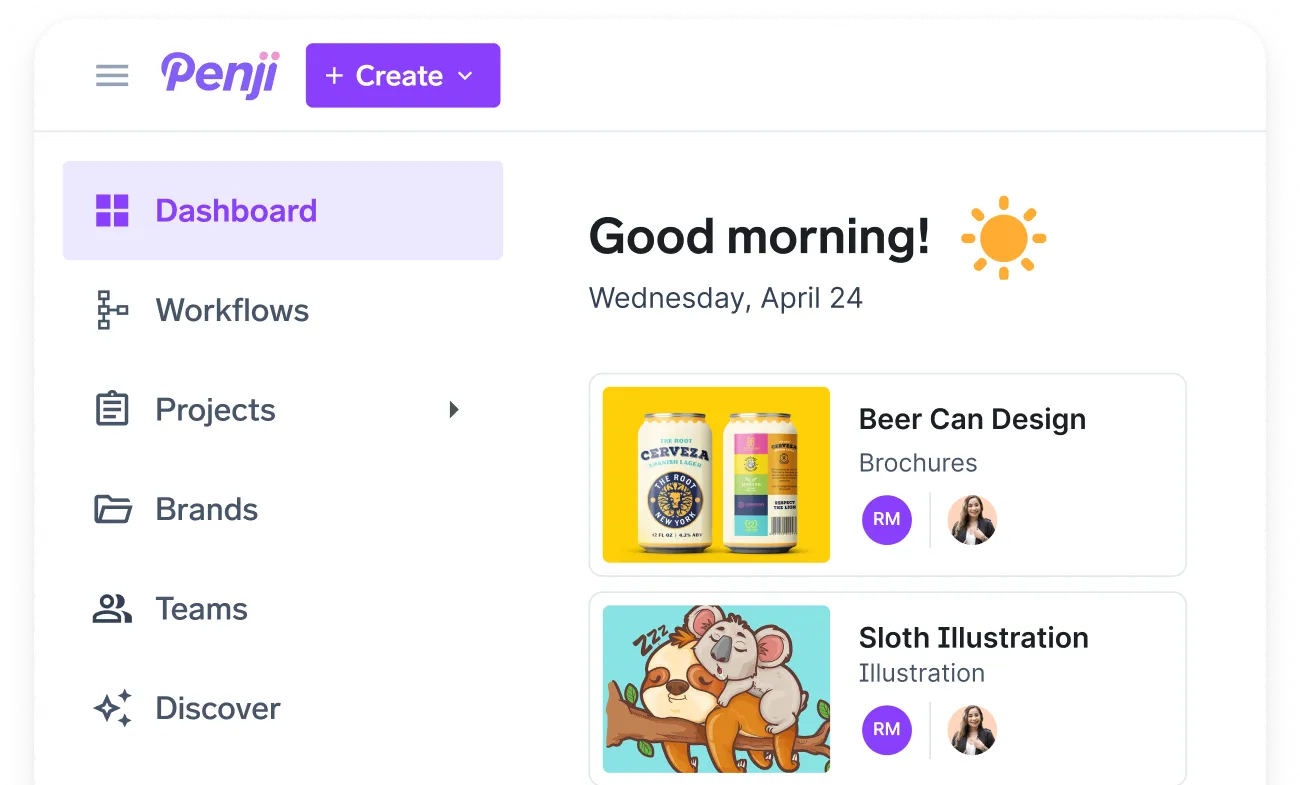
With Penji, everything goes into one place. You use a graphic design subscription to send requests, track progress, and get updates. It feels like having a small creative team that is always ready.
Why this helps
- You stop losing files
- You stop guessing who asked for what
- You stop waiting days for someone to reply
- You finally have a clear view of what is being worked on
This alone makes the whole team feel more in control. When everything is organized, people work faster and with less stress.
Step 2: Build a simple brand kit
Penji works best when your brand is clear. You do not need a huge brand book. A simple kit is enough to help designers understand your style.
What to include
- Your logo
- Your colors
- Your fonts
- A few examples of designs you like
- A few examples you want to avoid
- Any phrases or messages you use often
When you share this, Penji’s designers start to understand your style. Over time, your graphics look more consistent and more professional. This is a big win for marketing because consistency builds trust and makes your brand feel stronger.
A simple brand kit also saves time. You do not have to repeat the same instructions over and over. Designers already know what you expect.
Step 3: Turn campaigns into repeatable workflows
Strong marketing teams do not start from zero every time. They build simple checklists for each type of campaign and reuse them. This makes planning easier and helps you avoid last‑minute stress.
Example: A product launch workflow
- Social media graphics
- Email header
- Ad variations
- Landing page hero image
- Sales one‑pager
- A few short video thumbnails
- A banner for your website or blog
Every time you launch something new, you follow the same steps. Penji fills in the design work, and your team focuses on strategy instead of scrambling for assets.
This is where graphic design for marketing becomes smoother and more predictable. You know what you need, and Penji knows how to deliver it.
Step 4: Use creative as a service to remove bottlenecks
Most design delays happen because one person is overloaded or a freelancer is slow. Priorities change, and suddenly everything is behind. This is one of the biggest frustrations for marketing teams.
Penji helps by giving you a flexible creative team. You can request multiple projects, switch priorities, and ask for revisions without worrying about extra fees.
What this means for your team
- You can test more ideas
- You can launch campaigns faster
- You can react to trends without stress
- You can stop waiting for design help
- You can keep your team focused on strategy instead of production
This is the heart of creative as a service. It removes the bottlenecks that slow marketing teams down and gives you room to experiment.
When design is no longer the thing holding you back, you can finally move at the speed you want.
Step 5: Write better briefs and give clearer feedback
The teams that get the best results from Penji communicate clearly. You do not need long documents. You just need simple, direct instructions that help designers understand your goals.
A good brief includes
- What the design is for
- Who will see it
- Where it will be used
- The main message
- Any examples or inspiration
- Any must‑have elements
Good feedback sounds like
- “Make the headline bigger so it stands out.”
- “Use our brand blue instead of the lighter shade.”
- “This needs to feel more energetic.”
- “Let’s try a version with a darker background.”
Clear feedback helps Penji’s designers improve your graphics faster. Over time, they learn your style so well that you barely need to explain anything. This is when the partnership starts to feel natural and easy.
Step 6: Connect design output to real marketing results
The smartest teams track how Penji’s designs perform. They look at things like:
- Click‑through rates
- Landing page conversions
- Social engagement
- Sales or leads
- Time saved by the team
When something works, they ask Penji to make more of it. When something does not work, they adjust the message or the style.
This turns Penji from a design helper into a steady part of your marketing rhythm. You start to see which visuals perform best, and you can build future campaigns around what works.
Before Penji vs After Penji
| What Teams Experience | Before Penji | After Penji |
|---|---|---|
| Design speed | Slow and unpredictable | Steady and reliable |
| Brand consistency | All over the place | Clean and unified |
| Workload | Overwhelming | Organized and manageable |
| Cost | Hard to predict | Simple monthly plan |
| Team focus | Chasing assets | Running campaigns |
Conclusion
Marketing teams improved creative output with Penji by doing something simple. They stopped treating design as a last‑minute scramble and started treating it as a steady system.
With creative as a service, teams get more done, stay on brand, and free up time to focus on strategy instead of chasing graphics. It is not about being flashy or perfect. It is about having a reliable process that supports your work every day.
If your team wants a calmer, more organized way to handle design, Penji is a practical option that fits into your workflow without making things complicated.
Frequently Asked Questions
How does Penji help marketing teams work faster
Penji gives you a steady design team that works every day, so you can request graphics anytime without waiting for freelancers or hiring more people.
Can Penji handle all types of marketing graphics
Yes. Social ads, email graphics, landing page visuals, sales decks, and more. Learn more about our design support for marketing teams.
Is Penji good for small teams
Yes. Small teams often feel the design pressure the most, and Penji gives them support without needing to hire more staff.
Do I need a big brand guide to start
No. A simple brand kit with your colors, fonts, and logo is enough.
How fast is the turnaround
Most designs come back within a day or two, which helps teams launch campaigns faster.
About the author

Flore
Flore’s passionate about turning ideas into clear, useful content that connects with people and performs on search. From blog posts and landing pages to full content plans, her work is grounded in purpose and always aligned with a bigger picture.
Table of Contents
- Step 1: Move from scattered requests to one simple system
- Step 2: Build a simple brand kit
- Step 3: Turn campaigns into repeatable workflows
- Step 4: Use creative as a service to remove bottlenecks
- Step 5: Write better briefs and give clearer feedback
- Step 6: Connect design output to real marketing results
- Before Penji vs After Penji
- Conclusion
- Frequently Asked Questions